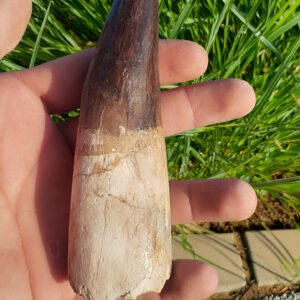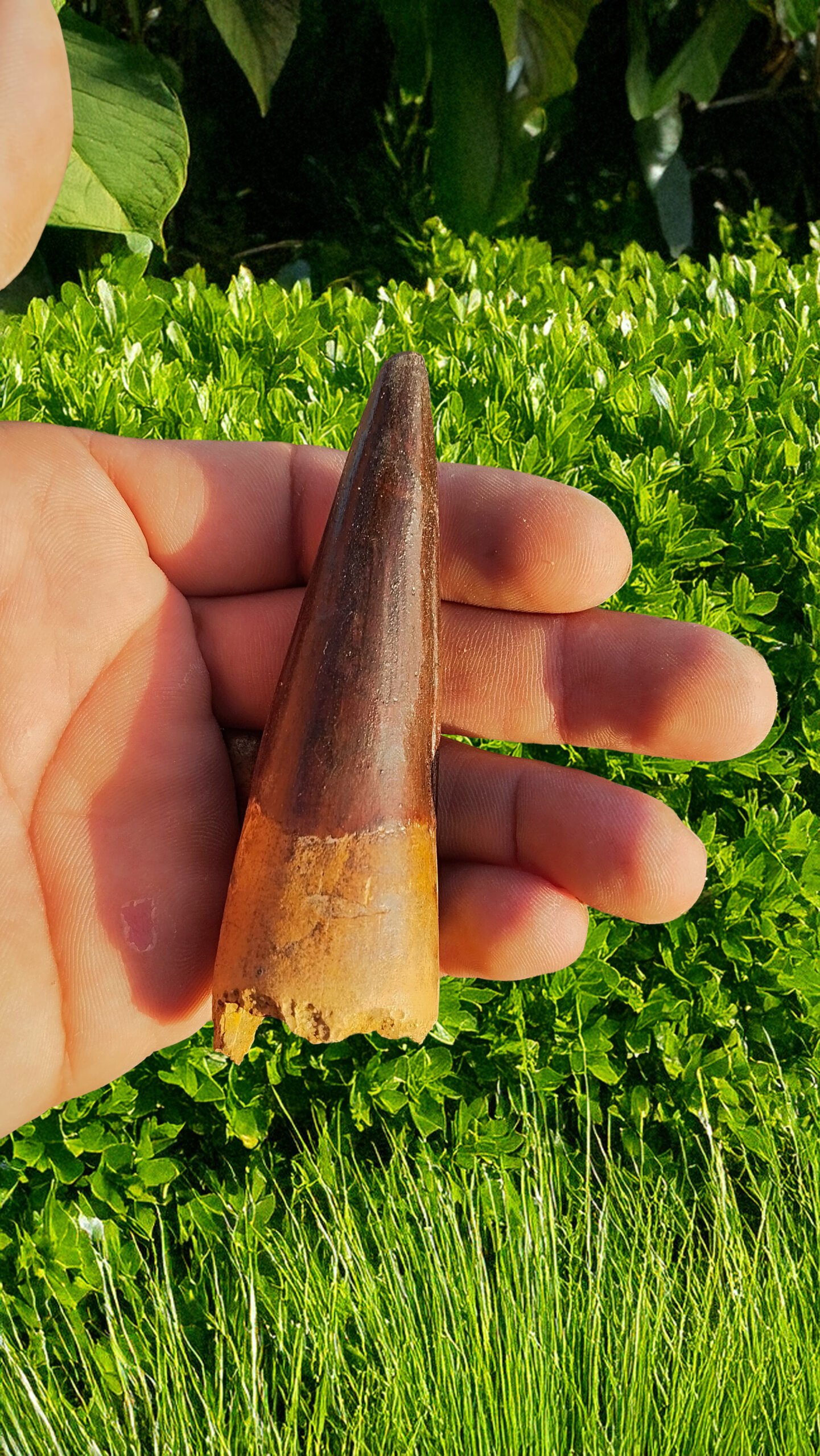
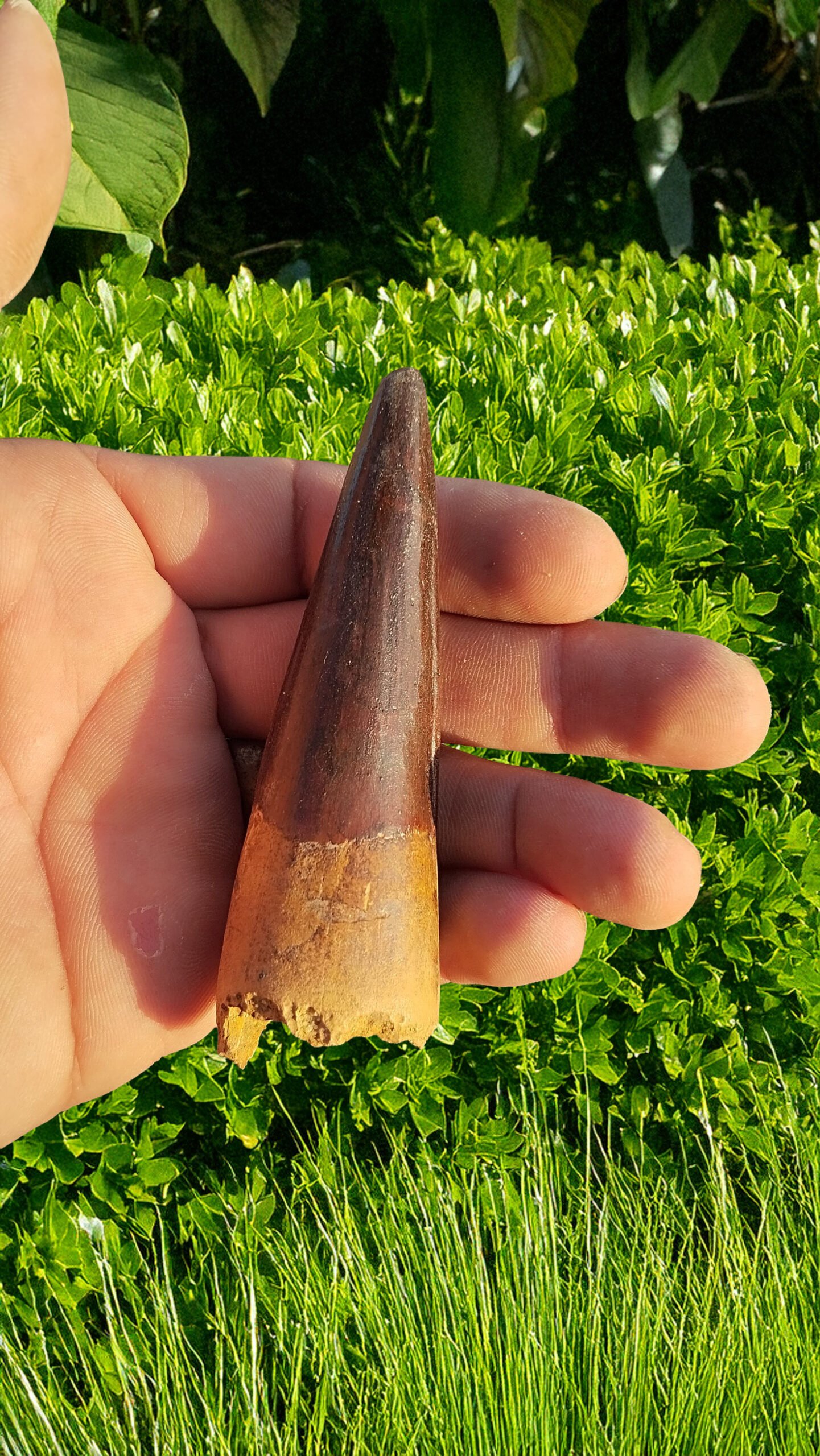
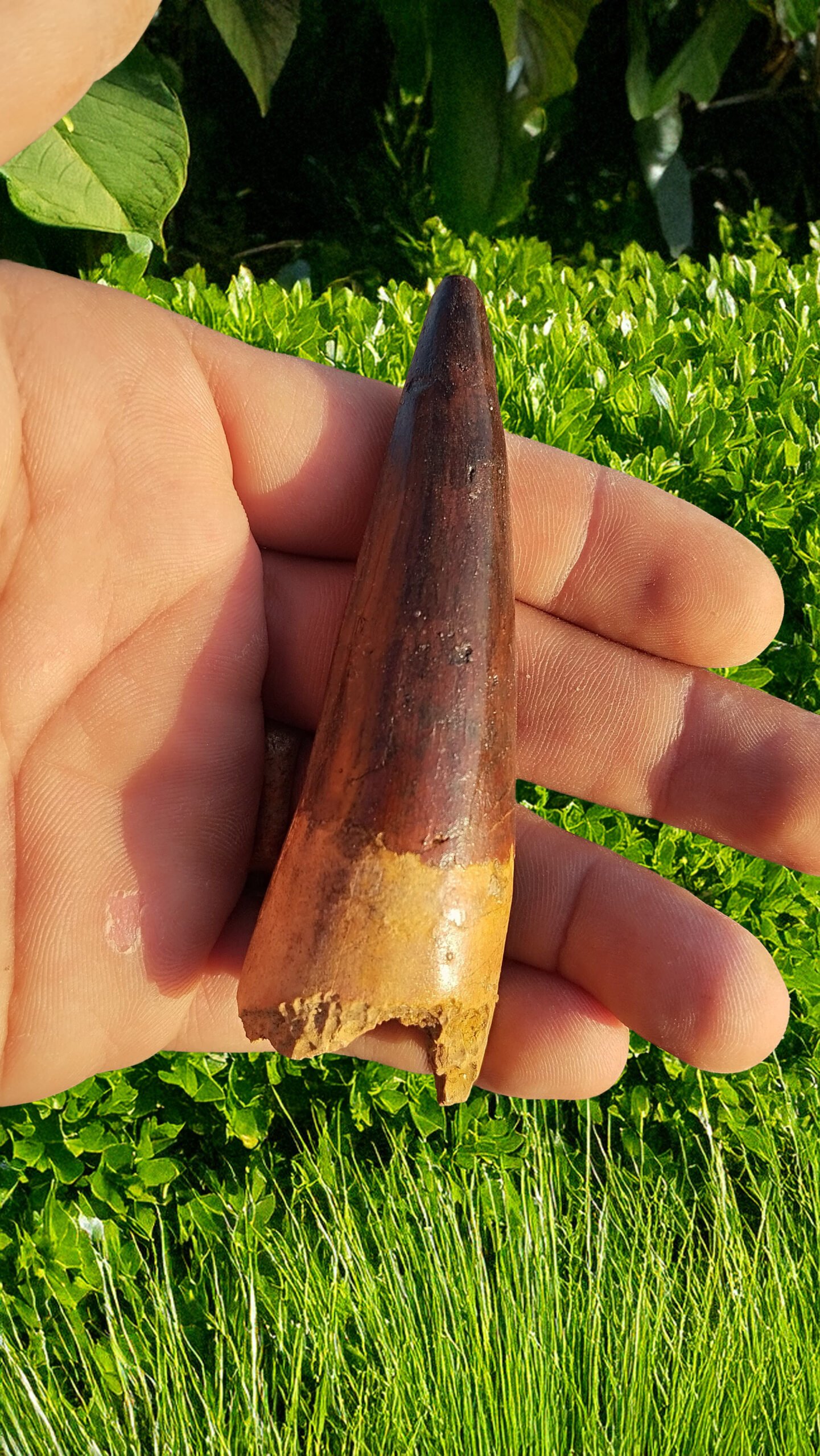

About this spinosaurus tooth gift
This set includes a genuine tooth from the giant river hunter called Spinosaurus. It is prepared by hand and set for display. The spinosaurus tooth gift is chosen for shape and clarity. Each piece is unique. You get a ready case and a data card. You also get a calm joy of deep time in your hand.
Full description about the animal
Spinosaurus lived in North Africa during the Late Cretaceous. It was huge. Longer than a T rex in many cases. Its tall sail rose from the back. The skull was long like a croc. The teeth were round in cross section and not serrated. Built for gripping fish. This fits the life it led near wide rivers and delta flats. Bones and teeth turn up in the Kem Kem region of Morocco. These beds hold fish scales. Turtle bits. Croc bones. The story is clear.
This animal had strong forelimbs. Likely used for grabbing prey. The tail was deep. New finds show a broad tail blade that pushed water. So Spinosaurus could swim and move in fresh water. It hunted sawfish and lungfish and big coelacanths. It also took small dinos or carrion when it could. The nose had pressure pits. These pits helped sense fish in water. The long jaws helped snap and hold. A tooth from this animal tells that tale. A spinosaurus tooth gift brings that river world to your desk.
The climate then was hot. Floodplains spread far. Seasonal shifts raised and dropped the water. Sand mixed with mud and iron. Over time the tooth fossilized. Iron gave it warm brown or red tones. You can see growth lines on many teeth. Some show feeding wear at the tip. Some show root textures. These marks are not flaws. They are the record of a life that ended over 95 million years ago.
Kids and adults can learn from the tooth. Count the ridges. Note the smooth sides. Compare with a serrated theropod tooth. You will see the link to fish hunting. Museums use the same signs to tell species apart. This is why the spinosaurus tooth gift works well in class. It shows form and function with no noise. It also sparks talk. What did the sail do. Show off. Heat control. Storage for fat. The debate goes on. The tooth stays firm as proof of the animal itself.
Why this spinosaurus tooth gift stands out
We select teeth with honest features. We list origin and formation. We seal fragile spots with museum grade consolidant only where needed. No paint. No fake filler. The case protects the tooth yet lets you take it out to hold. The info card gives age formation and care tips. The spinosaurus tooth gift includes what you need and nothing you do not.
Technical details
Origin is Kem Kem Beds in southeast Morocco. Geological period is Late Cretaceous. Cenomanian stage. Estimated age is about 95 to 100 million years. Material is natural fossil tooth with minor stabilization. Condition is Good to Very Good with typical river wear at tip. Size for this listing range is 40 to 60 mm long. Each tooth varies in color and wear. That is normal for river fossils.
Warranty and shipping
Ships in a padded box with display stand and data card. If the tooth arrives damaged we fix it or refund you. Simple. Return window is 30 days from delivery. Keep the case and card for a fast return. Local and global shipping are offered. Tracking is included.
Learn more and related items
Internal link — Related category
Shop Dinosaur Teeth
External link — Trusted reference
Spinosaurus profile at the Natural History Museum
The spinosaurus tooth gift is a clear and lasting present. Good for a home shelf. Good for a student kit. Good for a quiet moment with deep time.
Bullet Point Feature List
Real Spinosaurus tooth with clear Kem Kem origin
Display stand and labeled data card included
Museum grade stabilization used only when needed
Honest surface with growth lines and river wear
Age about 95 to 100 million years
Size range 40 to 60 mm per piece
Ready spinosaurus tooth gift for home or class
Technical Specs Table
| Spec | Detail |
|---|---|
| Fossil type | Spinosaurus tooth |
| Material | Natural fossil tooth with light seal |
| Size | 90 mm length |
| Estimated age | 95 to 100 million years |
| Origin | Kem Kem Beds Morocco |
FAQs
Were Spinosaurus teeth used for chewing or gripping
They were for gripping, not chewing. Long, conical, non-serrated teeth ideal for catching slippery prey like fish. Swallowed food whole or in large chunks.
Which Moroccan fossil formations produce Spinosaurus teeth
Mainly from the Kem Kem Beds in southeastern Morocco, including the Ifezouane and Aoufous formations within the Kem Kem Group.
What is the Kem Kem Beds
A fossil-rich Late Cretaceous formation in southeastern Morocco. Sandstone and mudstone from ancient river systems, famous for diverse predators like Spinosaurus and Carcharodontosaurus.