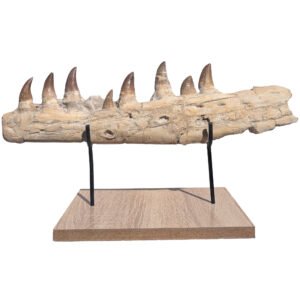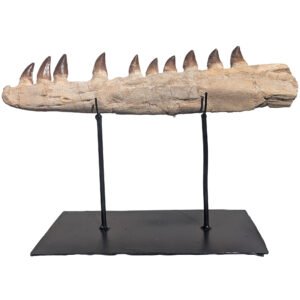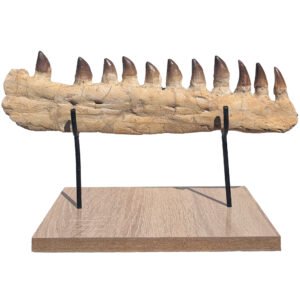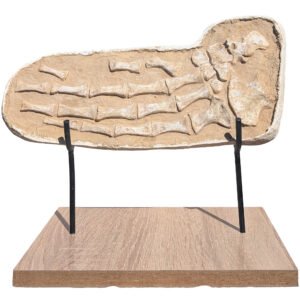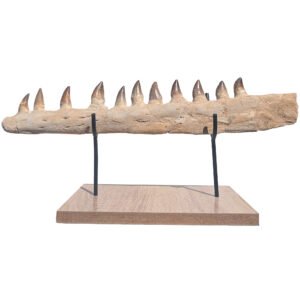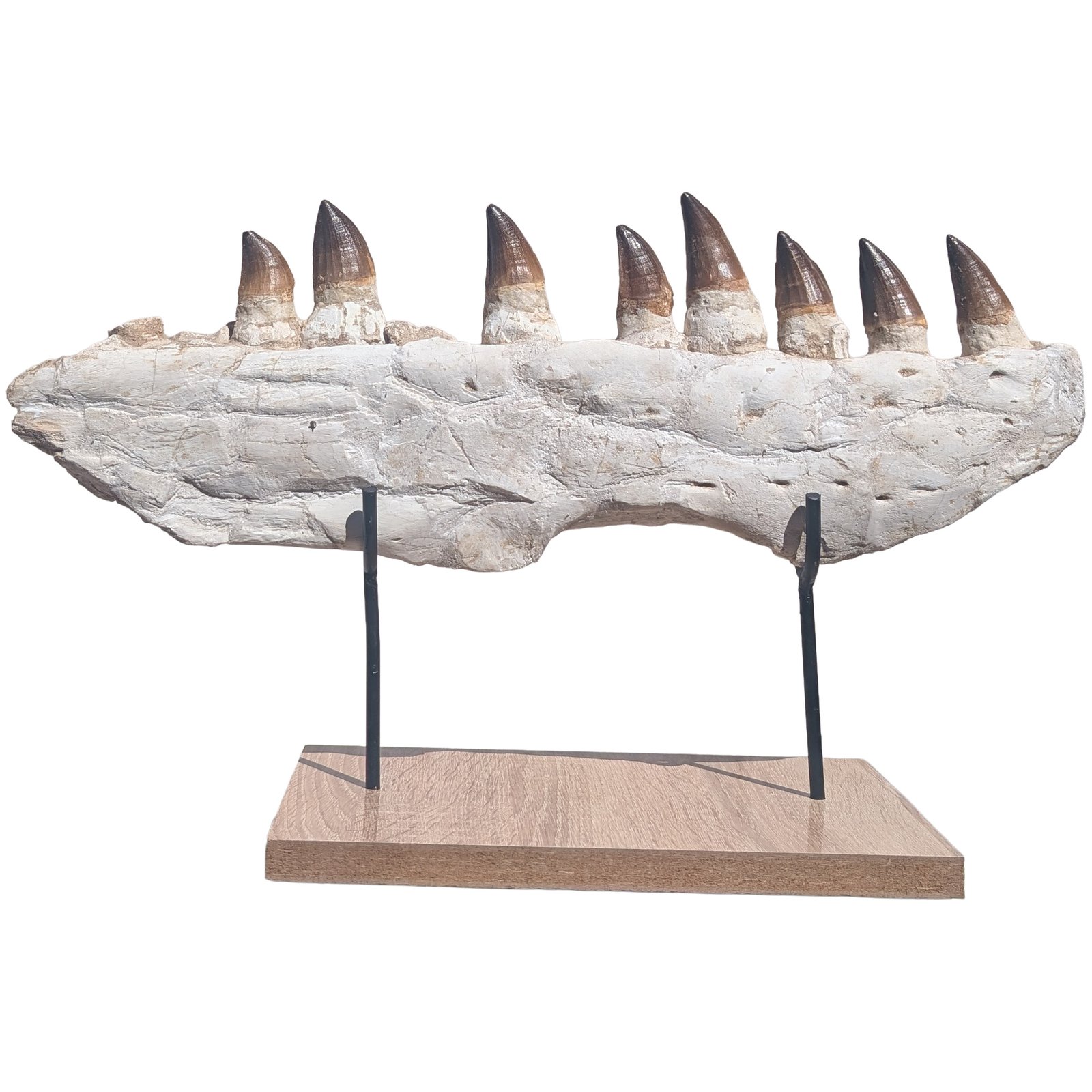
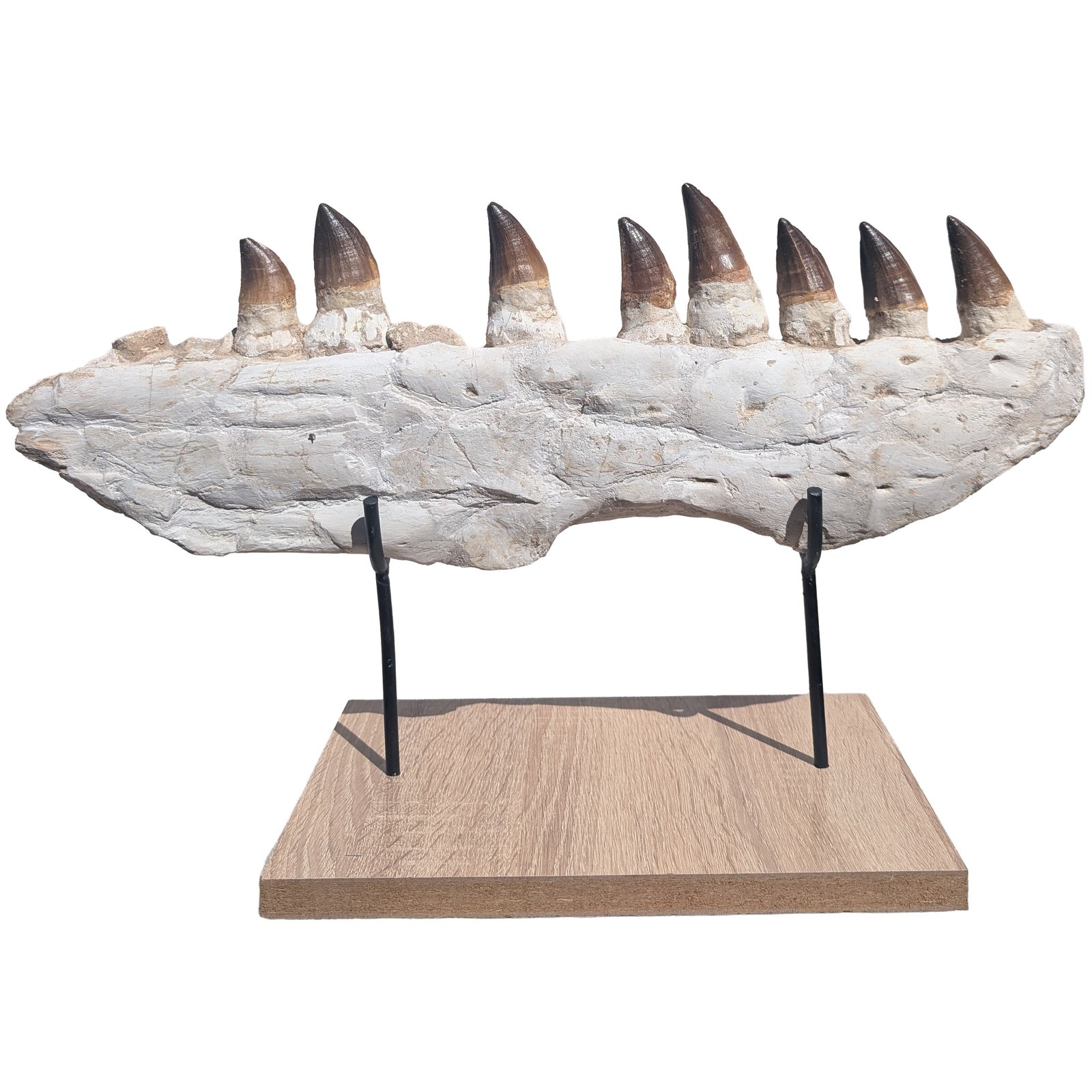
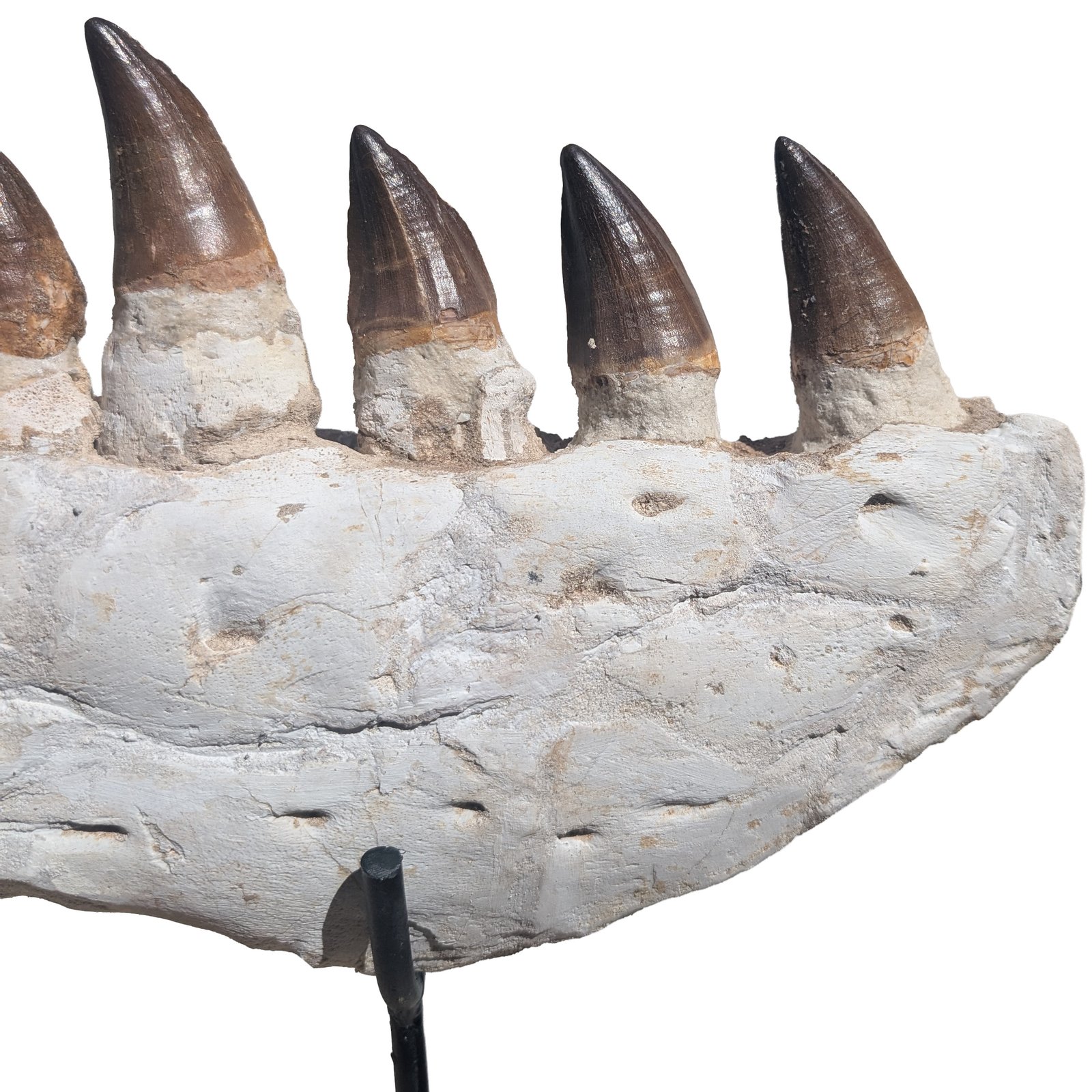
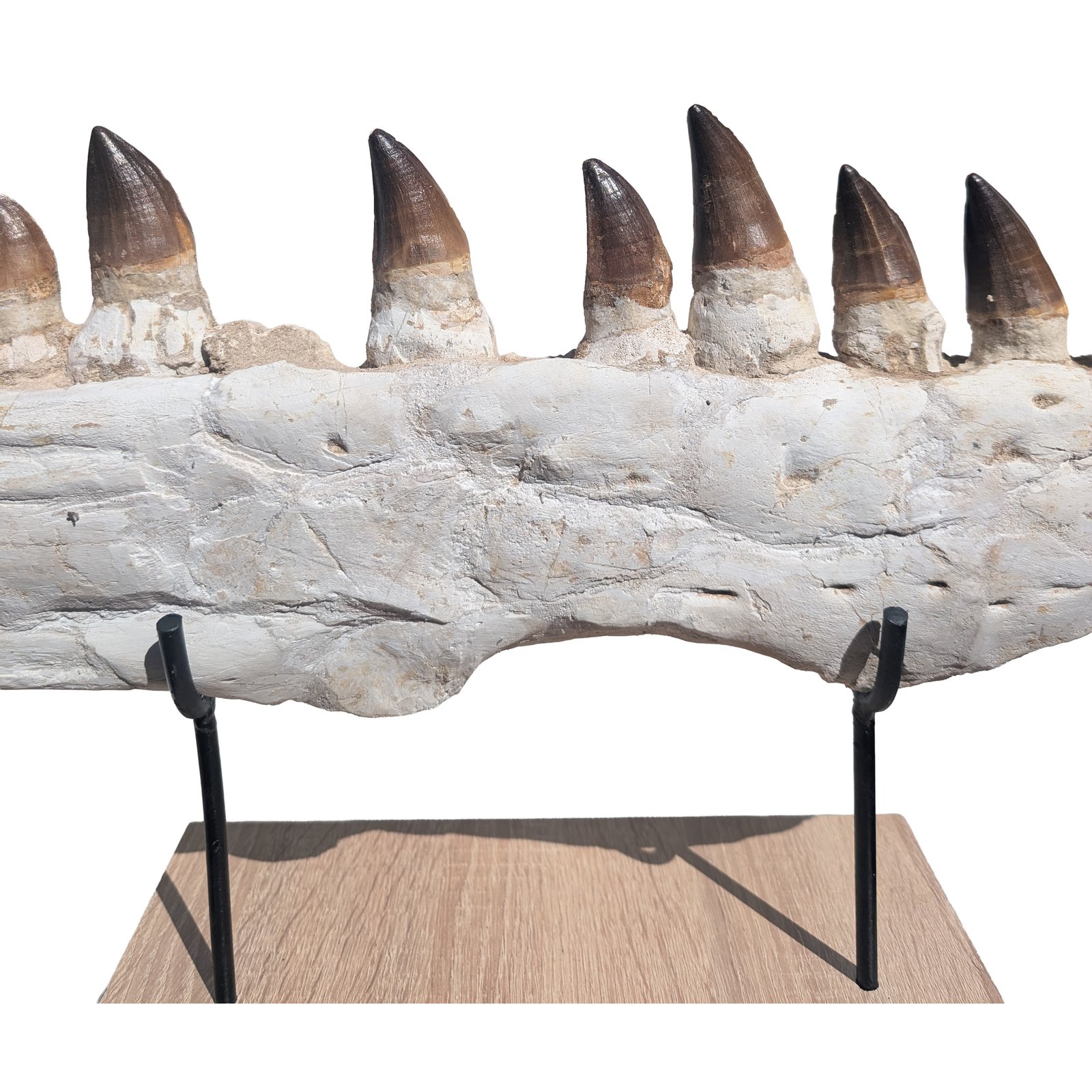
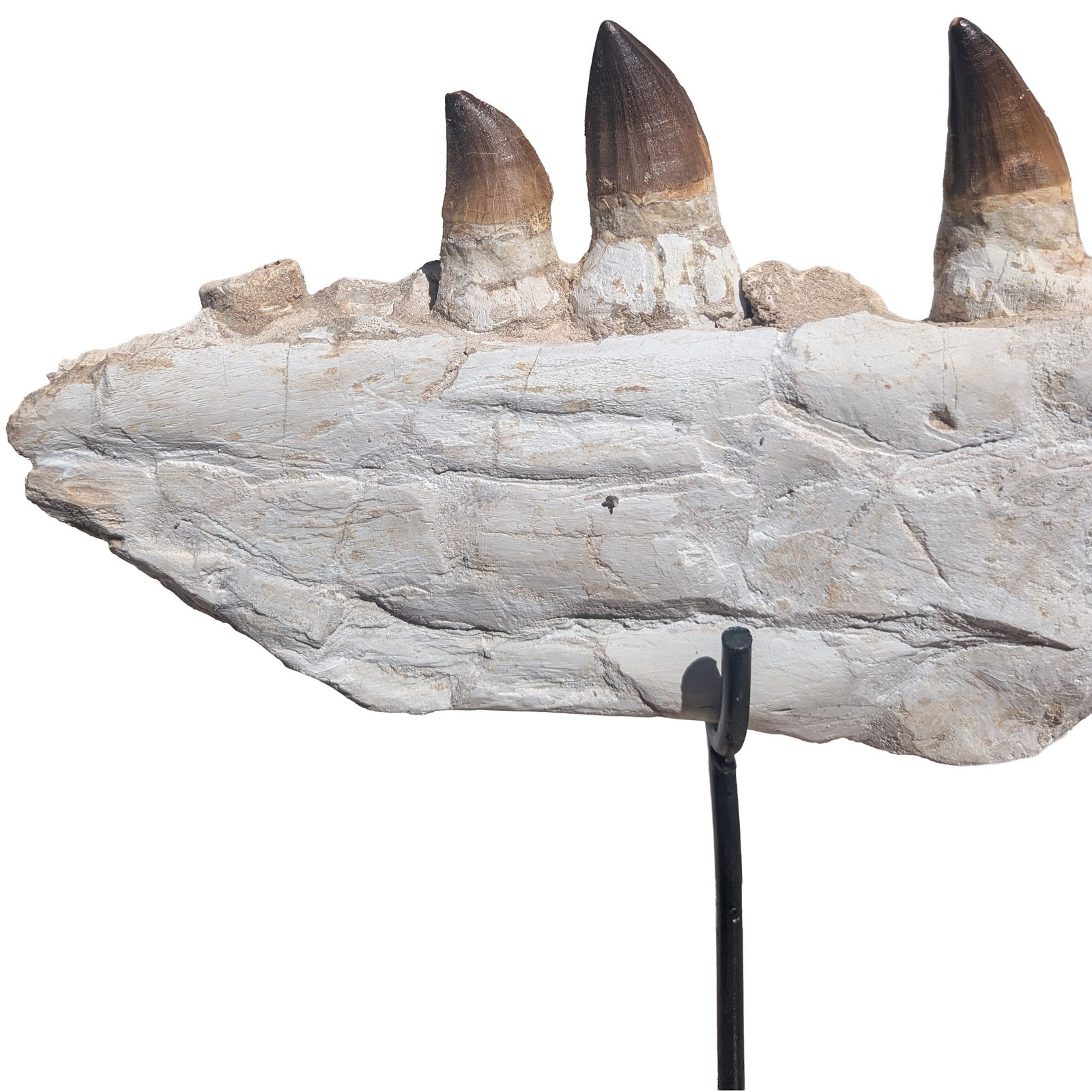
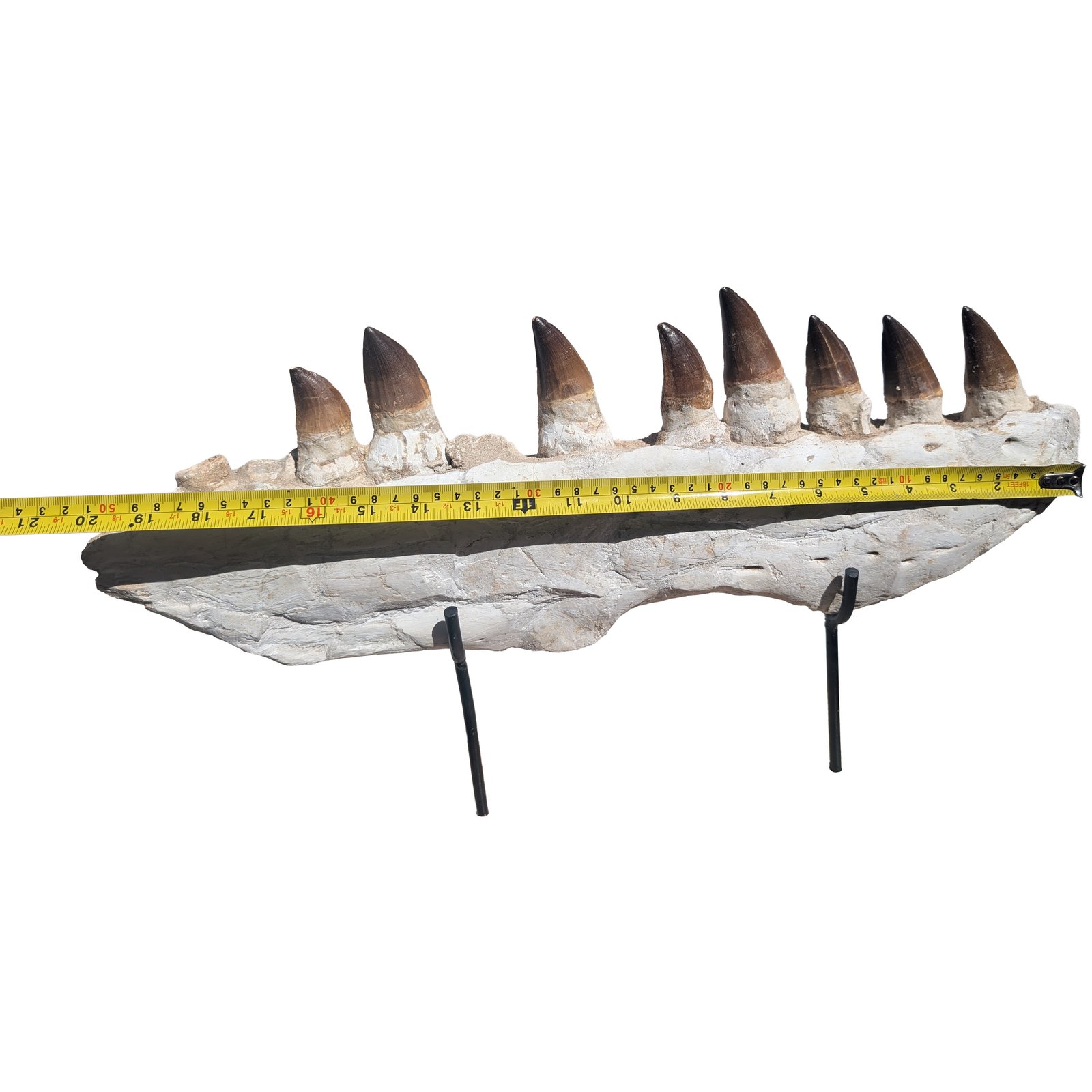
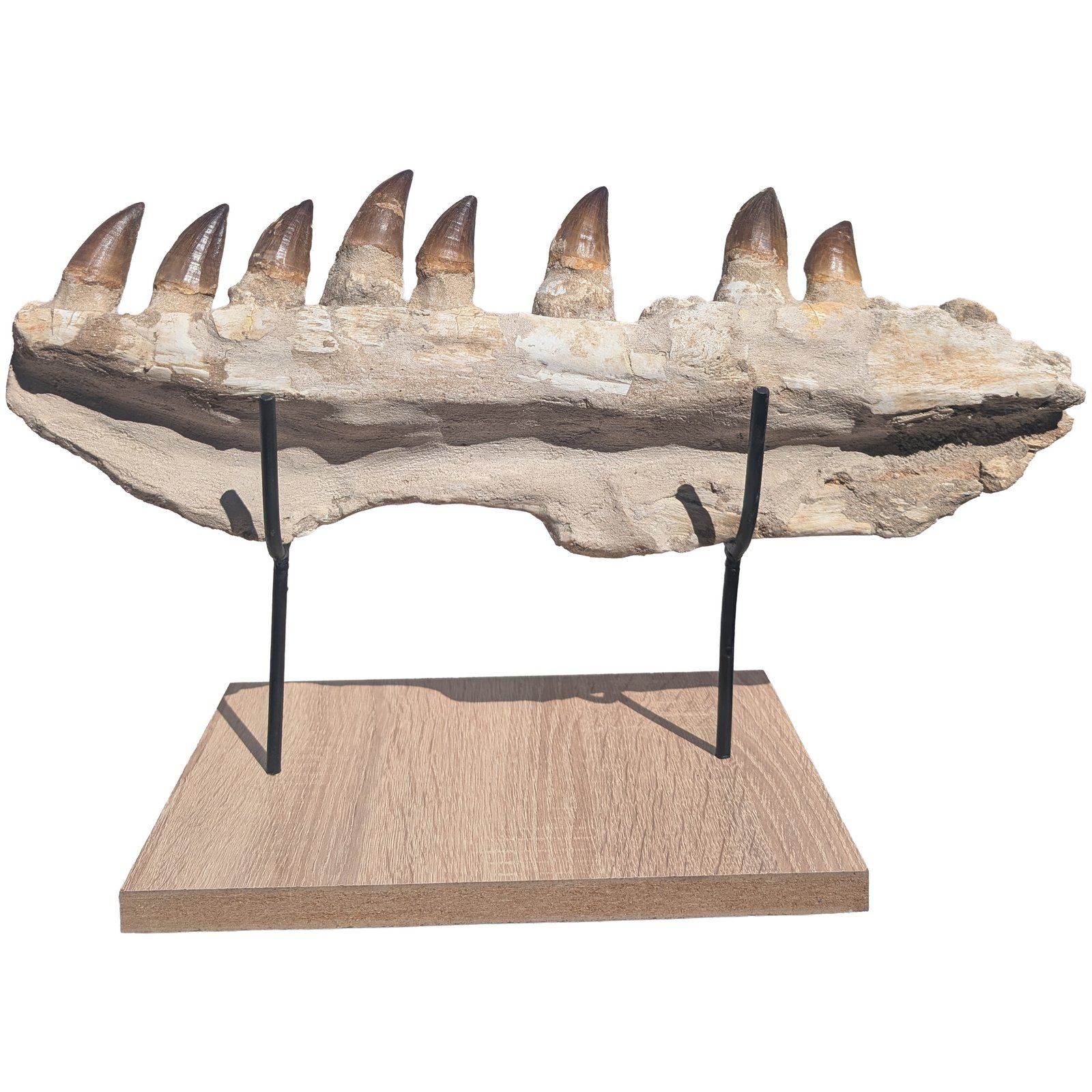

The Fossil Genuine Mosasaur Specimen
The Fossil Genuine Mosasaur Specimen comes from an ancient marine predator that lived during the Late Cretaceous period, roughly 70–66 million years ago. The Mosasaur was not a dinosaur. It was a giant marine reptile that could reach over 50 feet in length. Its body was built for speed, with paddle-like limbs and a long tail that helped it chase prey through prehistoric seas. Its jaws held double rows of sharp teeth. It could crush fish, turtles, and even other marine reptiles.
This genuine fossil represents a real part of that creature’s skeleton—often a section of jawbone or vertebra preserved in limestone matrix. Each specimen has unique textures, color tones, and details from millions of years of fossilization.
Our specimens are carefully prepared using mechanical tools under magnification. No artificial reconstruction. Only minor stabilization to preserve the structure. Each fossil comes from legal excavation sites in Morocco, one of the world’s most important Mosasaur fossil regions. The stone matrix is Cretaceous chalk, rich with ancient marine life remains.
Collectors appreciate the Mosasaur for its iconic role in prehistoric oceans. Museums display similar specimens to show how reptiles adapted to marine environments. The Mosasaur’s streamlined form and predatory features make it one of the most fascinating fossils you can own.
Each Fossil Genuine Mosasaur Specimen includes a certificate of authenticity, identifying its origin and geological age. The piece you receive will vary in size and shape but will always be genuine and museum-grade.
This fossil is perfect for teaching, gifting, or adding to a serious collection. You hold in your hand something that swam before humans existed. No cast, no replica. Just pure prehistoric life turned to stone.
Technical Details
Origin: Khouribga, Morocco
Geological Period: Late Cretaceous (approx. 70–66 million years ago)
Material: Fossilized bone in natural limestone matrix
Condition: Stabilized and cleaned, no restoration
Type: Marine reptile fossil (Mosasaur)
Size: 5–9 inches (varies by specimen)
Warranty & Shipping
All fossils are handled with care and shipped securely. Each Fossil Genuine Mosasaur Specimen is inspected before packing. Includes Certificate of Authenticity. 30-day satisfaction guarantee on condition. Free worldwide shipping for orders over $150.
Related Product
See our Fossil Shark Tooth Collection for more ancient marine predators.
External Reference
Learn more about Mosasaurs from the Natural History Museum.
Bullet Point Features
100% authentic Fossil Genuine Mosasaur Specimen
From the Late Cretaceous period, about 70 million years old
Legally sourced and expertly prepared in Morocco
Ideal for collectors, educators, or fossil lovers
Comes with Certificate of Authenticity
No artificial materials or replica parts
Shipped safely with satisfaction guarantee
Technical Specs Table
| Specification | Detail |
|---|---|
| Fossil Type | Genuine Mosasaur Specimen |
| Material | Fossilized bone in limestone |
| Size | 51 cm |
| Estimated Age | 70–66 million years |
| Origin | Khouribga, Morocco |
FAQ: Mosasaurs
How strong were mosasaur jaws?
Mosasaur jaws were incredibly strong, built for crushing and tearing prey. Some species are estimated to have had a bite force between 10,000 and 13,000 newtons, similar to large crocodiles or great white sharks. Their flexible skulls and powerful muscles allowed them to open their mouths wide and swallow large prey whole.
How many teeth did mosasaurs have?
Depending on the species, mosasaurs had between 40 and over 100 sharp, conical teeth. These teeth were arranged along the upper and lower jaws, and some species even had additional teeth on the roof of their mouth (pterygoid teeth) to help hold onto slippery prey like fish and squid.
Did mosasaurs replace their teeth?
Yes. Like modern reptiles, mosasaurs continuously replaced their teeth throughout their lives. New teeth formed beneath old ones and pushed them out when worn or broken, ensuring the mosasaur always had sharp teeth ready for hunting.