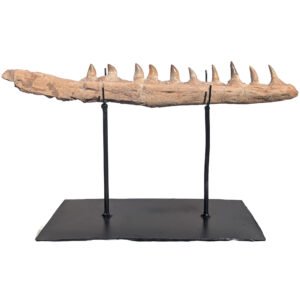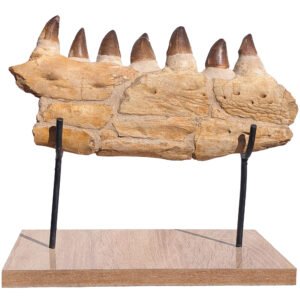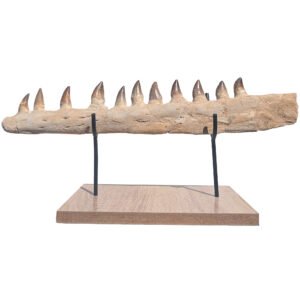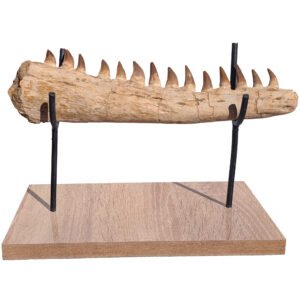

Jaw Moroccan Mosasaur Display Fossil
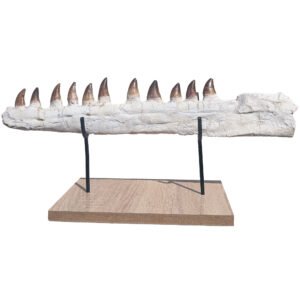
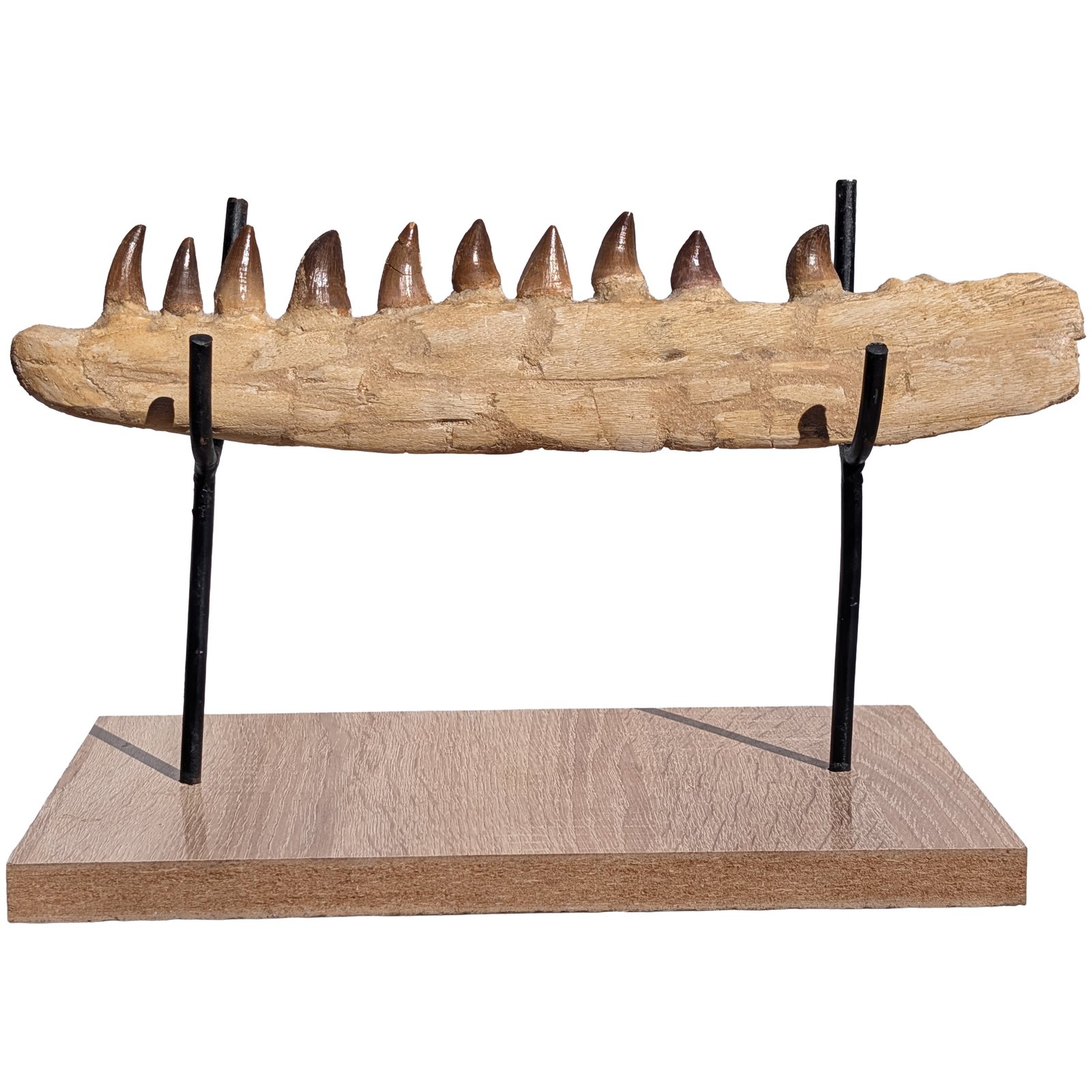
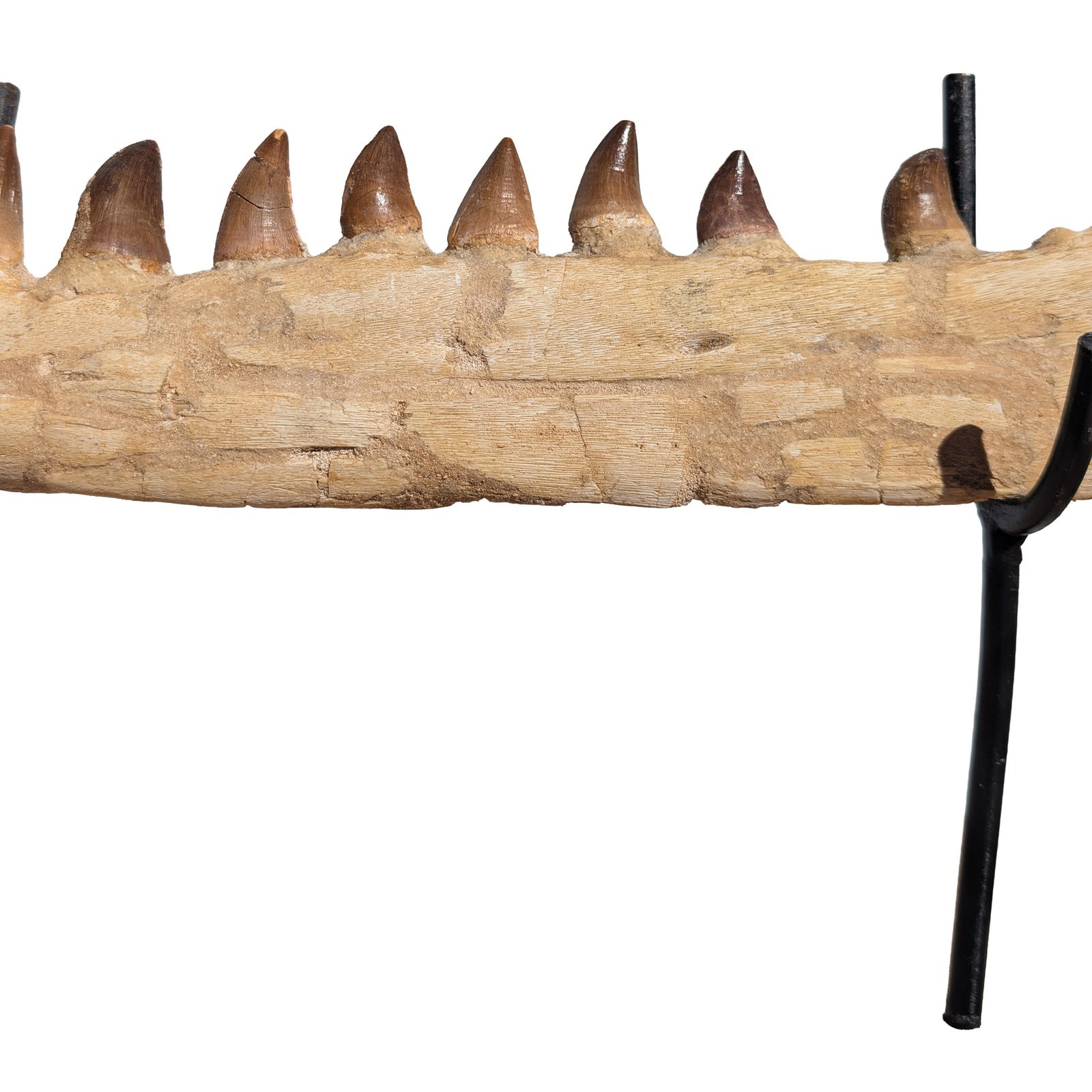
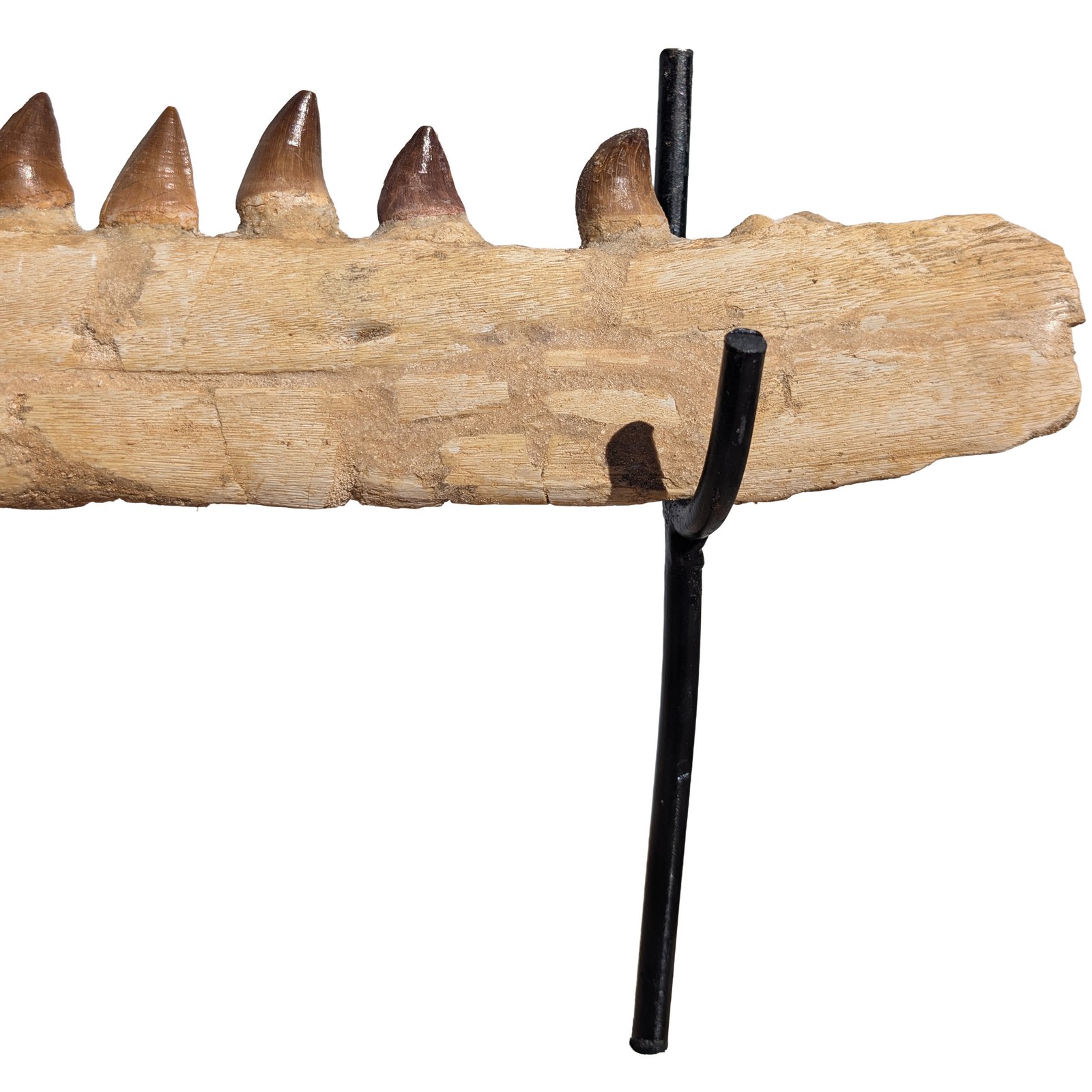
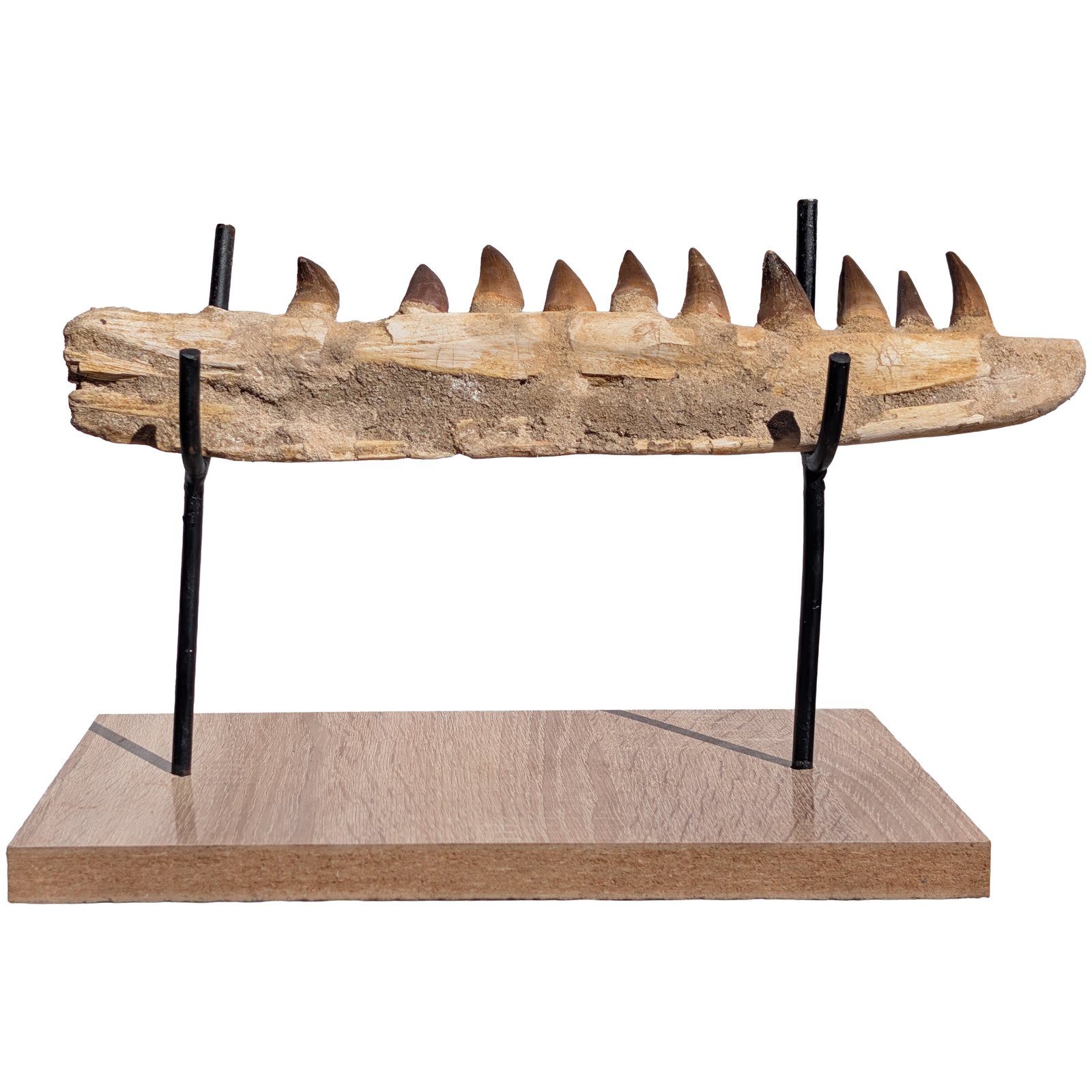
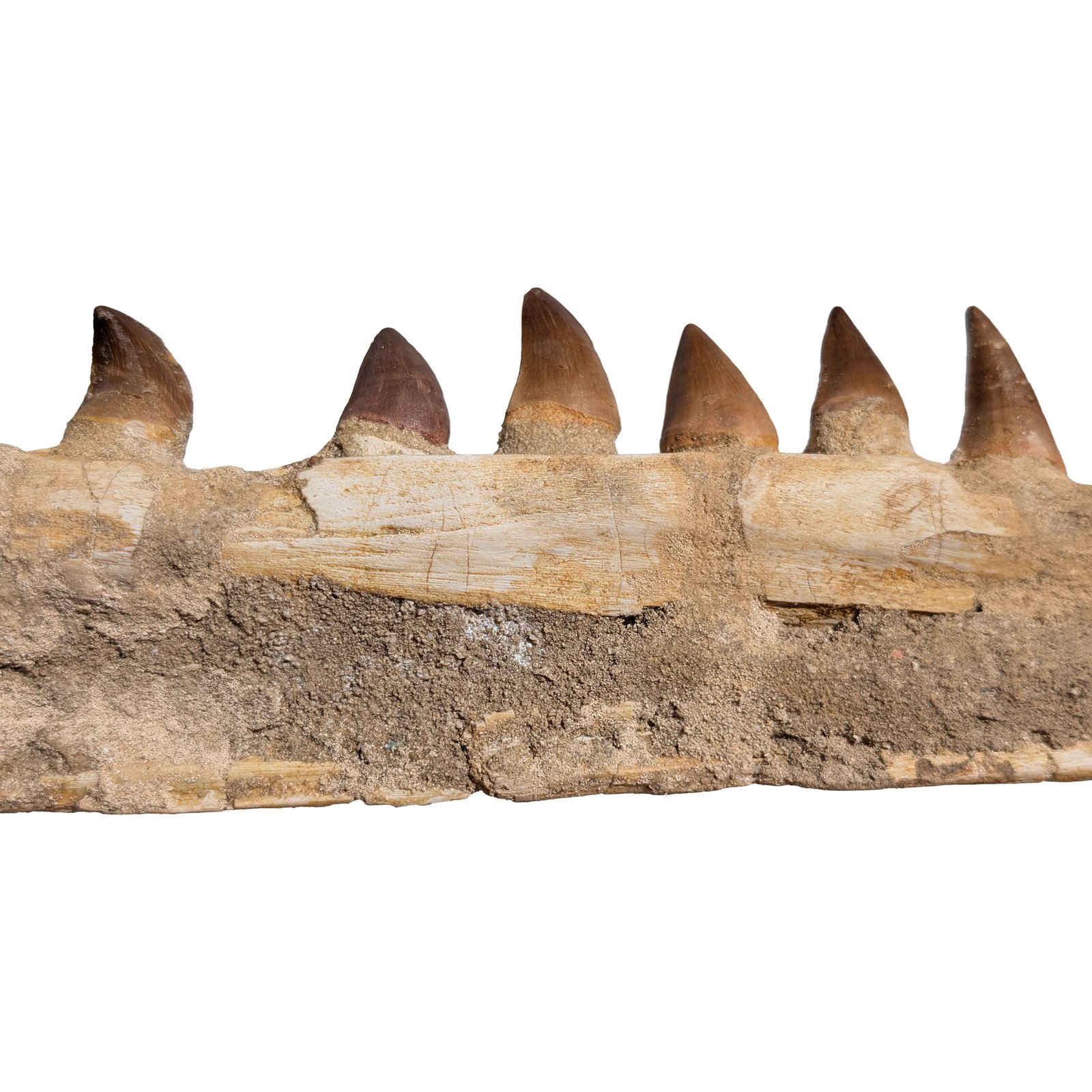
This Jaw Moroccan Mosasaur Display contains a preserved jaw section from a mosasaur. Mosasaurs were giant marine reptiles. They ruled the seas near the end of the dinosaur age. But they were not dinosaurs. They were more related to modern monitor lizards and snakes.
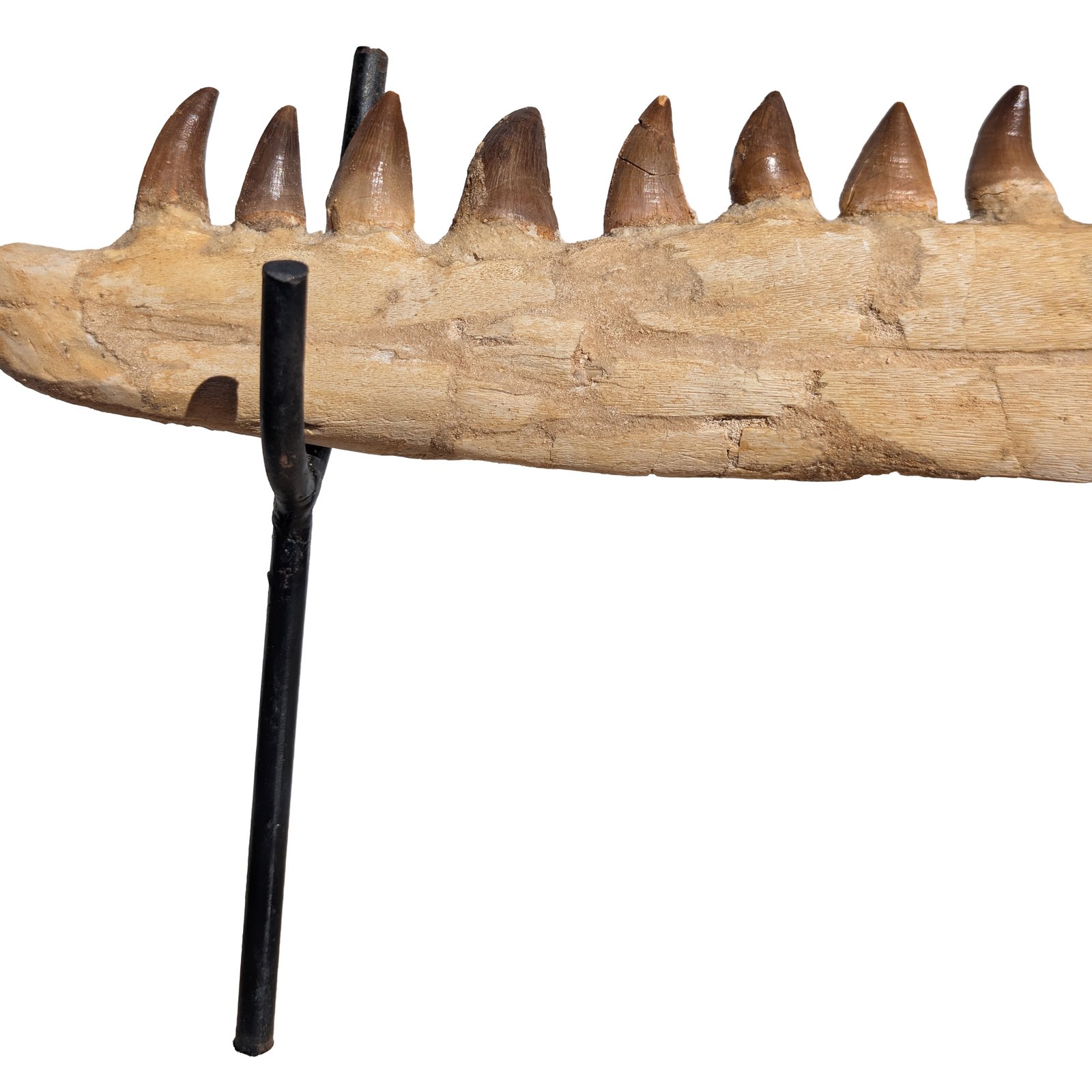
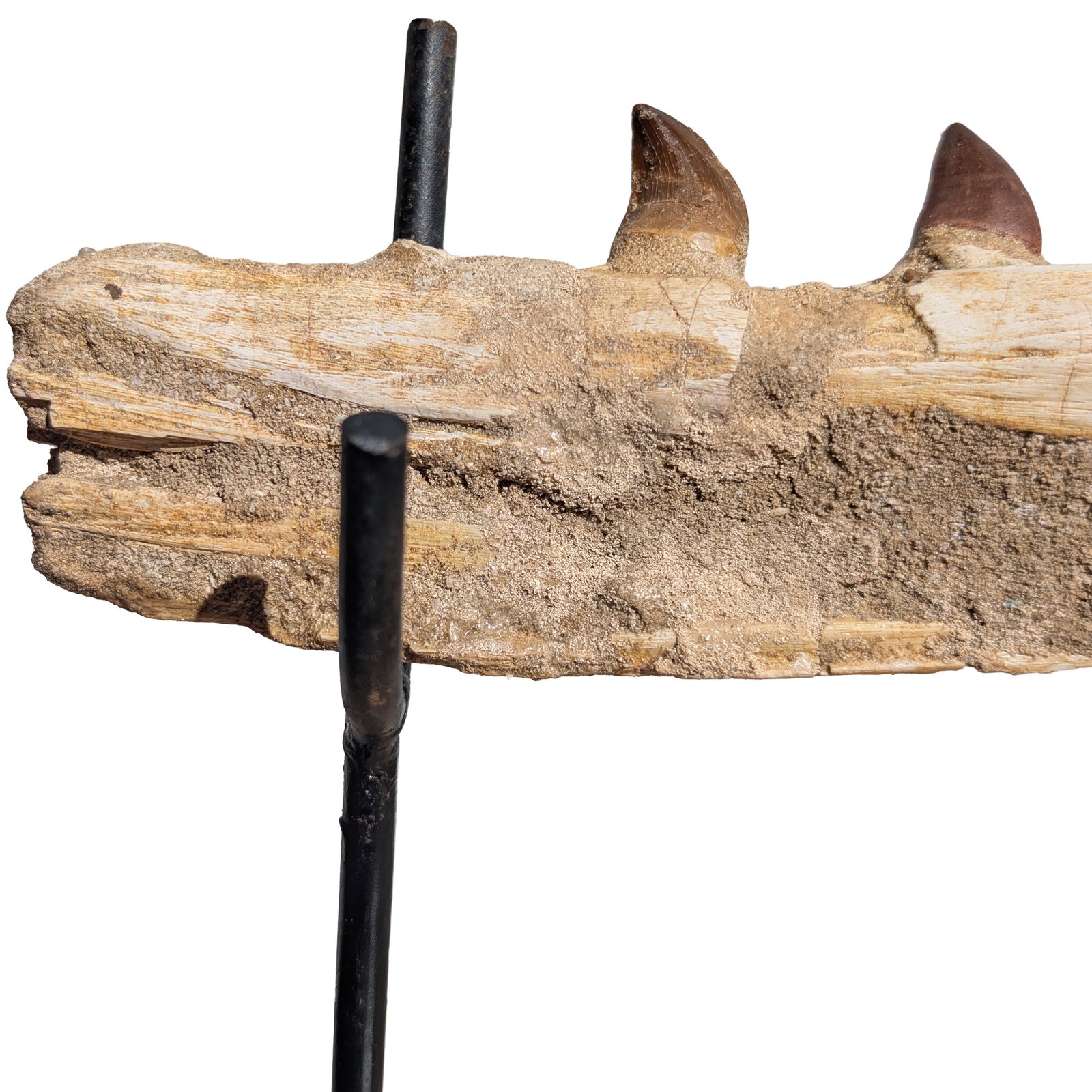
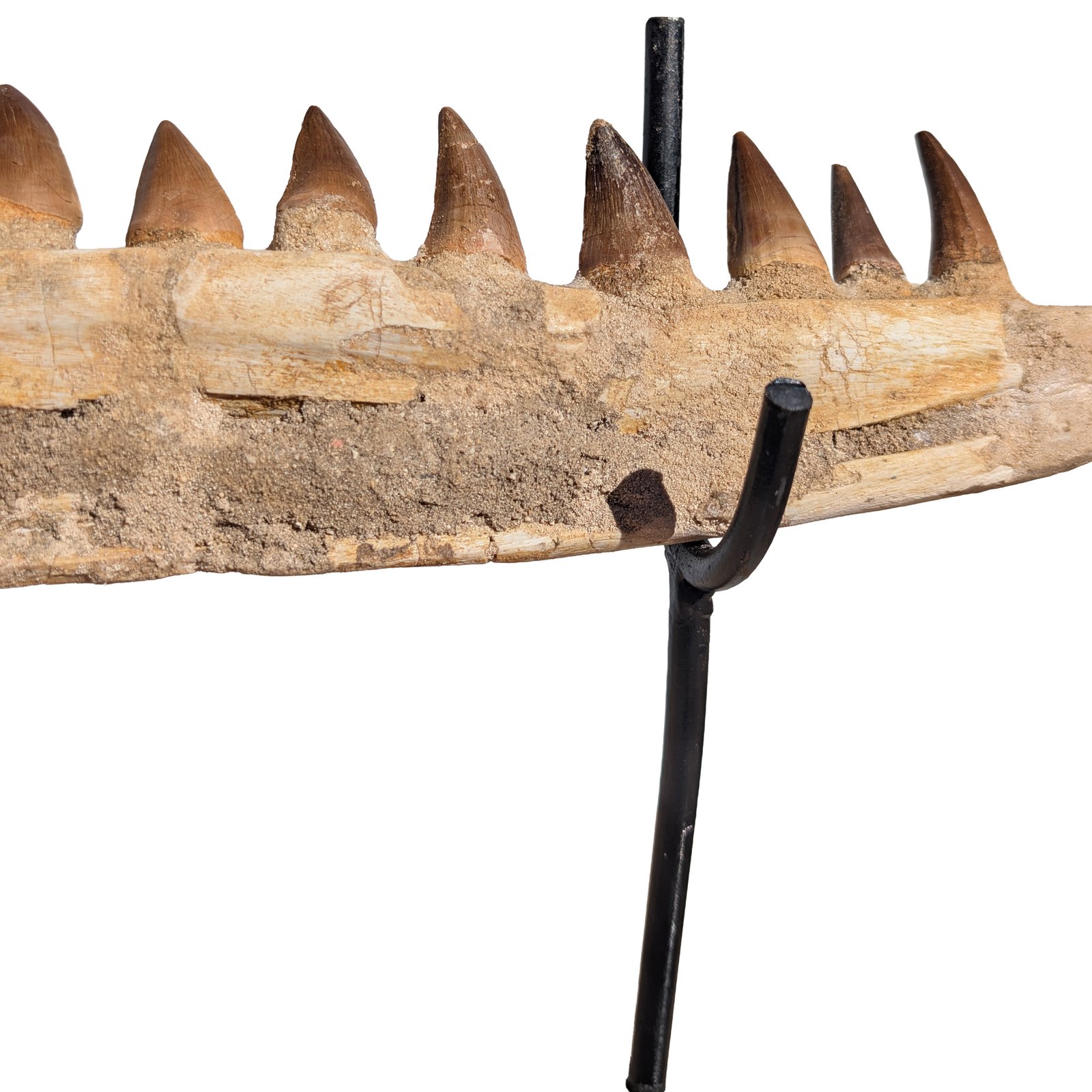
This fossil piece shows part of the lower jaw. Several teeth remain in place. The enamel still shines. But there is natural wear from millions of years underground. That adds character. And proof it is real.
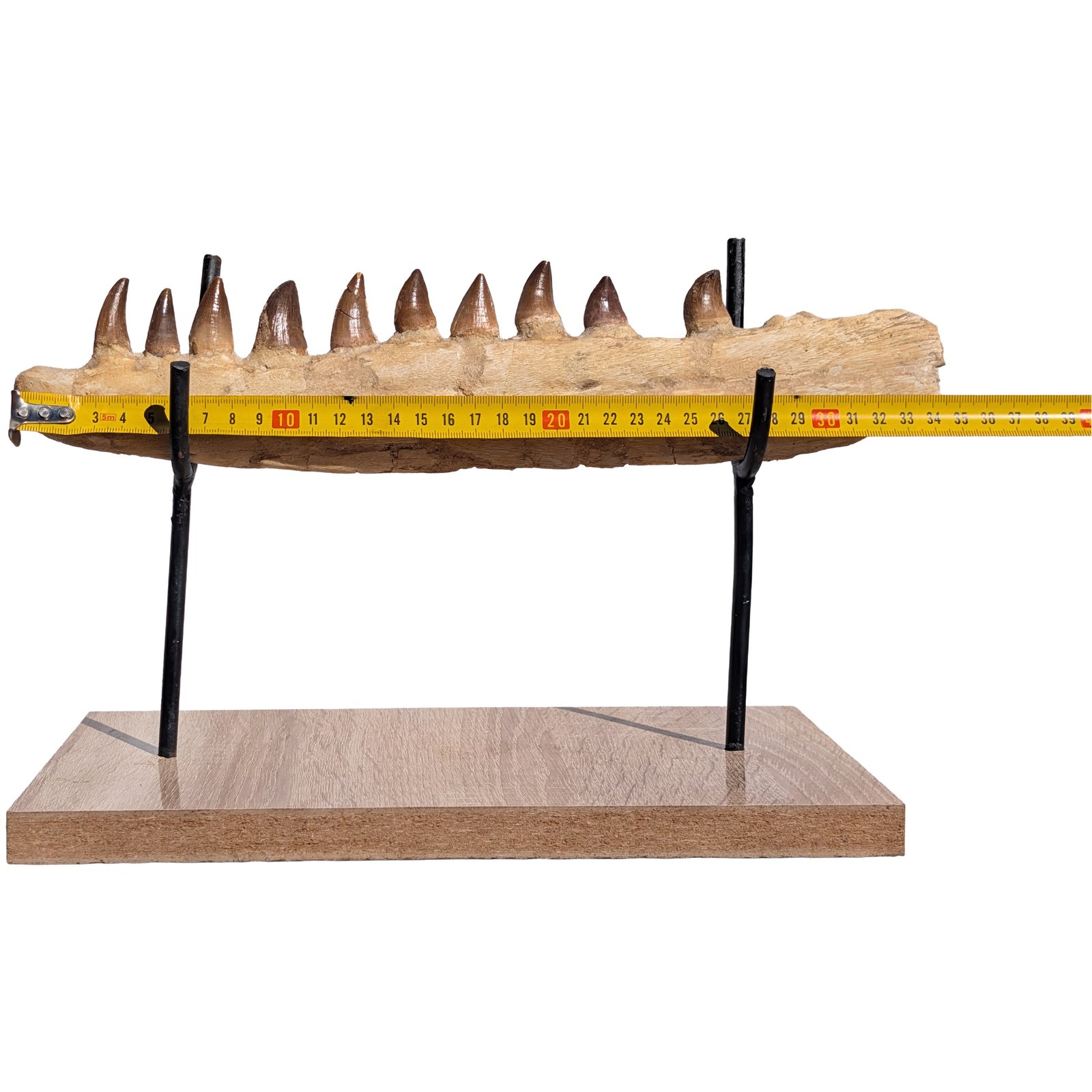
The bone matrix is natural marine phosphate rock. Common for fossils from Morocco. The fossil is cleaned and mounted for display. Stable base included. Easy to place on shelf or desk.
Each tooth has the classic mosasaur shape. Long. Slight curve. Sharp point. Built to grab fish and other sea animals. When mosasaurs hunted they snapped their jaws shut fast. Their teeth held prey so it could not escape.
The fossil dates to the Late Cretaceous period. Around 66 to 72 million years old. At that time a shallow sea covered much of North Africa. Many sea animals lived there. Fish. Sharks. Ammonites. And giant mosasaurs.
This display fossil comes from the Ouled Abdoun Basin in Morocco. One of the best fossil regions in the world. Fossils from this area are well known in museums and research collections.
Collectors often choose mosasaur fossils because they show the power of ancient sea predators. The jaw piece helps people see how the teeth sat in the bone. That detail makes it more educational than a loose tooth.
Shipping is protected and insured. Fossil packed with foam and sturdy box. If damage occurs in transit we replace or refund. Simple warranty. No stress.
You may also want to see our related item:
Internal Link: Mosasaur Tooth Fossil Collection
For more information about mosasaurs and marine reptiles visit:
External Resource: Natural History Museum Mosasaur Guide – https://www.nhm.ac.uk/discover/mosasaur.html
About the Mosasaur Sea Predator
Mosasaurs were giant marine reptiles that lived during the late Cretaceous period. They first appeared around 100 million years ago. Over time they became the top hunters in many ancient seas.
A full mosasaur could reach over 50 feet long. Some species even larger. Their body looked like a mix of a lizard and a crocodile. But built for ocean life.
They had a long powerful tail. This tail helped them swim fast. Their limbs changed into flippers. That allowed them to steer in water. The body shape helped them move like modern marine reptiles.
But the most famous feature was the jaw.
The mosasaur skull held long rows of sharp teeth. Teeth shaped like spikes. Perfect for grabbing slippery prey. Fish. Ammonites. Sea turtles. Even other mosasaurs sometimes.
The lower jaw had flexible joints. That allowed the mouth to open wide. Similar to snakes today. Some species also had extra teeth on the roof of the mouth. These teeth helped push food down the throat.
When mosasaurs hunted they relied on speed and surprise. They likely attacked from below. Then snapped their jaws shut around prey. Once caught the prey rarely escaped.
Many fossils of mosasaurs come from marine sediments around the world. But Morocco is one of the richest fossil locations. The phosphate mines there preserve bones and teeth very well.
Scientists study mosasaur fossils to learn about ocean life before the dinosaur extinction. Around 66 million years ago a mass extinction event wiped them out. The same event that ended the dinosaurs.
Today mosasaur fossils help us understand ancient oceans. They also show how reptiles adapted to life in water. A real jaw fossil like this one shows that history in a simple and clear way.
Features
Authentic mosasaur jaw fossil
Several natural teeth preserved in bone
Fossil from Moroccan phosphate beds
Late Cretaceous marine reptile specimen
Mounted display base included
Good educational fossil for classrooms
Each piece unique due to natural formation
Technical Specifications
| Specification | Details |
|---|---|
| Fossil Type | Mosasaur jaw section with teeth |
| Material | Fossilized bone and enamel |
| Size | Approx. 34 cm display piece |
| Estimated Age | 66–72 million years |
| Origin | Ouled Abdoun Basin, Morocco |