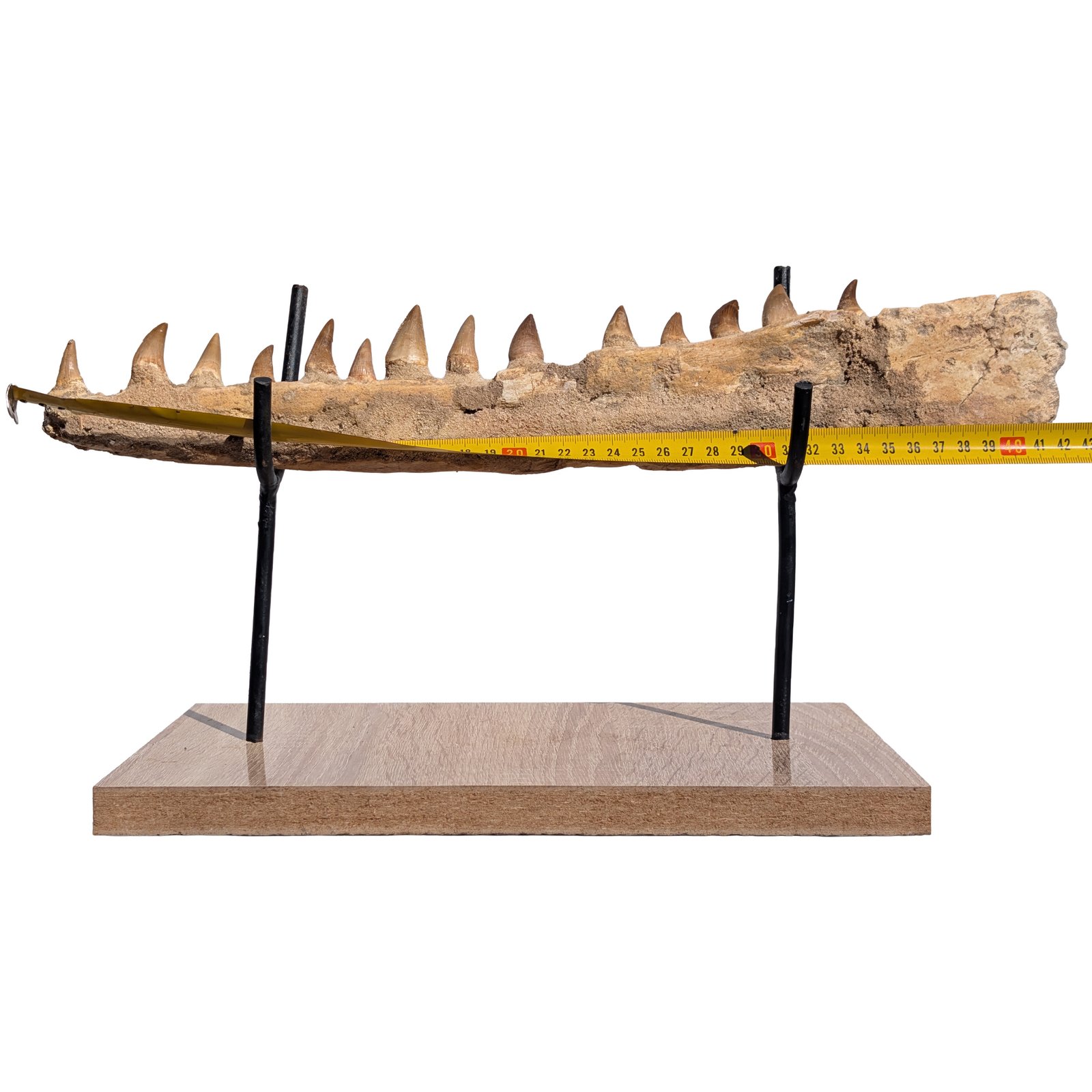

Mosasaur Jaw Display Piece Fossil Description
The Mosasaur Jaw Display Piece represents one of the most powerful marine predators of the Late Cretaceous period. Mosasaurs lived about 70 million years ago. They were large marine reptiles that ruled the seas at the end of the dinosaur age.
But mosasaurs were not dinosaurs.
They were actually related to modern monitor lizards and snakes. Their bodies adapted to ocean life. Long body. Strong tail. Paddle shaped flippers. A shape built for fast swimming.
Some mosasaurs reached lengths of 30 to 50 feet. A few species even larger. That made them some of the biggest predators in ancient oceans.
But the most important part of the animal was the jaw.
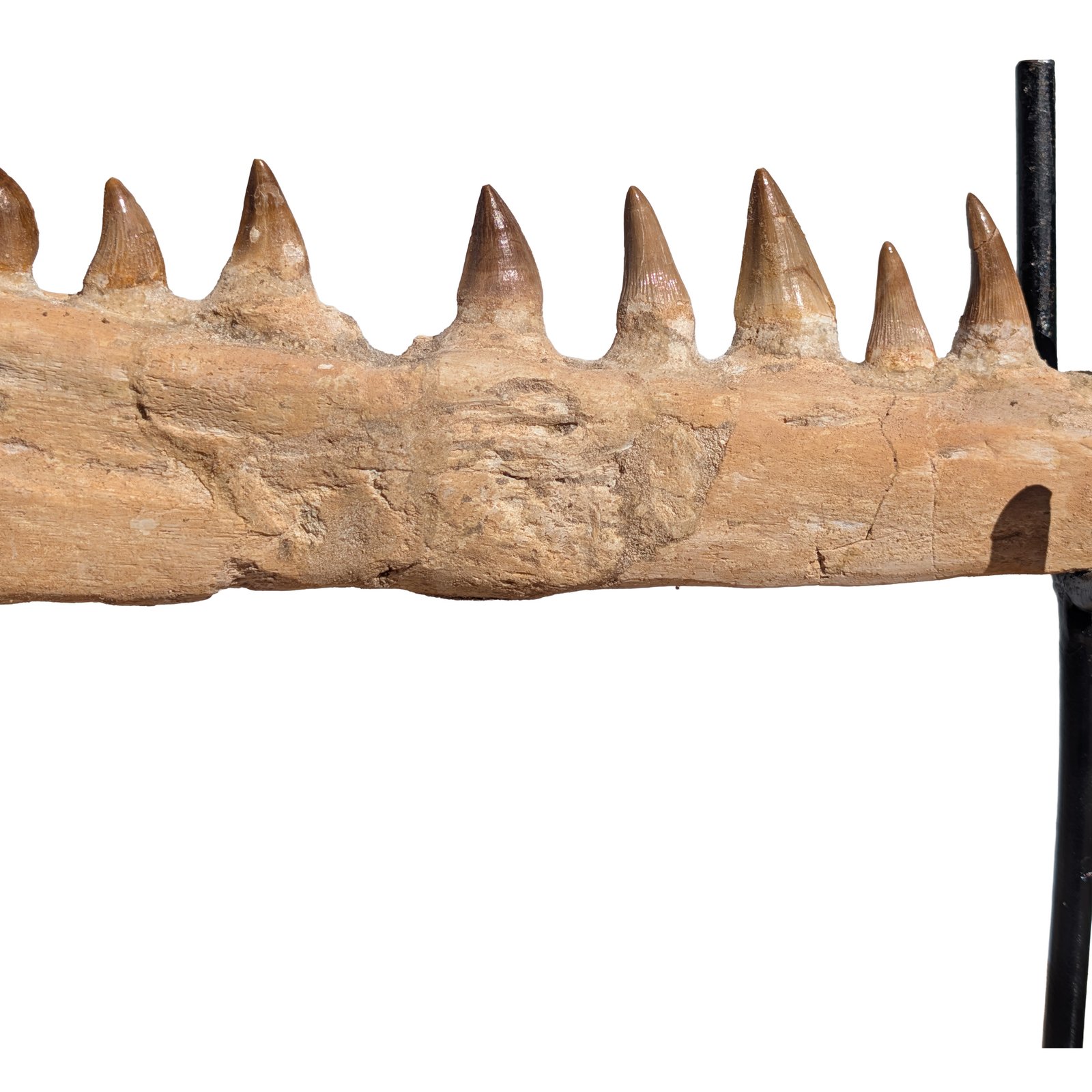
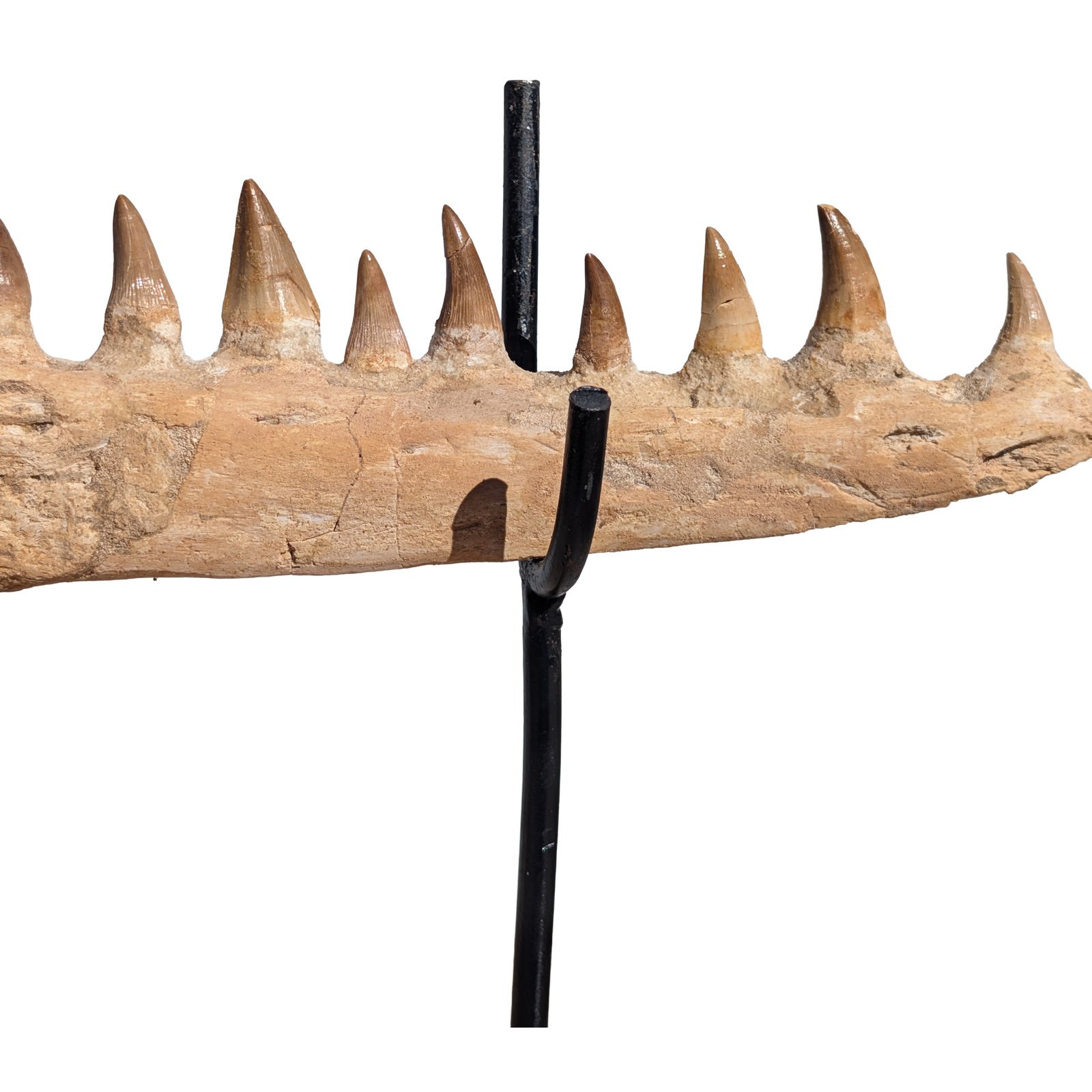
The mosasaur jaw held rows of long cone shaped teeth. Sharp tips. Slight curve backward. This helped trap prey once it was caught. Fish could not slip away. Squid could not escape.
But mosasaurs had another trick.
Inside the mouth. On the roof. They had a second set of teeth called pterygoid teeth. These helped pull prey deeper into the throat. A bit like the feeding system of snakes today.
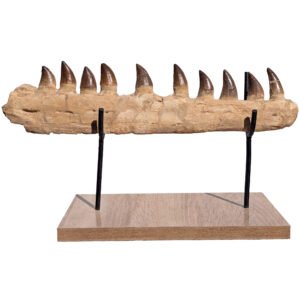
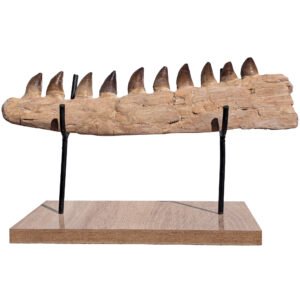
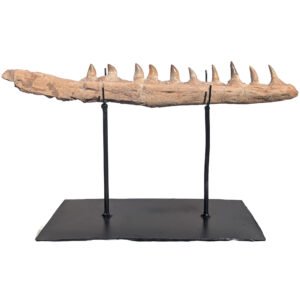
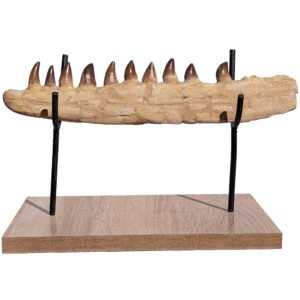
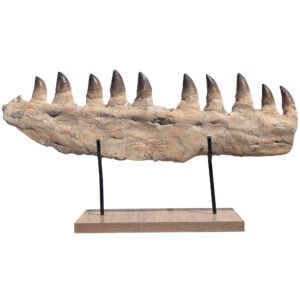
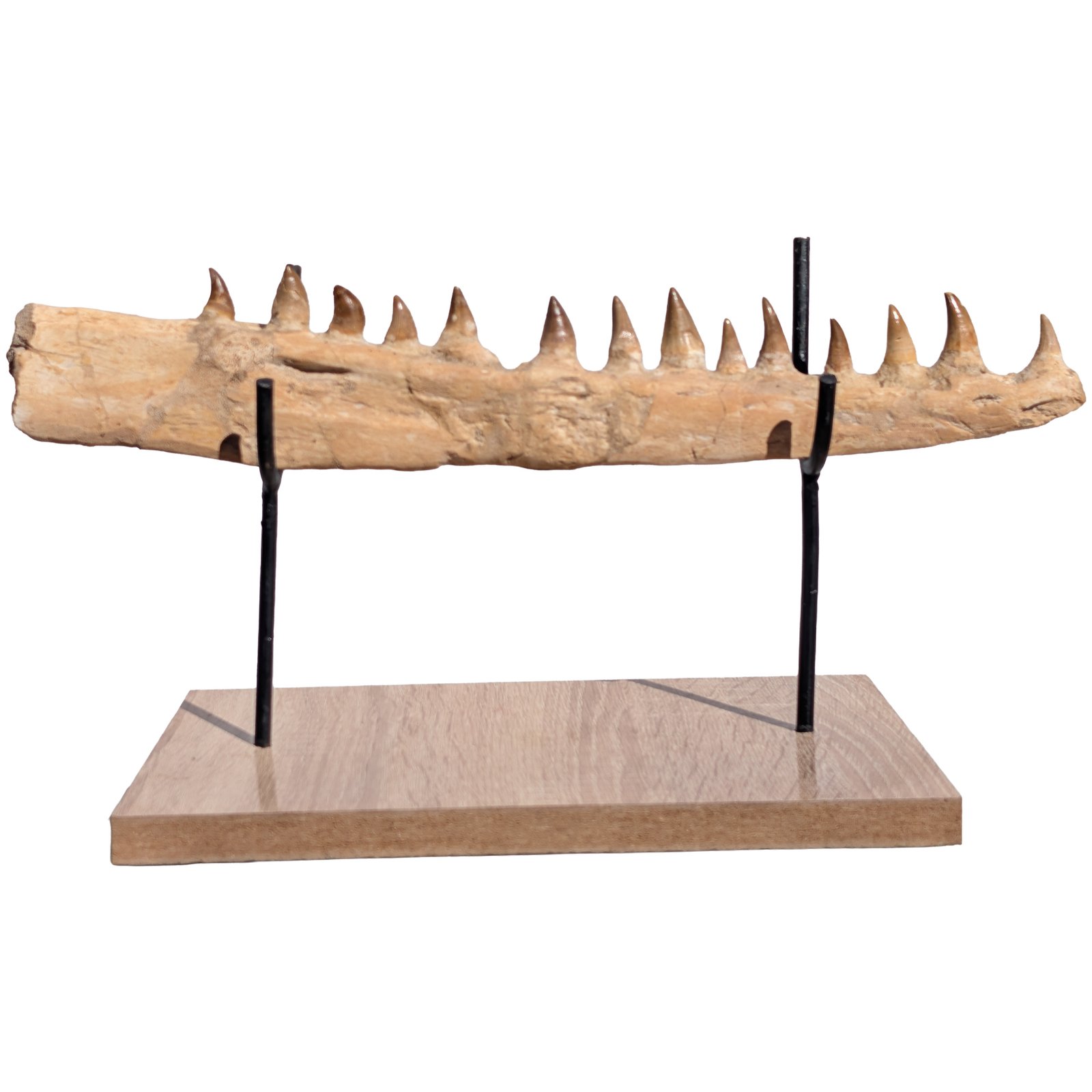
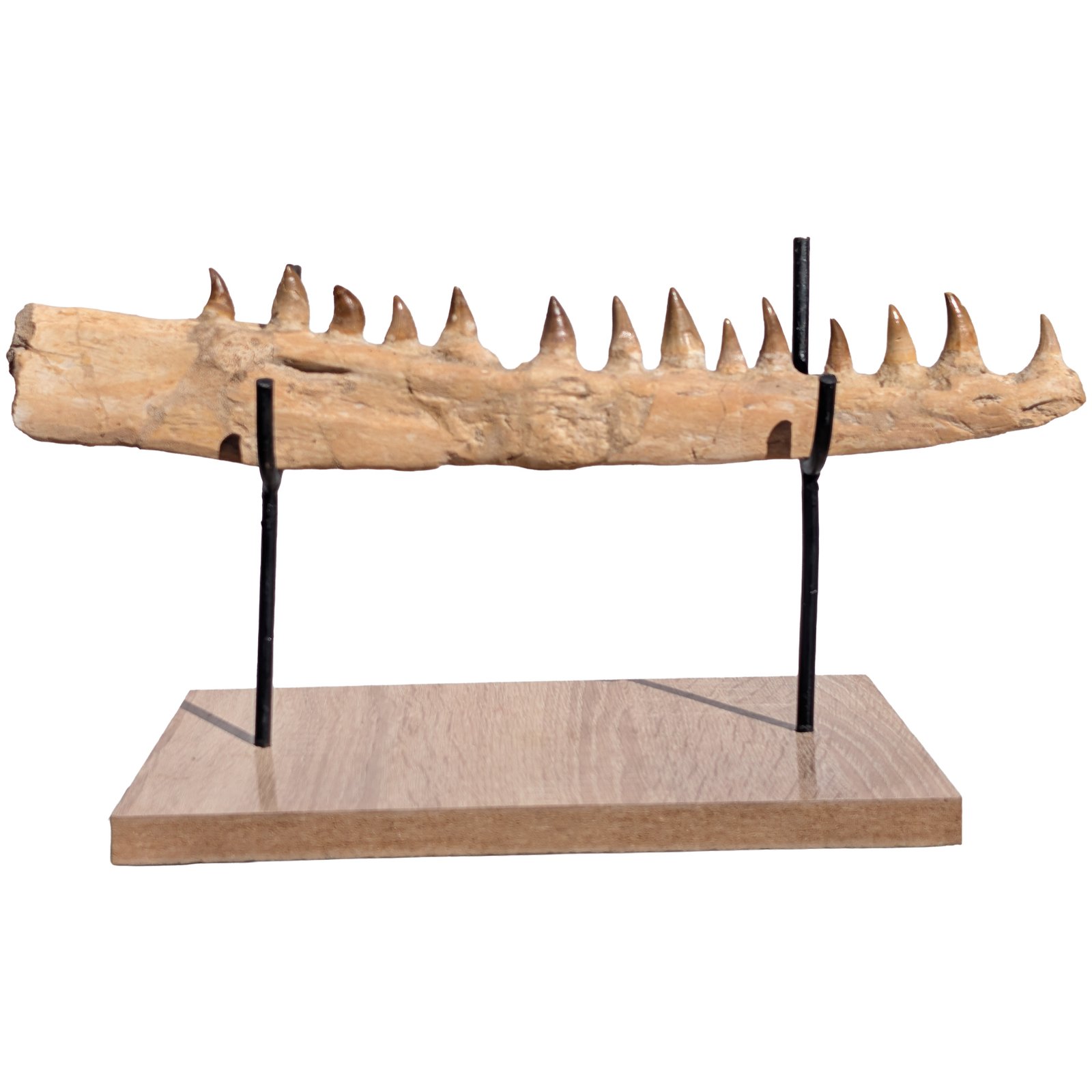
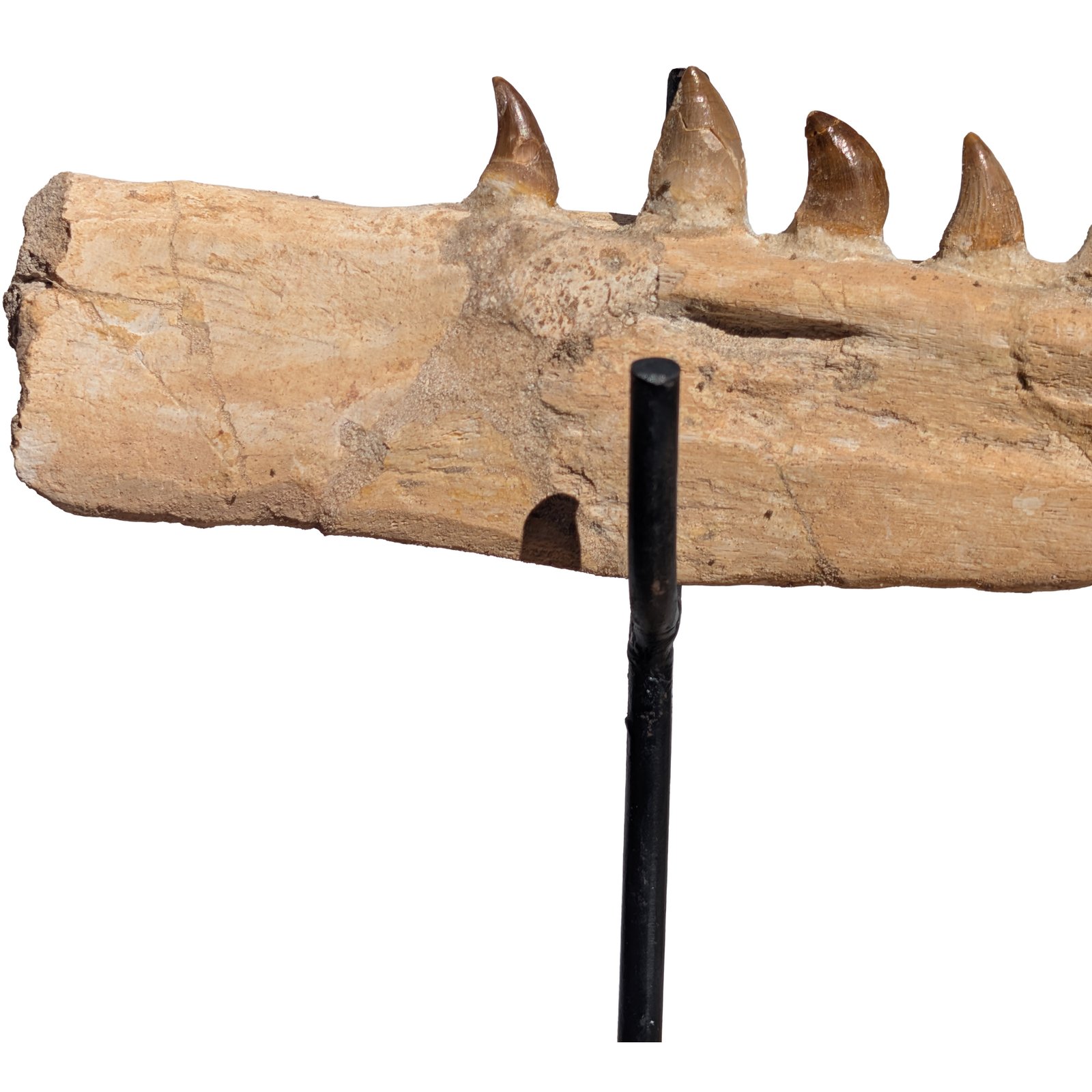
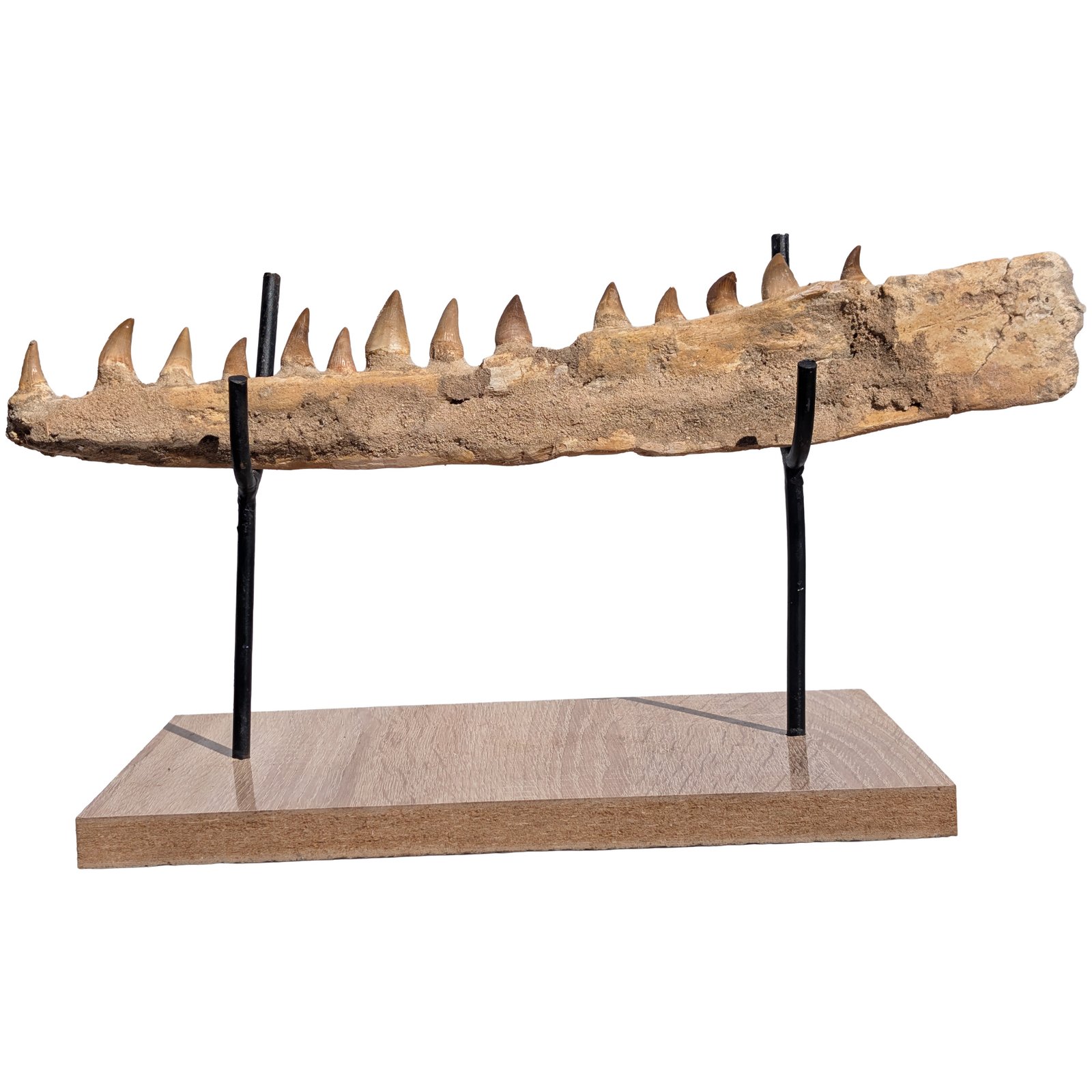
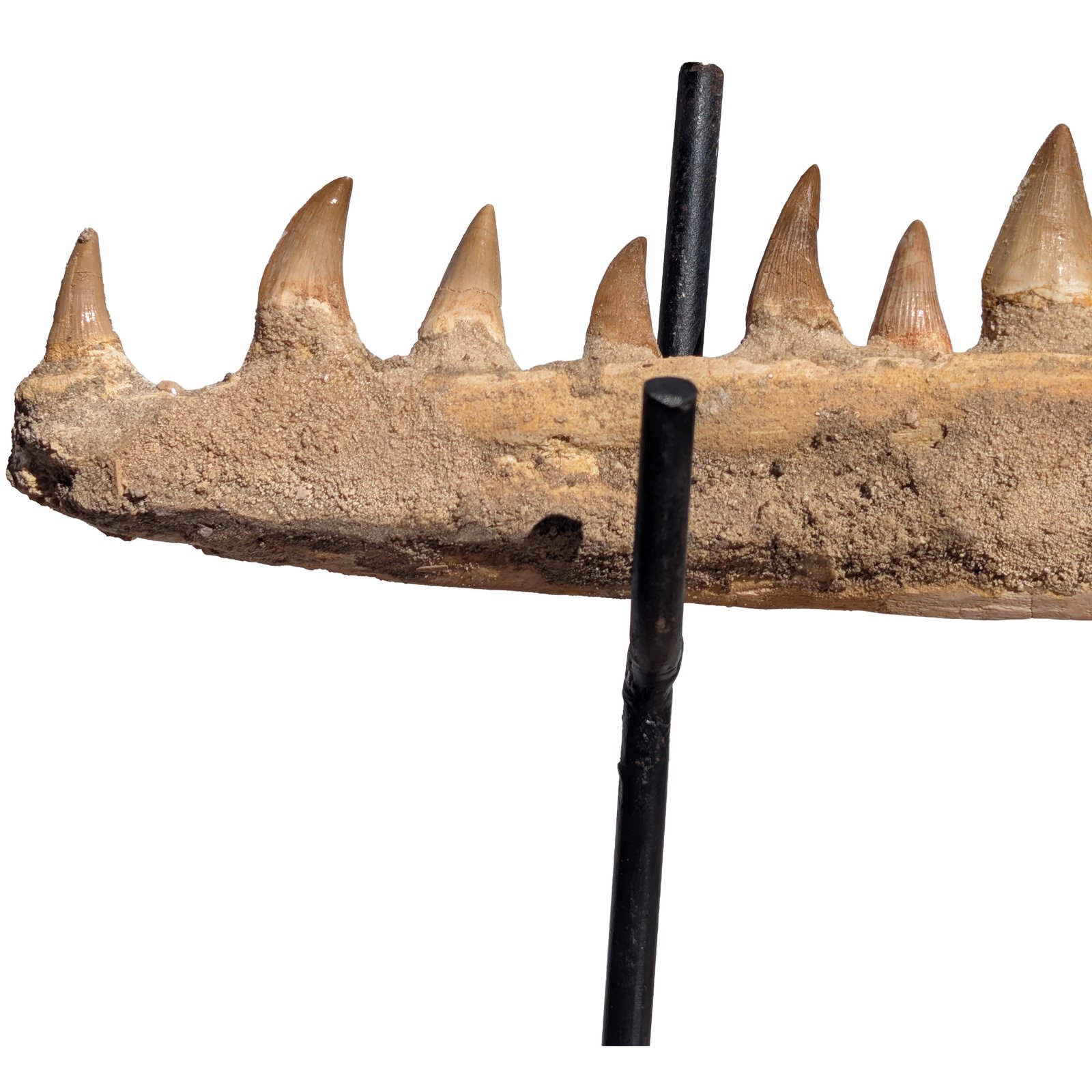
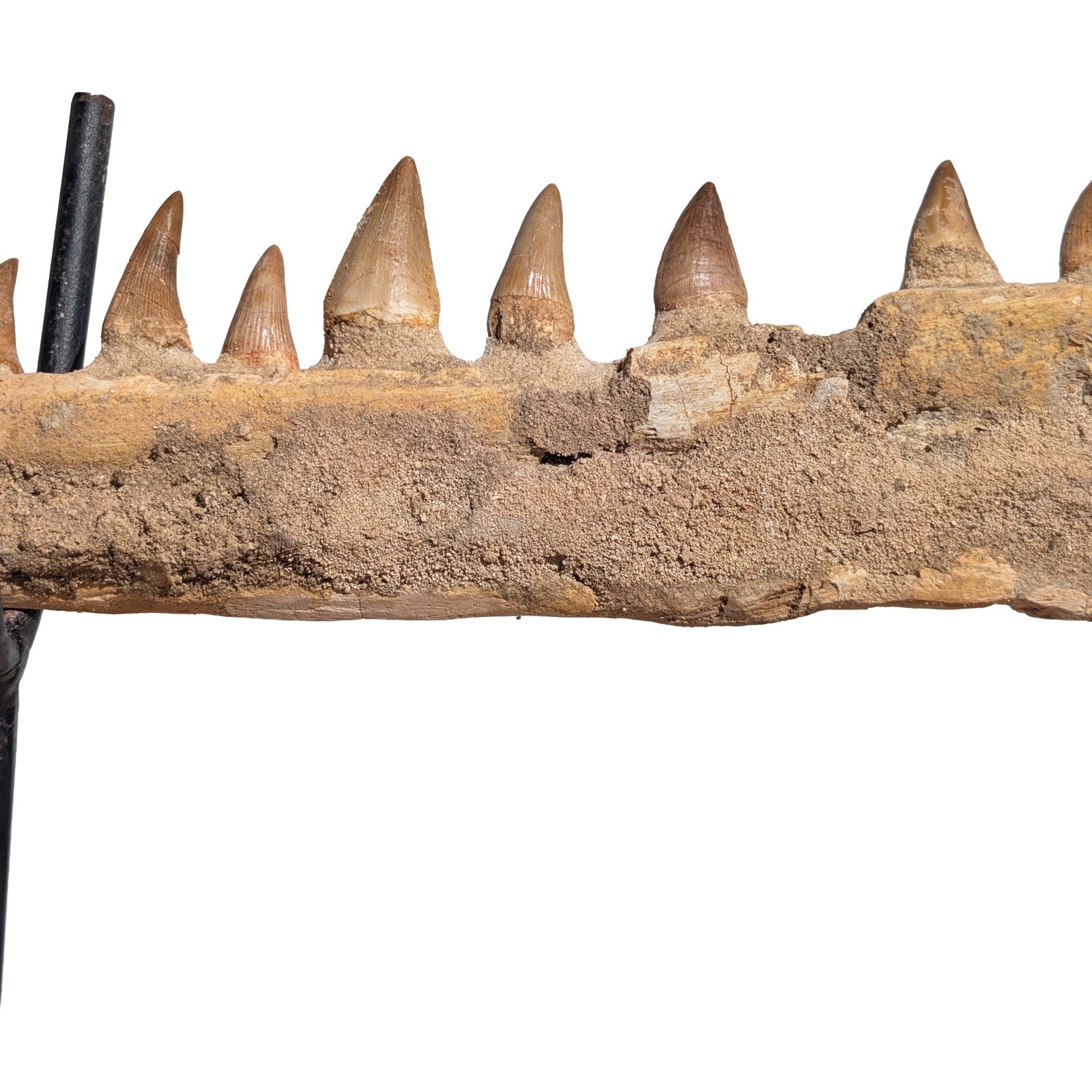
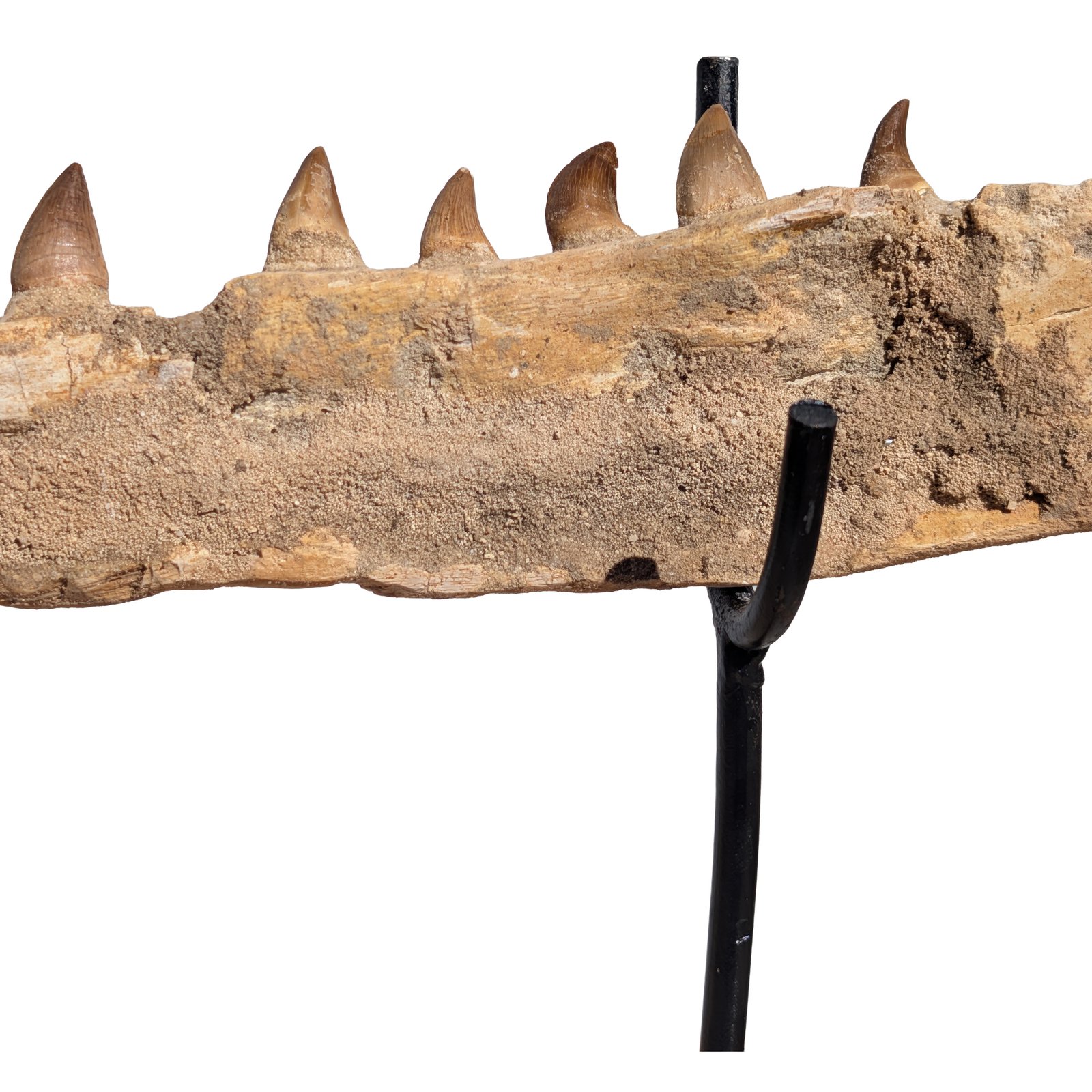
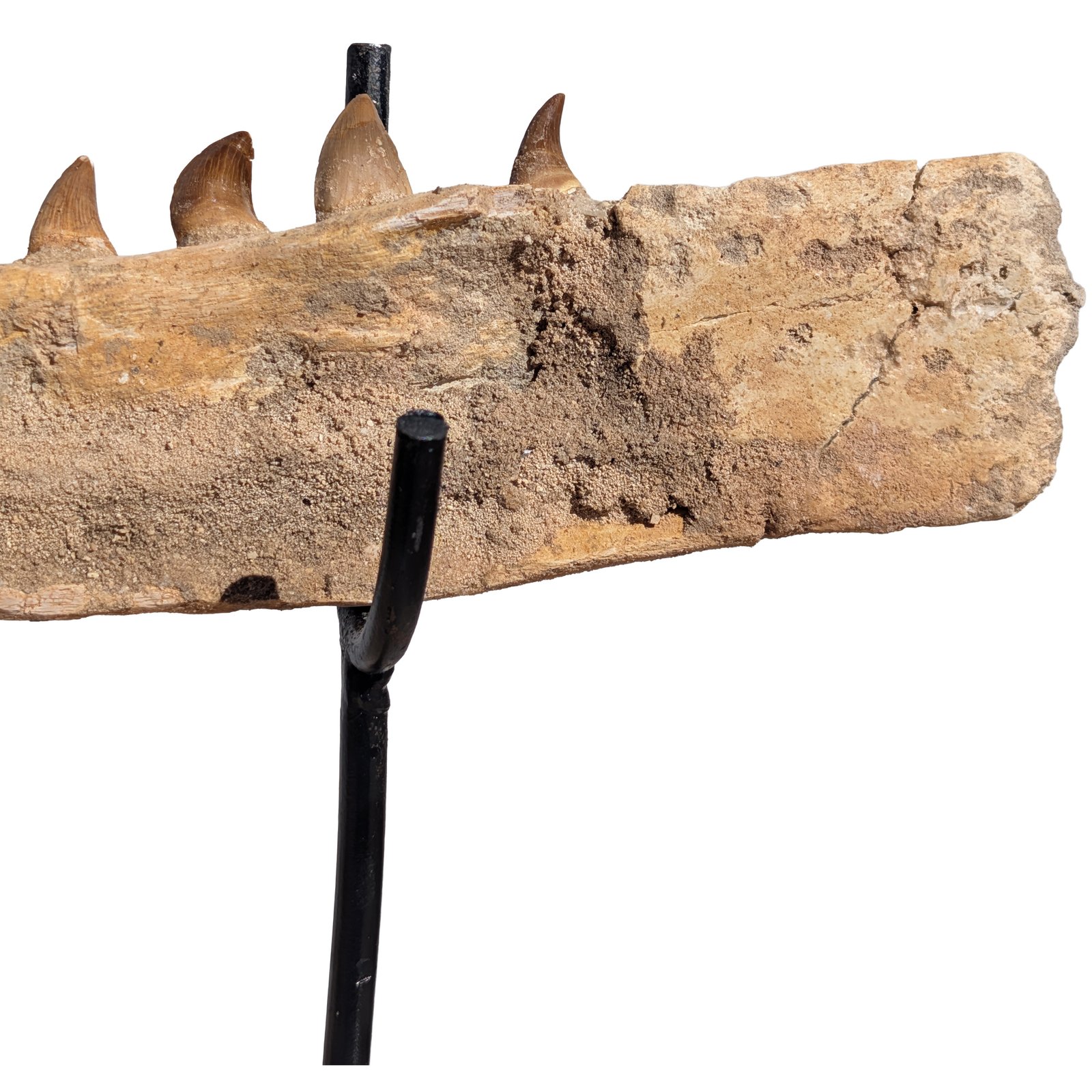
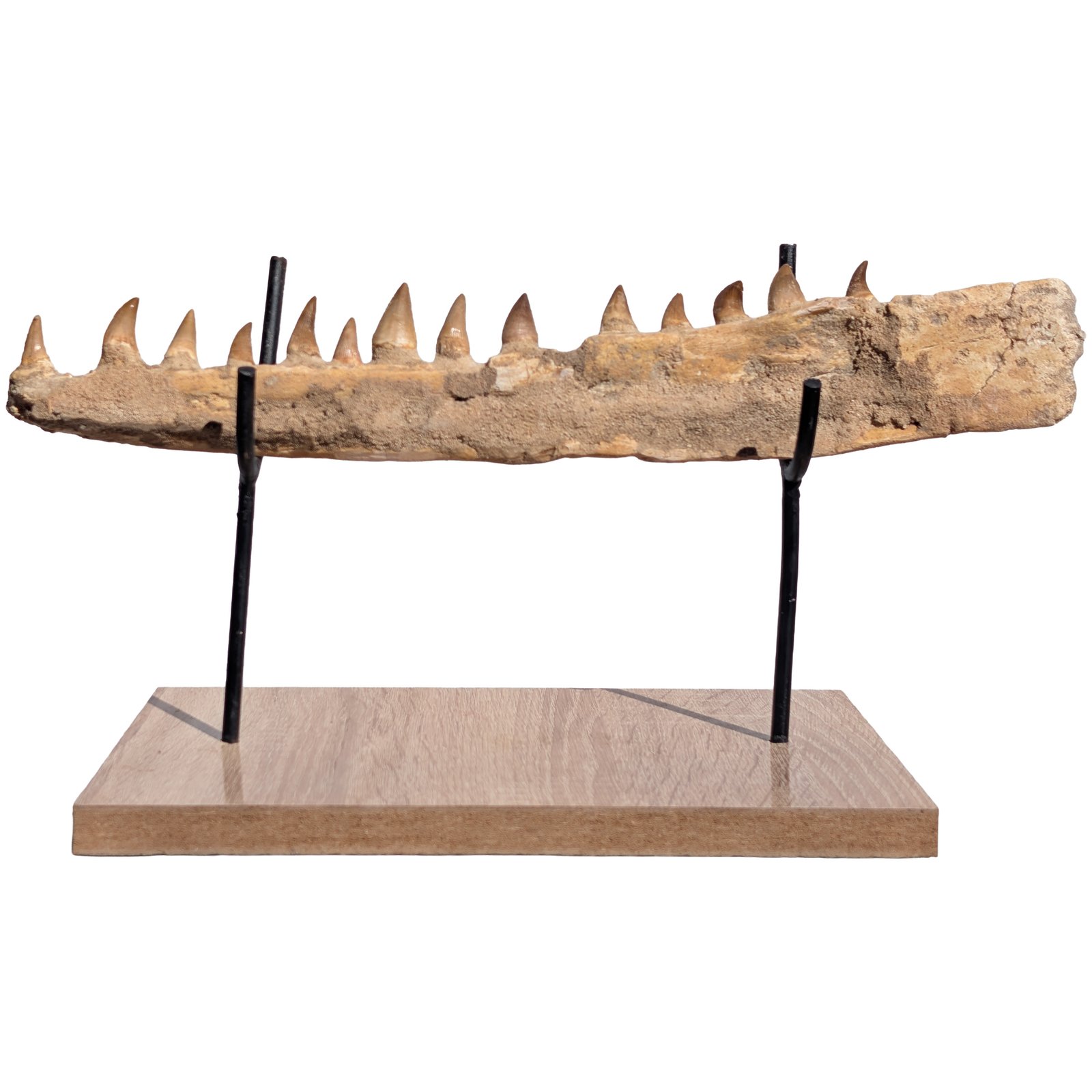
This Mosasaur Jaw Display Piece shows the thick lower jaw bone that supported those teeth. The bone is dense and strong. Built to handle large bites. Fossil teeth sit deep inside the bone sockets.
Many mosasaur fossils come from Morocco. Millions of years ago this region was covered by shallow tropical seas. Marine animals lived in large numbers. Fish. Ammonites. Marine reptiles.
When a mosasaur died its body sank to the sea floor. Sediment slowly covered the bones. Over millions of years minerals replaced the original bone material. The fossil turned to stone.
This fossil jaw piece still shows the natural bone texture. Tooth roots remain visible. Some crowns show wear from ancient feeding.
Mosasaurs hunted a wide range of prey. Fish. Squid. Ammonites. Sea turtles. Even other mosasaurs in some cases. Bite marks on fossils prove this.
Because of their size and feeding ability they were top predators of their environment.
Today mosasaur fossils are displayed in many natural history museums. They help scientists understand marine reptile evolution and prehistoric ocean ecosystems.
If you want to learn more about mosasaurs and marine reptiles you can visit the Smithsonian Ocean Portal
https://ocean.si.edu
Display and Preservation
This Mosasaur Jaw Display Piece has been carefully prepared for display. Loose sediment removed. Bone stabilized. Natural fossil surface preserved.
But the fossil still keeps its natural appearance. No heavy reconstruction. What you see is the real fossil structure.
Ships in protective packaging to prevent damage during transport. Each fossil is unique. Tooth position and bone shape may vary slightly.
Authenticity guaranteed.
Want to explore more marine predator fossils?
Internal Link: Browse our Mosasaur Fossils Collection
Key Features
Authentic Mosasaur Jaw Display Piece fossil
Real fossilized jaw bone with preserved teeth
Marine reptile from the Late Cretaceous period
Natural fossil surface with visible bone texture
Prepared and stabilized for display
Ideal for fossil collectors or classroom study
Each specimen unique in tooth placement and shape
Technical Specifications
| Feature | Details |
|---|---|
| Fossil Type | Mosasaur Jaw Fossil |
| Material | Fossilized Bone and Teeth |
| Size | Approx. 42 cm |
| Estimated Age | About 70 million years |
| Origin | Morocco |
| Geological Period | Late Cretaceous |