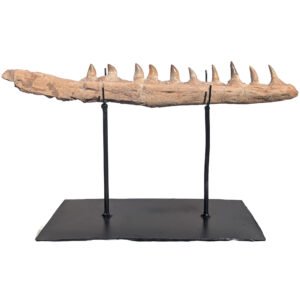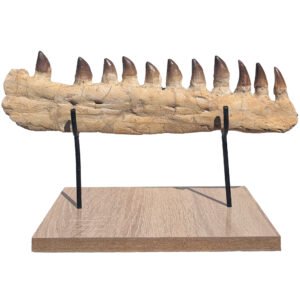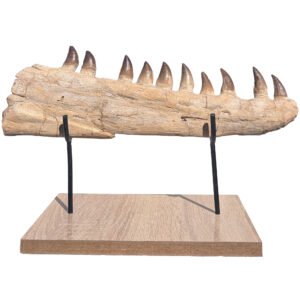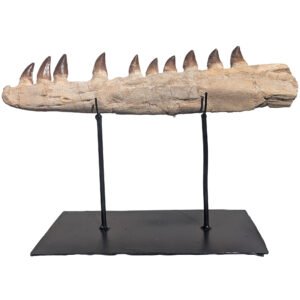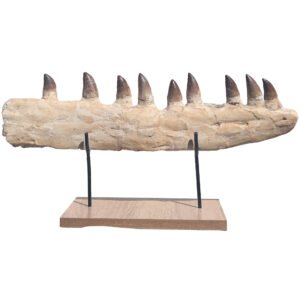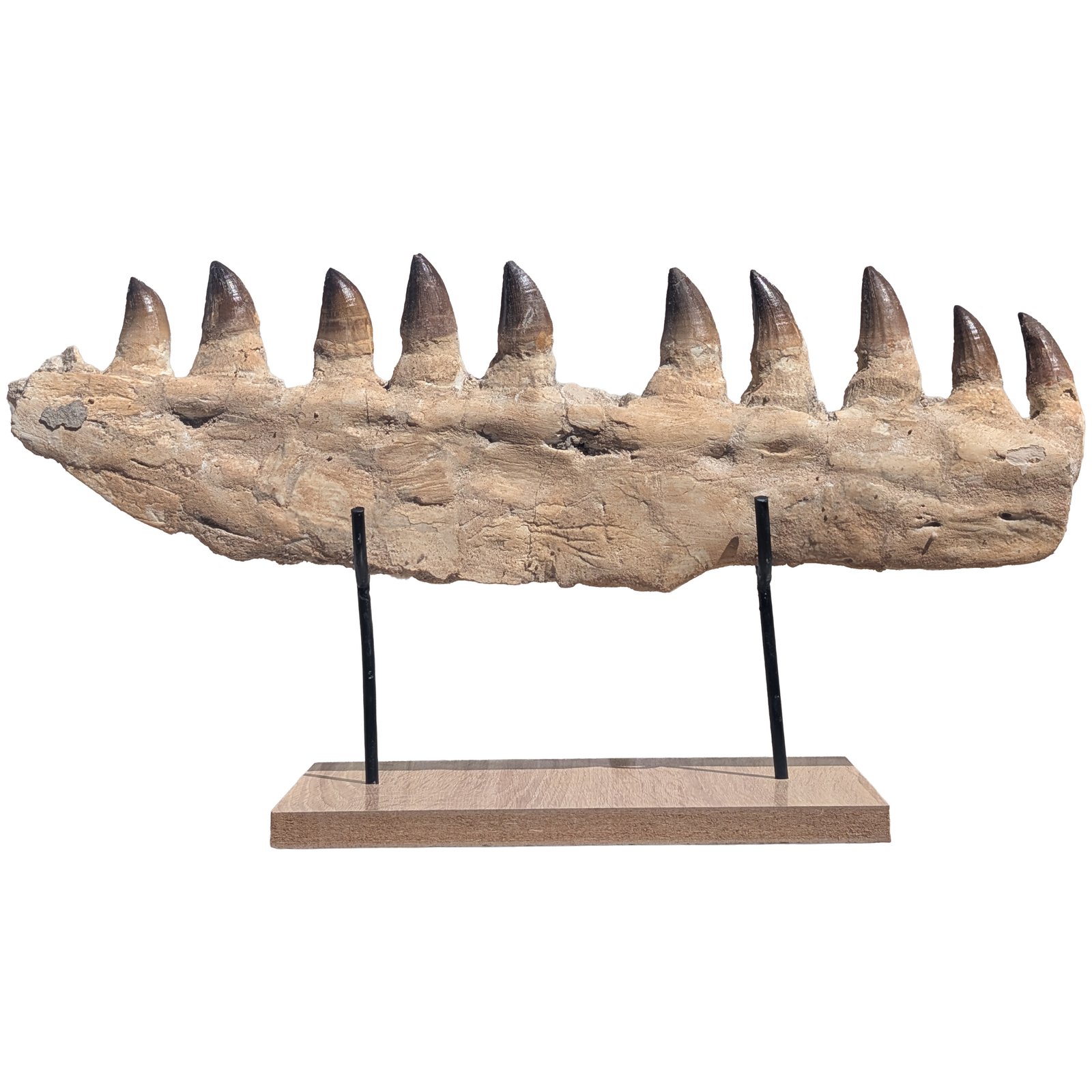
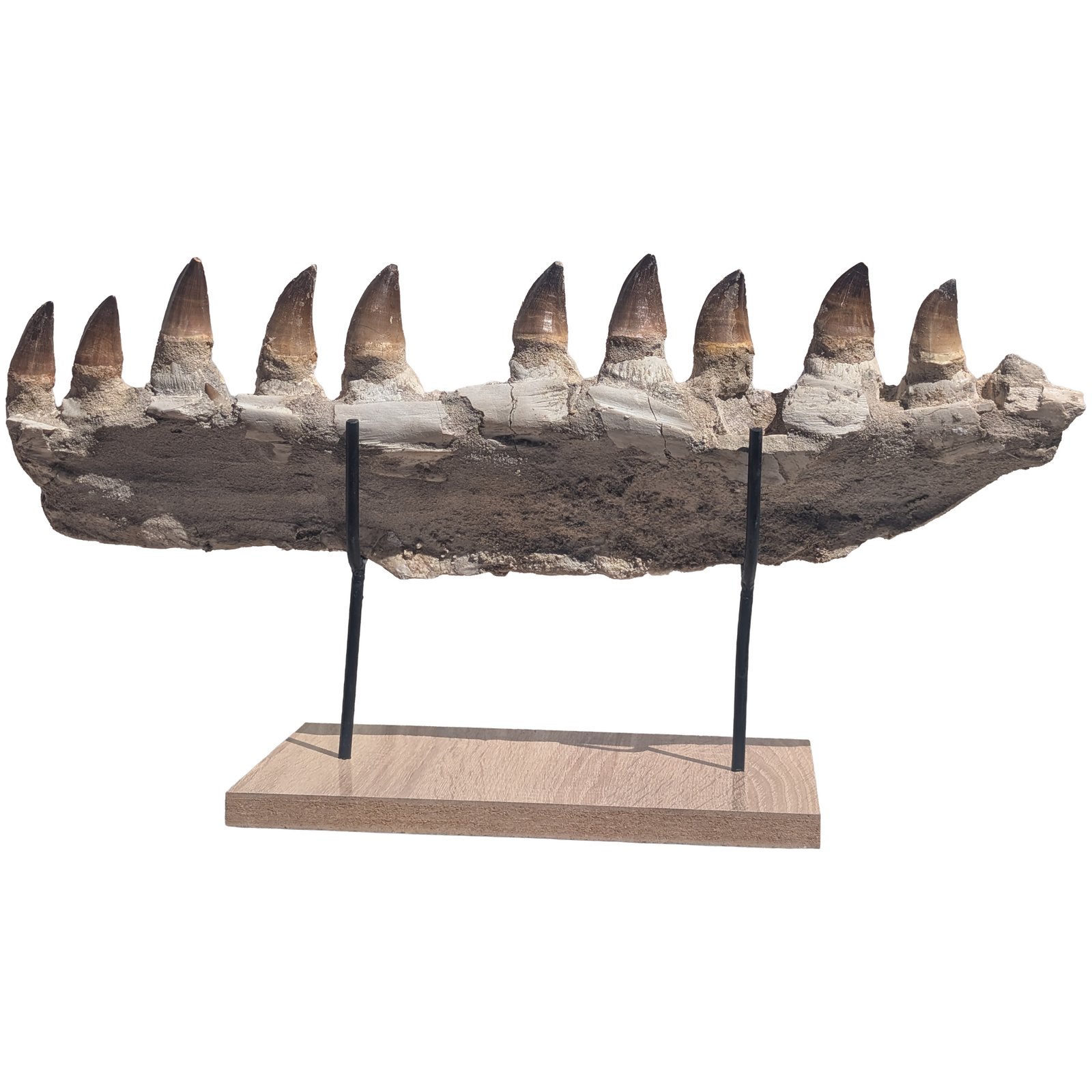
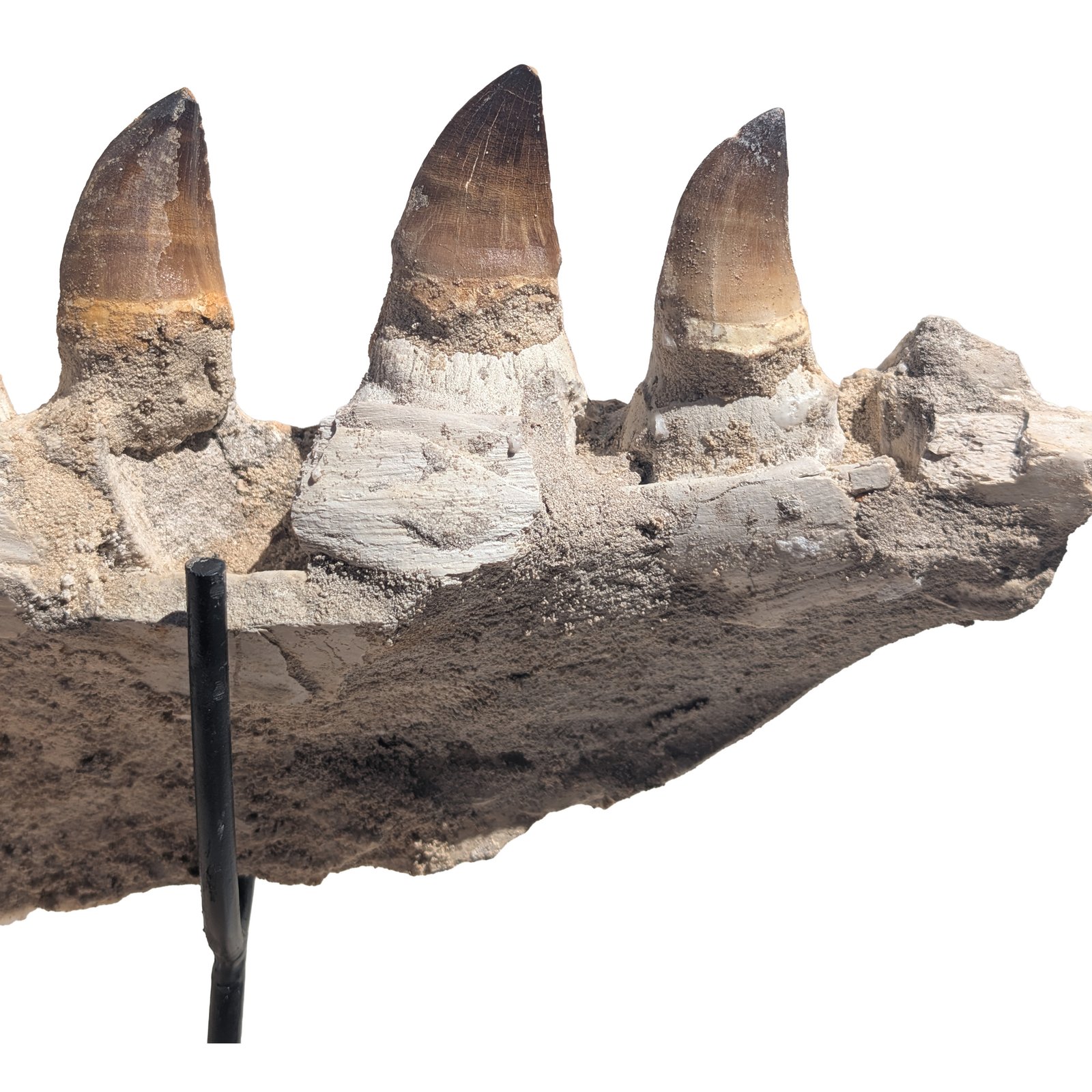
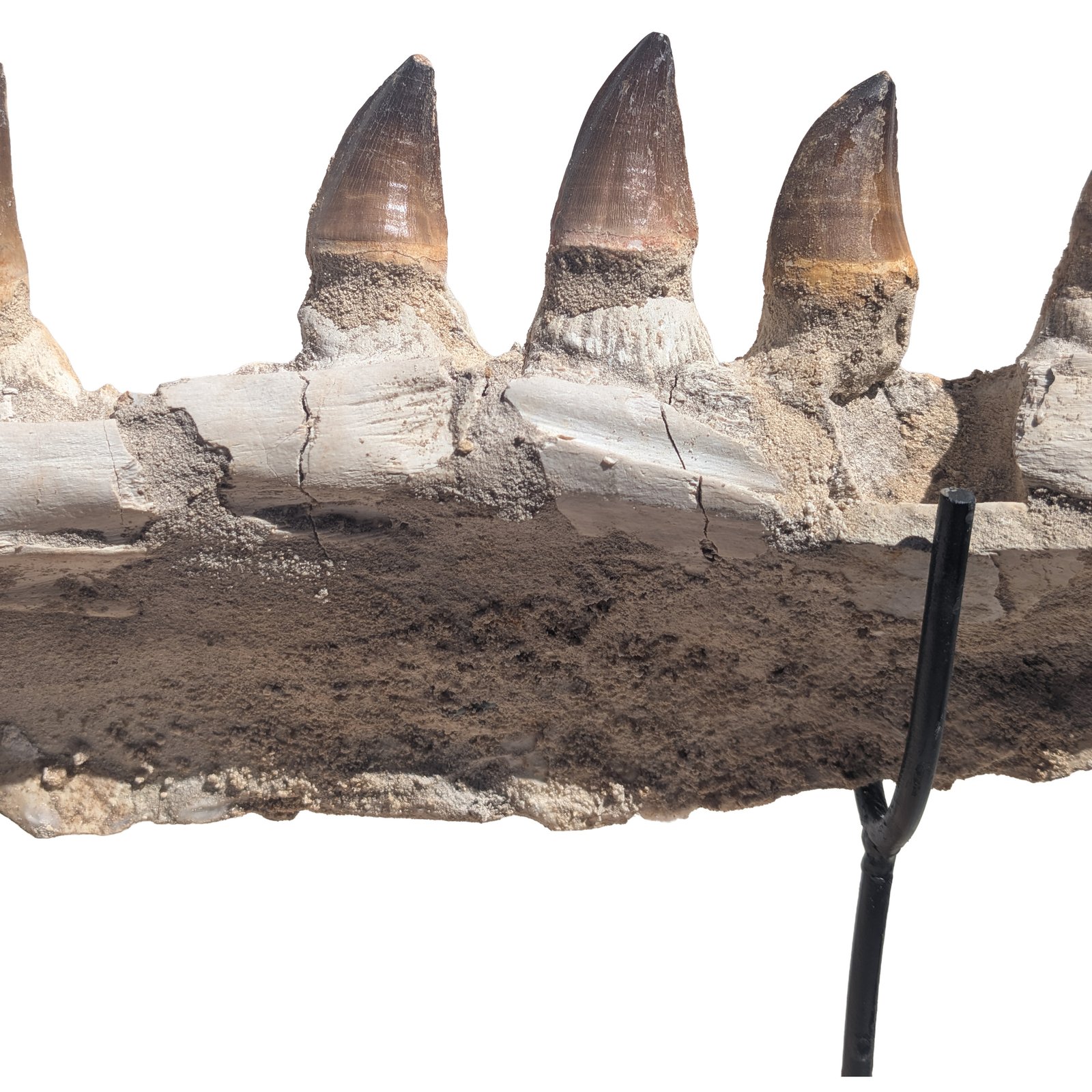
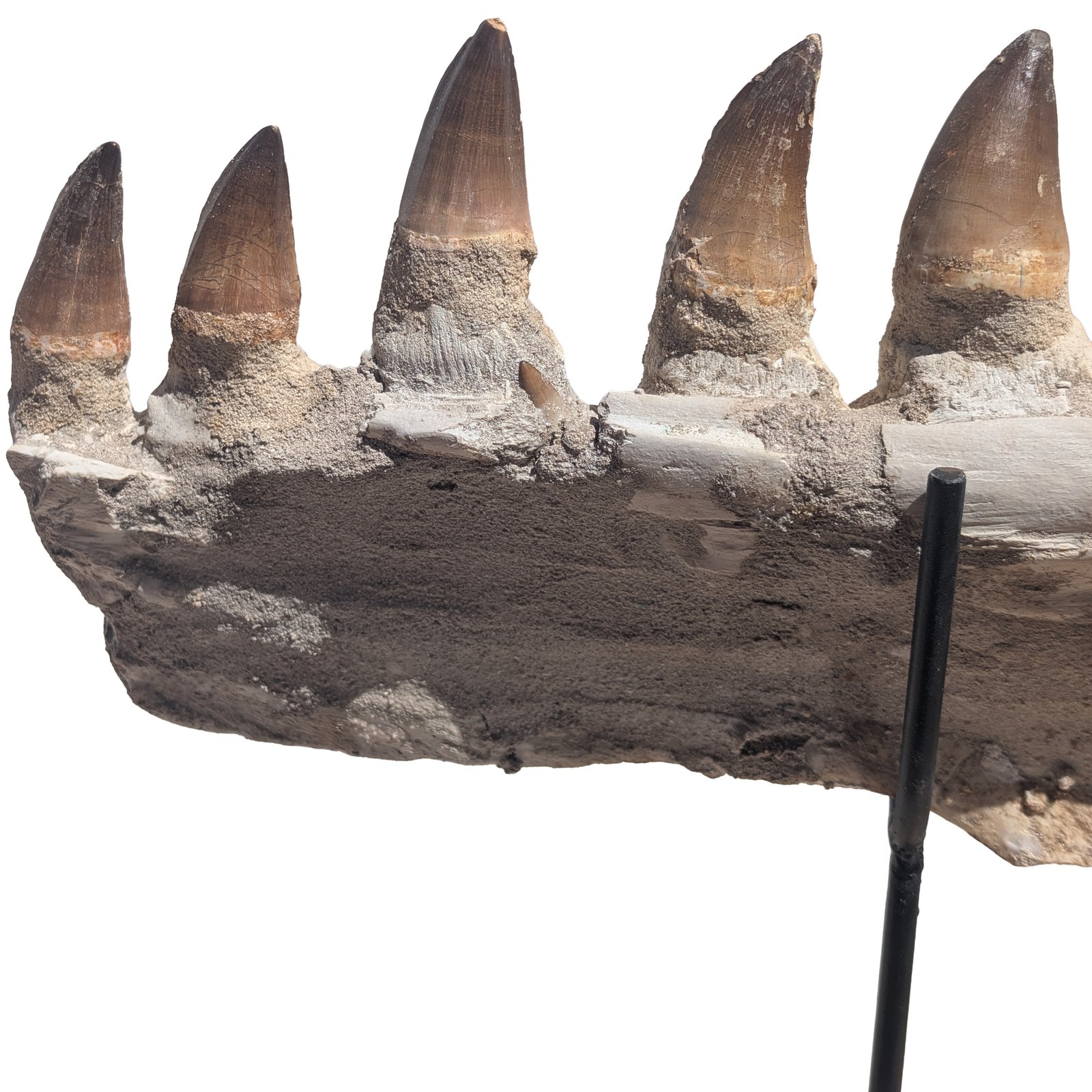
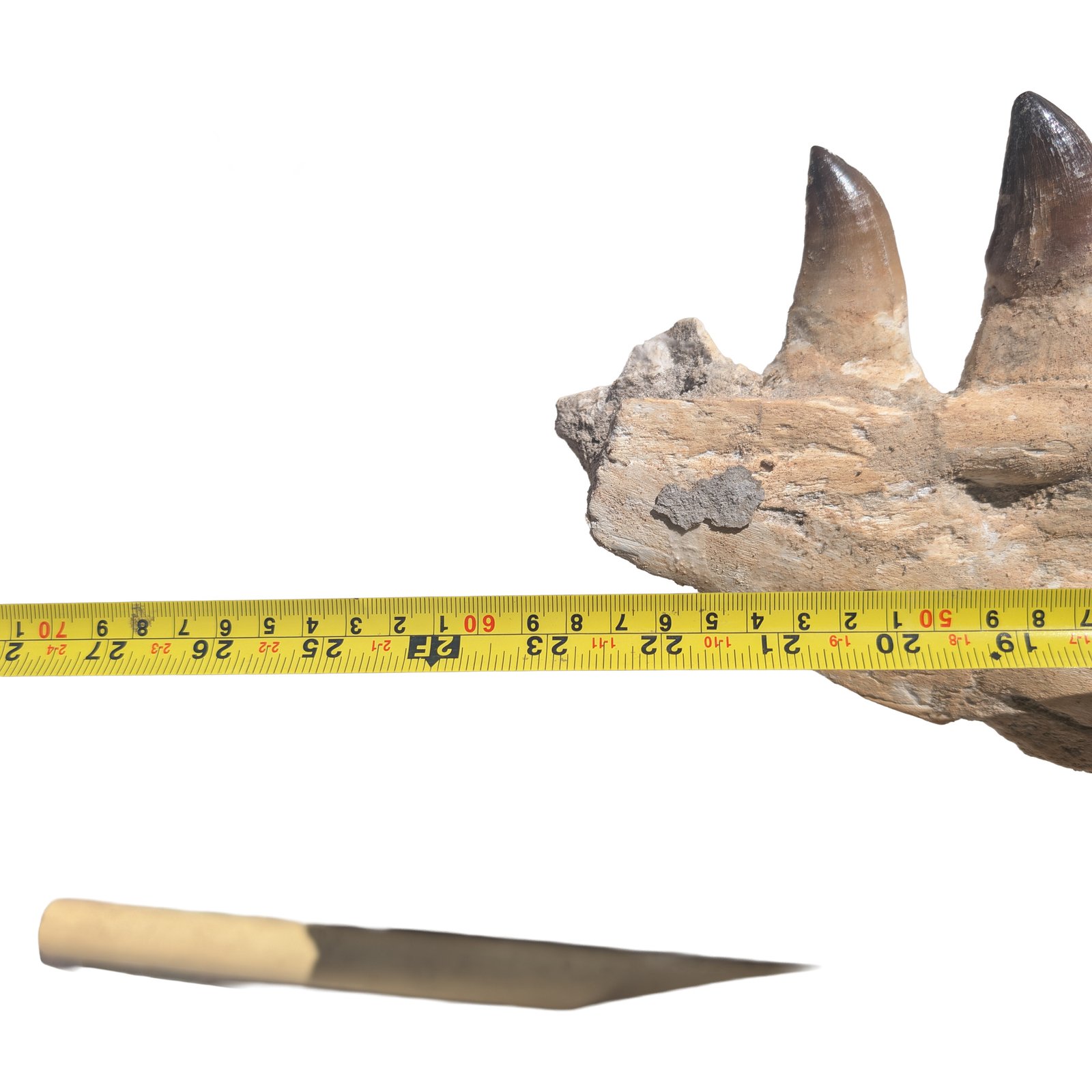
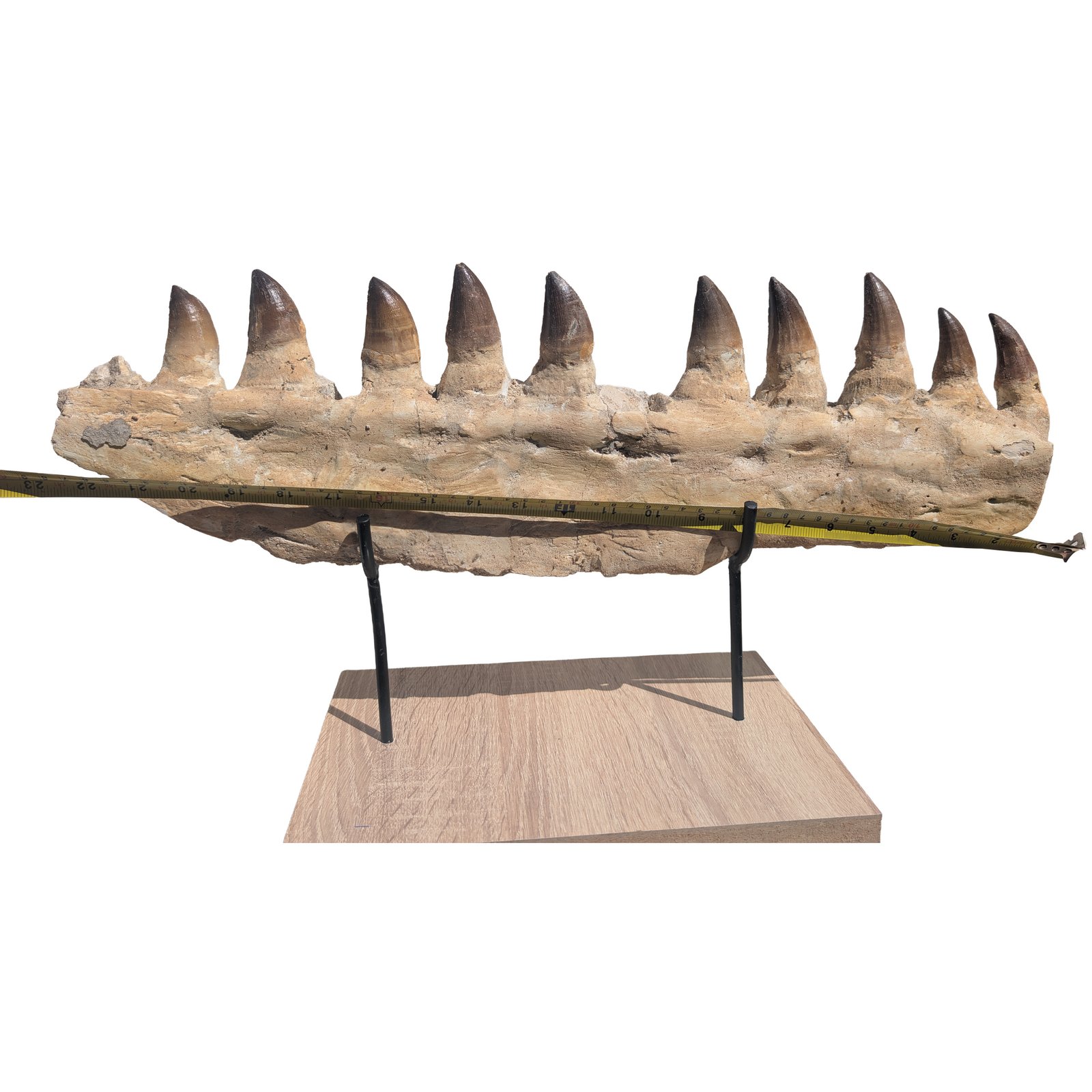
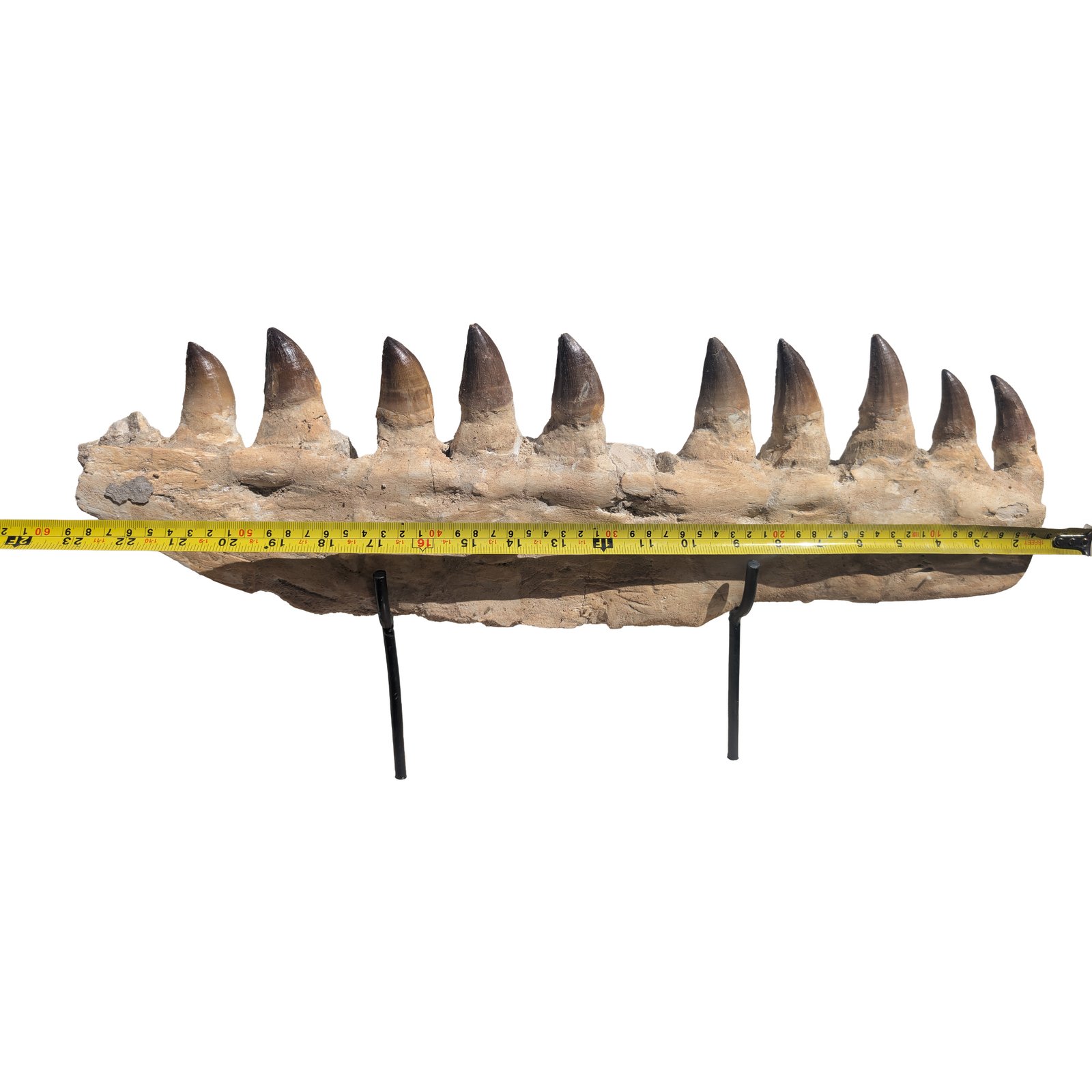
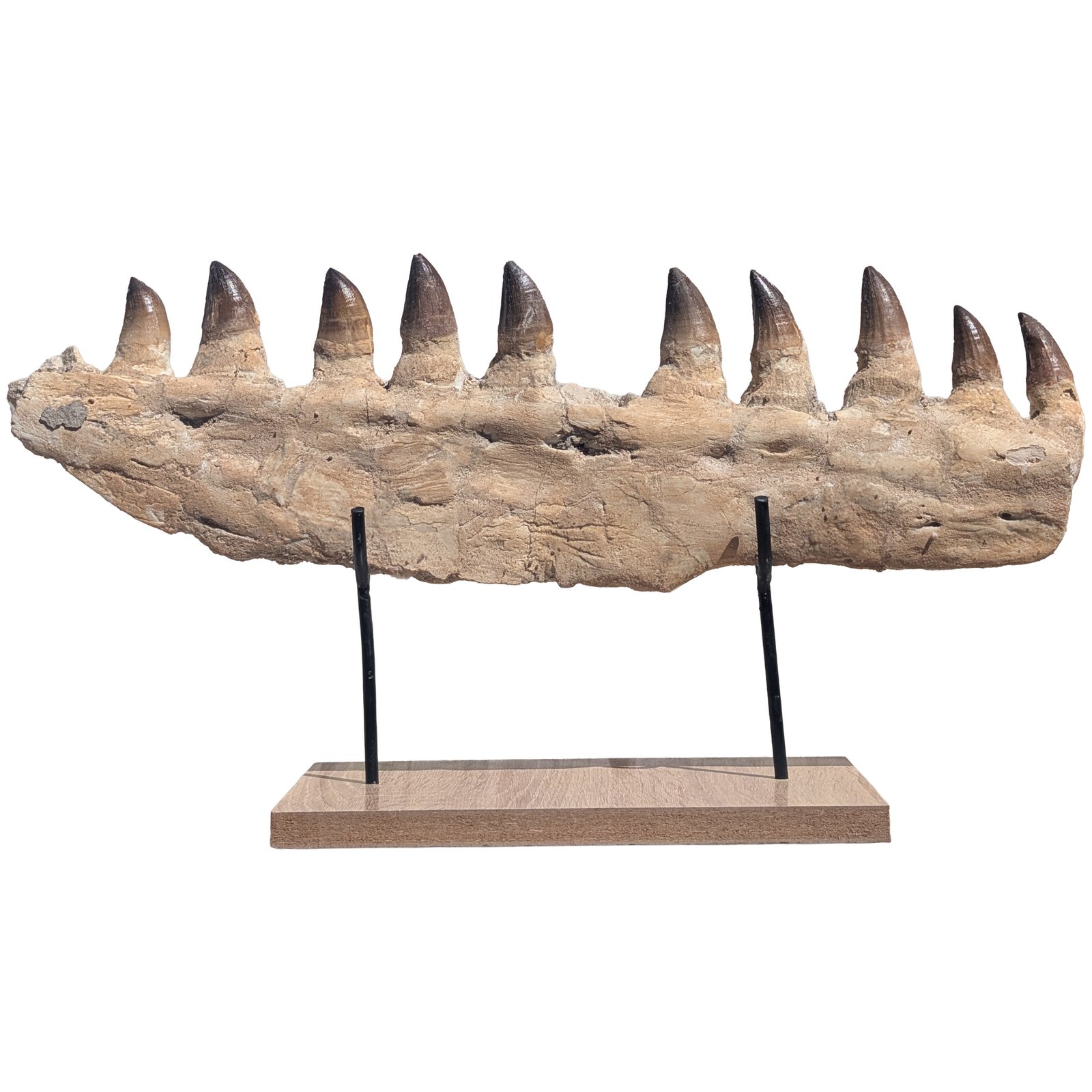
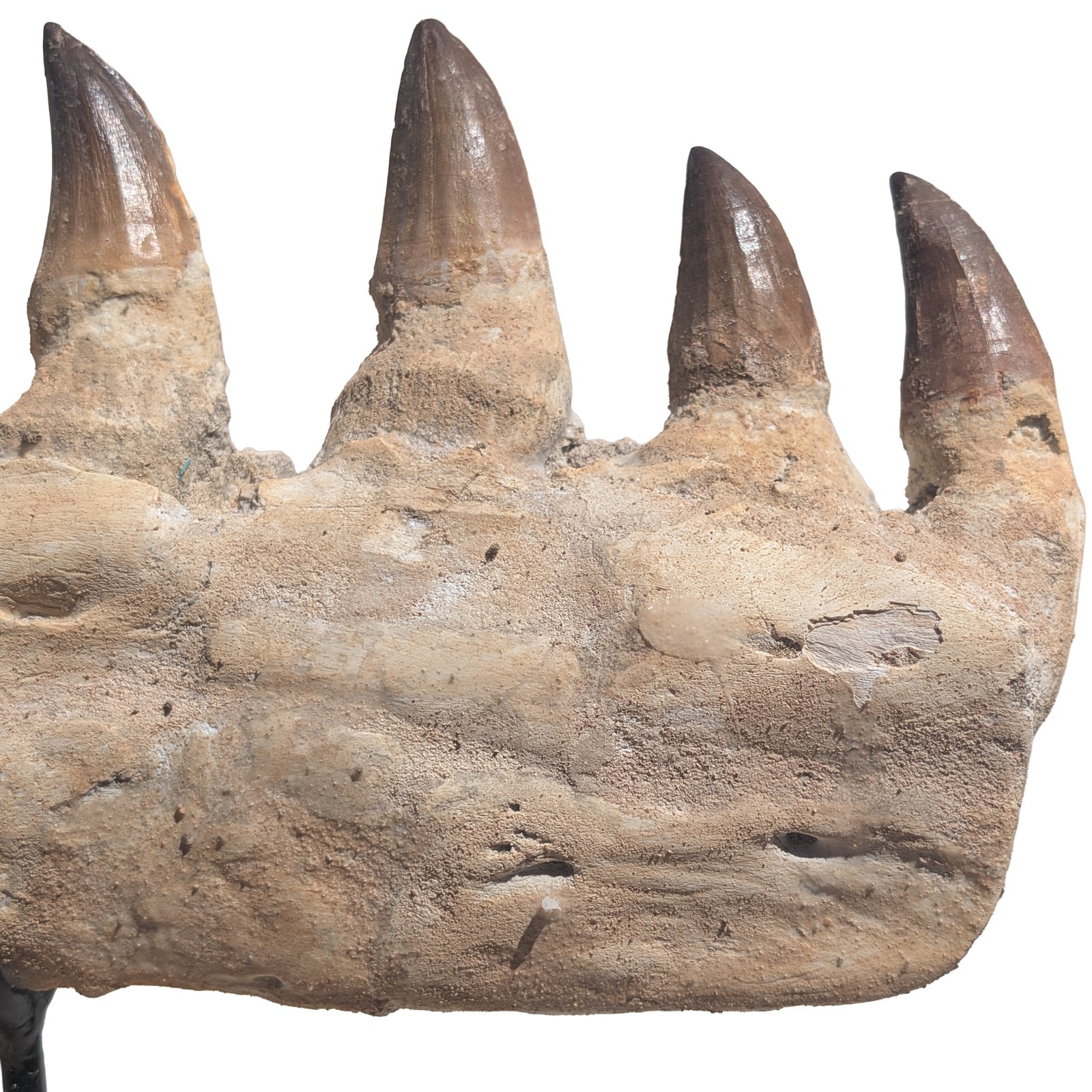
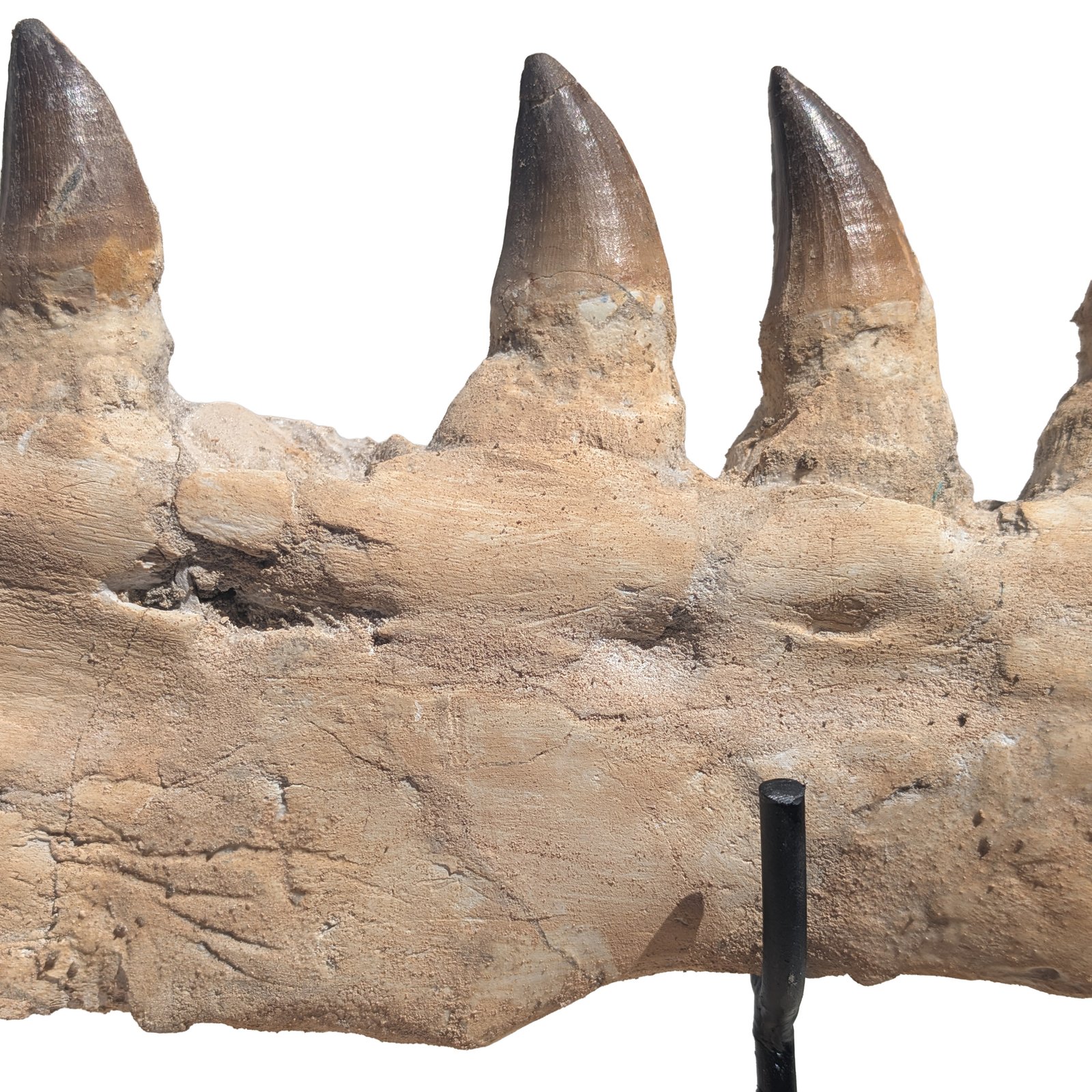
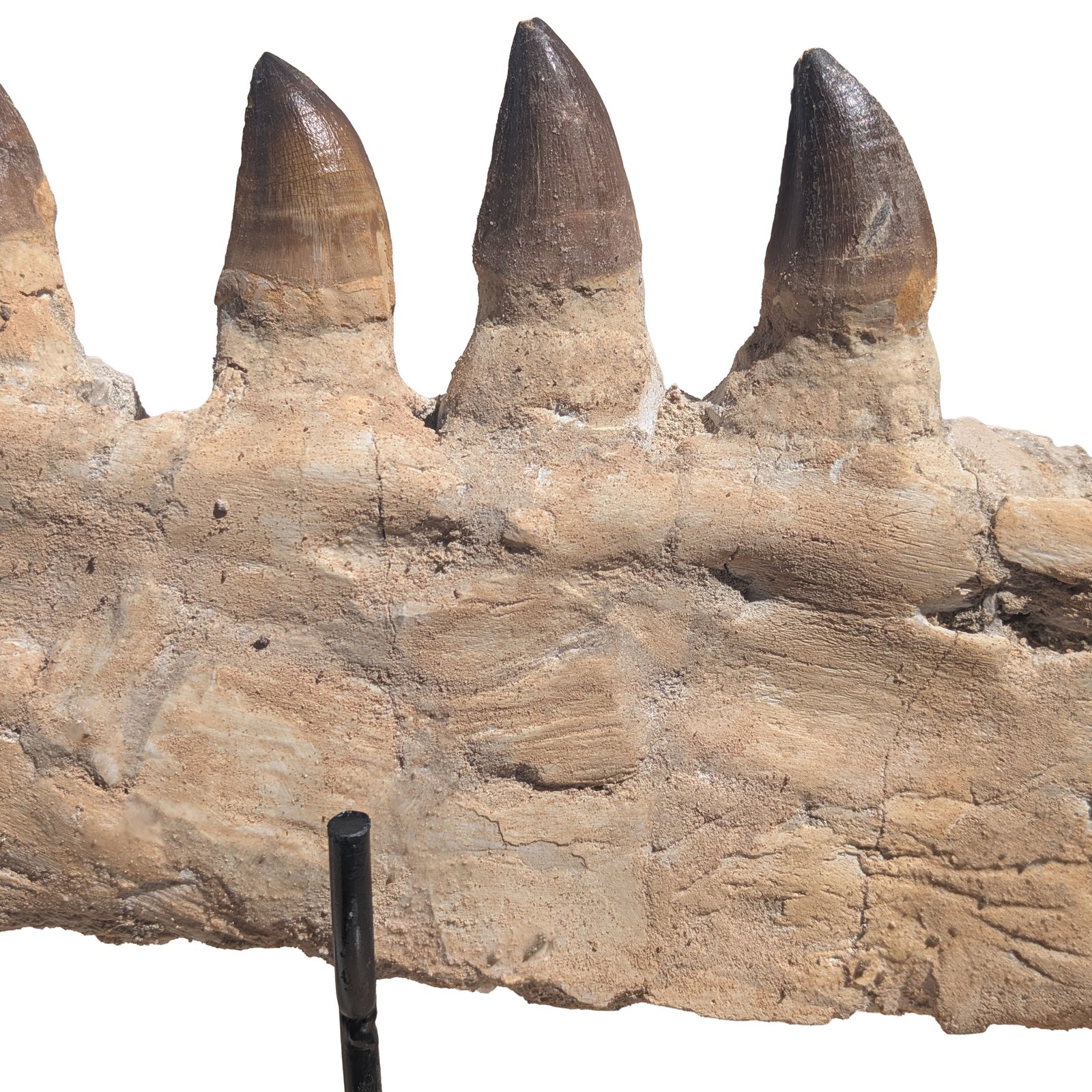

Mosasaur Jaw Large Display
This Mosasaur Jaw Large Display fossil brings the mighty marine reptile back to life. The Mosasaur wasn’t a dinosaur. It was a powerful sea lizard that ruled the Cretaceous seas. Its long jaws and blade-shaped teeth made it a top predator. Scientists believe it could crush shells and tear through prey like fish and ammonites.
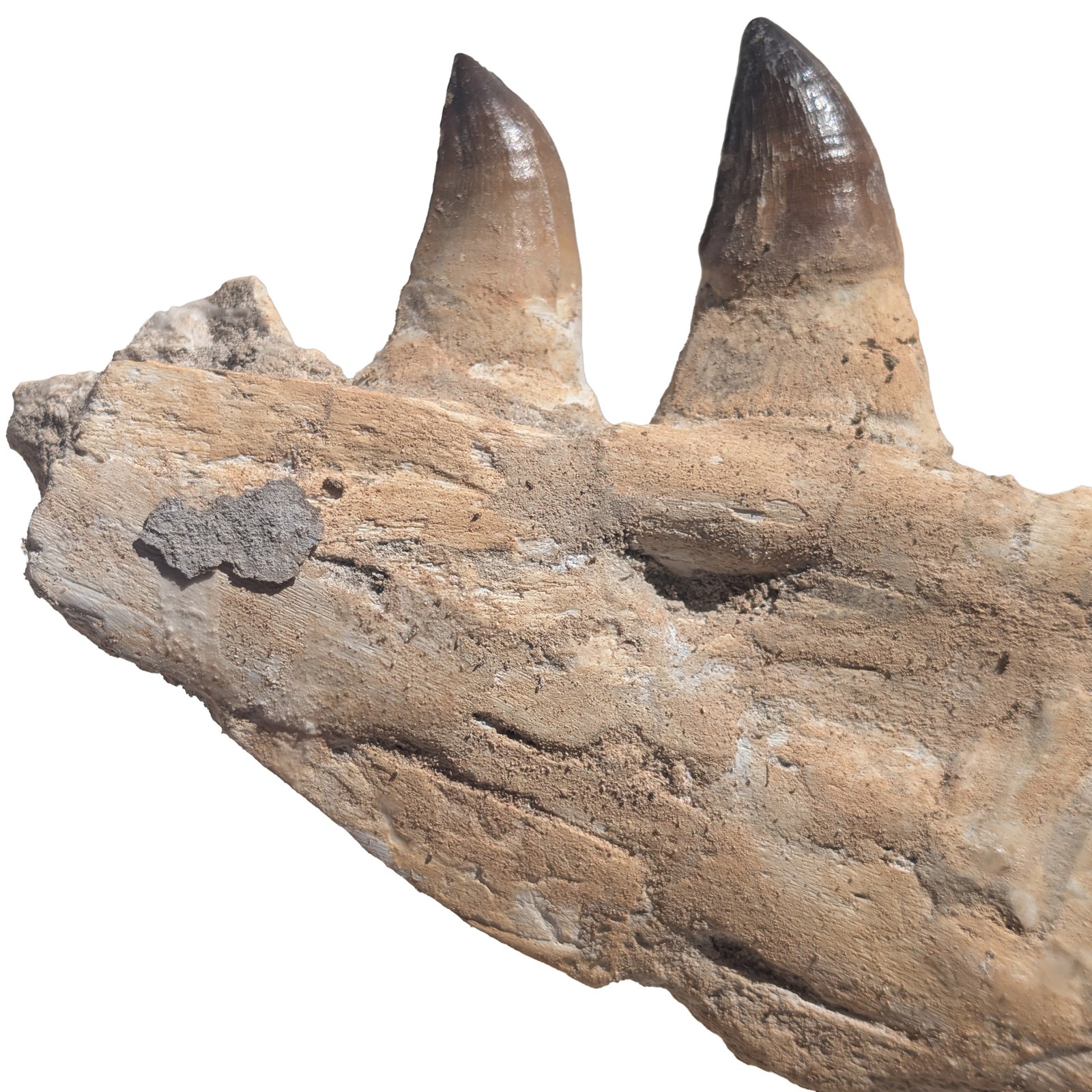
Each fossil jaw comes from real sediment layers found in Morocco. The mineralized bones and preserved tooth sockets reveal a story that goes beyond science. You can see the detail in each ridge and socket. The surface texture holds marks of age, compression, and fossilization. It’s not just a fossil. It’s a record of survival from 70 to 66 million years ago.
Collectors and educators prize Mosasaur fossils for both their beauty and history. When displayed, the jaw commands attention. Its long curved form and intact teeth show natural power. For classrooms or museums, it helps explain evolution, marine reptiles, and life before extinction. For private collectors, it’s a centerpiece that connects ocean fossils with Earth’s ancient story.
This specimen has been carefully prepared by skilled fossil technicians. Matrix cleaned, stabilized, and reinforced for long-term display. No cast parts. Only genuine fossil material with light restoration for structural integrity. The Mosasaur jaw sits on a custom wood base for display stability. Each piece is one-of-a-kind.
Origin and Geological Context
This Mosasaur fossil comes from the phosphate beds of Khouribga, Morocco. These deposits are rich in late Cretaceous marine fossils. The rock layers date back about 70 million years. Over time, calcium phosphate replaced organic material, preserving bone detail. The color ranges from light tan to gray-brown, depending on mineral content.
Warranty and Shipping
Ships securely in foam-lined crates with full insurance. Each fossil includes a certificate of authenticity and provenance details. 30-day satisfaction guarantee.
Related Product: See our Cretaceous Fossil Tooth Collection for more marine reptile finds.
External Reference: Learn more about Mosasaurs from the Smithsonian Ocean Portal.
Features
Authentic Mosasaur jaw fossil
Late Cretaceous period, approx. 70 million years old
Real bone and tooth impressions, no replicas
From phosphate deposits of Morocco
Professionally cleaned and stabilized
Custom display base included
Certificate of authenticity provided
Technical Specs
| Specification | Details |
|---|---|
| Fossil Type | Mosasaur Jaw |
| Material | Natural fossilized bone and tooth |
| Size | Approx. 58 cm |
| Estimated Age | 70 million years |
| Origin | Khouribga, Morocco |
| Display Base | Wood with metal supports |
| Condition | Stabilized fossil, minor restoration |
FAQs
What countries have mosasaur fossils been found in?
Mosasaur fossils have been discovered on every continent, including North America, Europe, Africa, South America, and Antarctica. Notable finds come from countries like the United States, the Netherlands, Morocco, and New Zealand.
Are mosasaur fossils rare?
Mosasaur fossils are relatively common compared to many marine reptiles, especially in areas with Late Cretaceous marine deposits. However, complete skeletons and well-preserved skulls are rarer and highly valuable to paleontologists.
What rock layers contain mosasaur fossils?
Mosasaur fossils are typically found in Late Cretaceous sedimentary rocks, such as chalk, limestone, and shale. These layers were formed in ancient marine environments where mosasaurs once thrived.