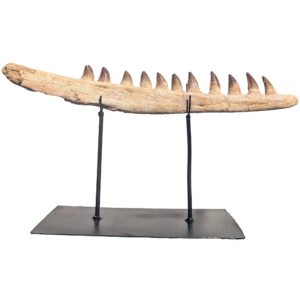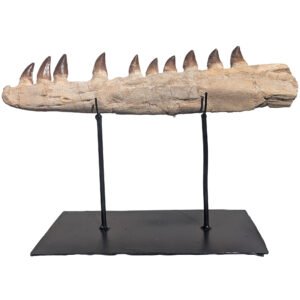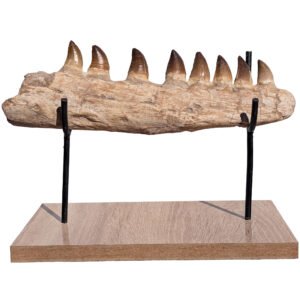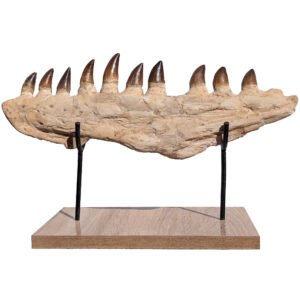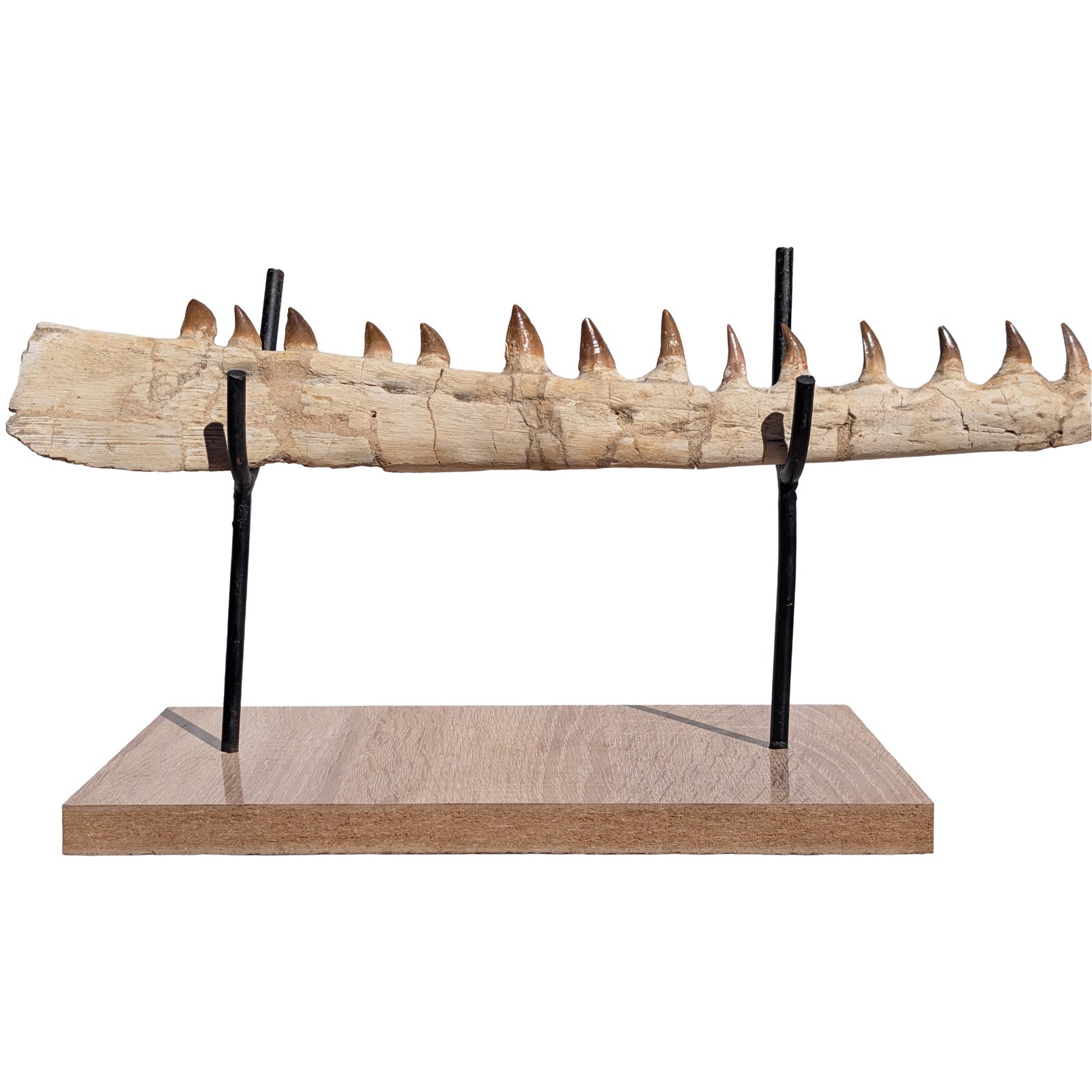
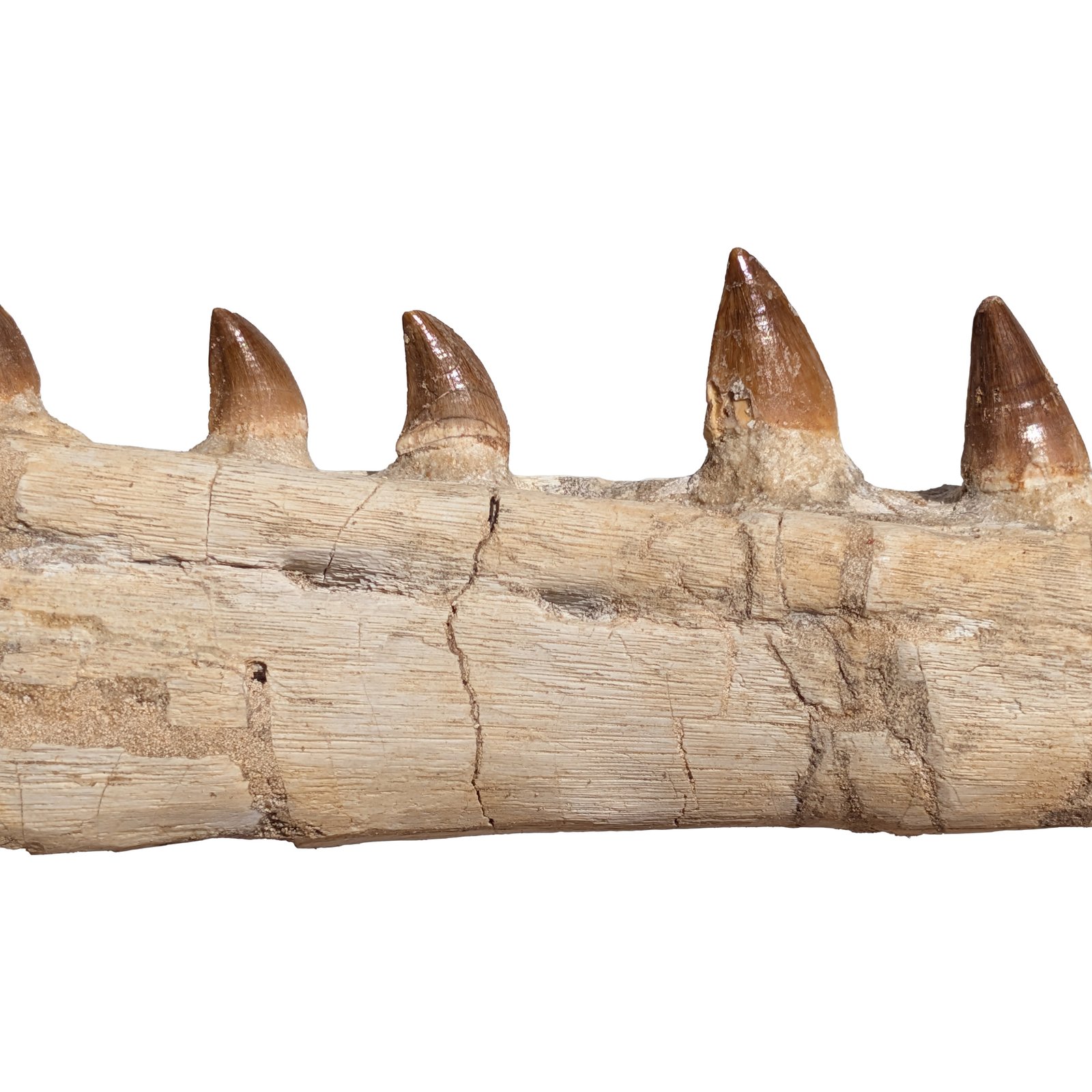
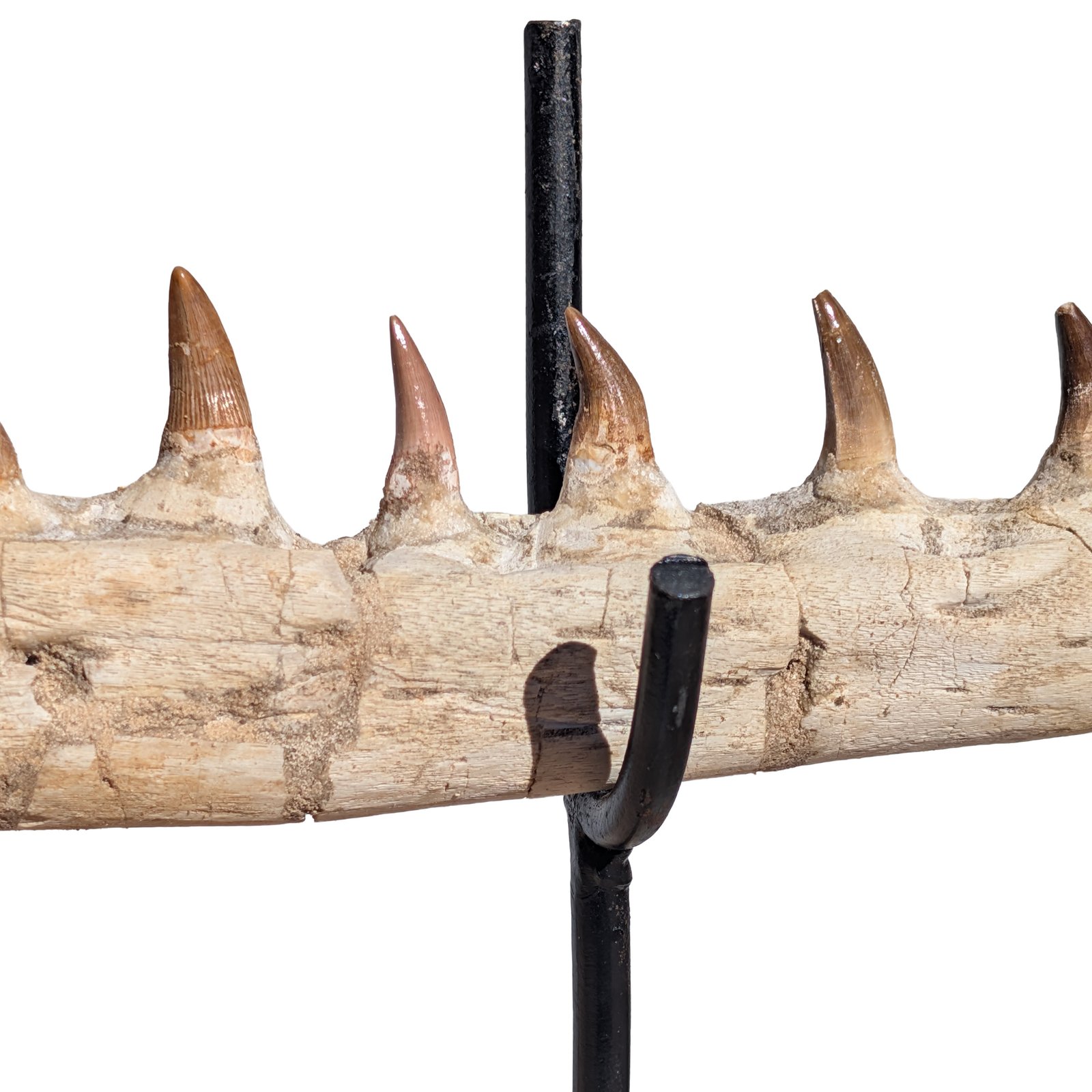
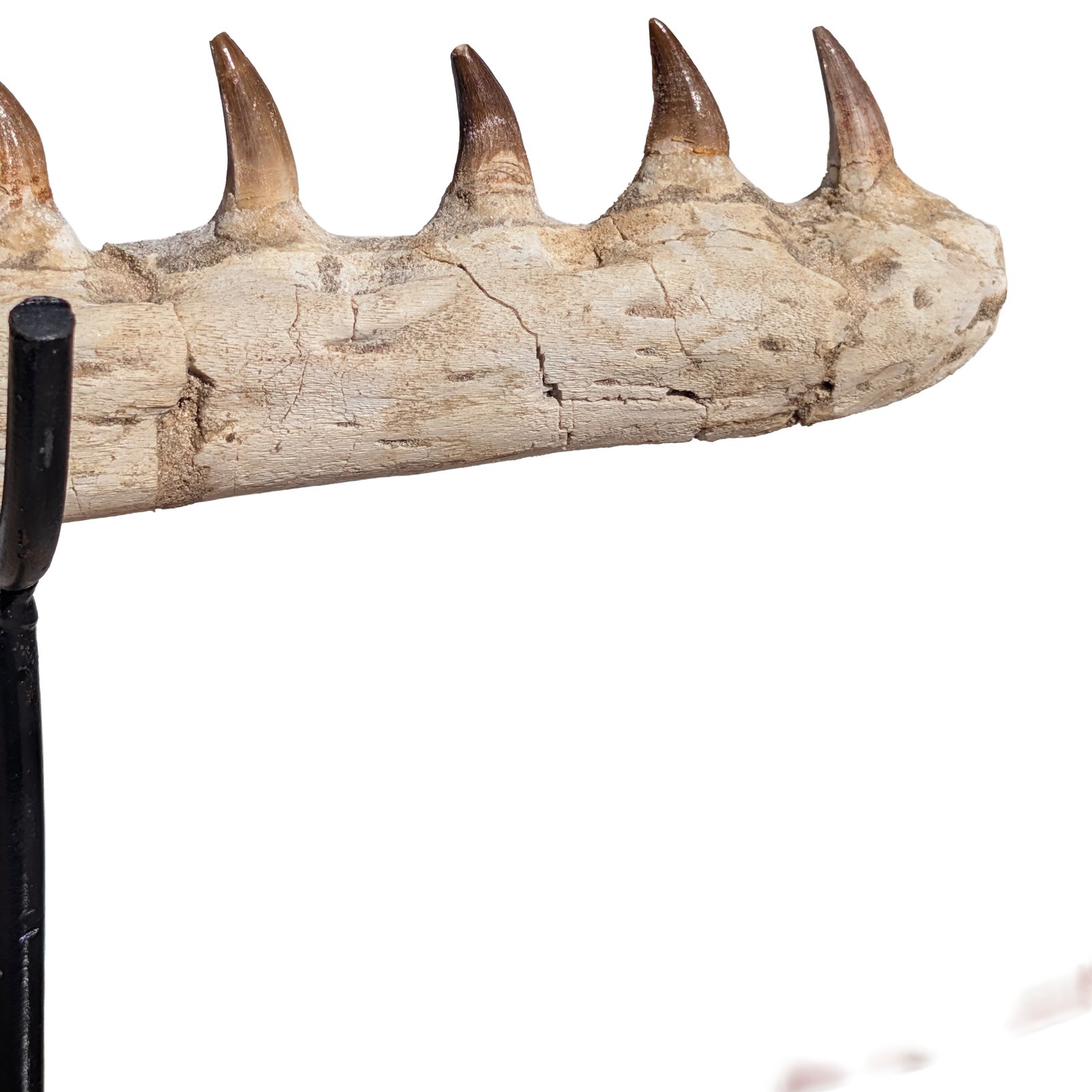
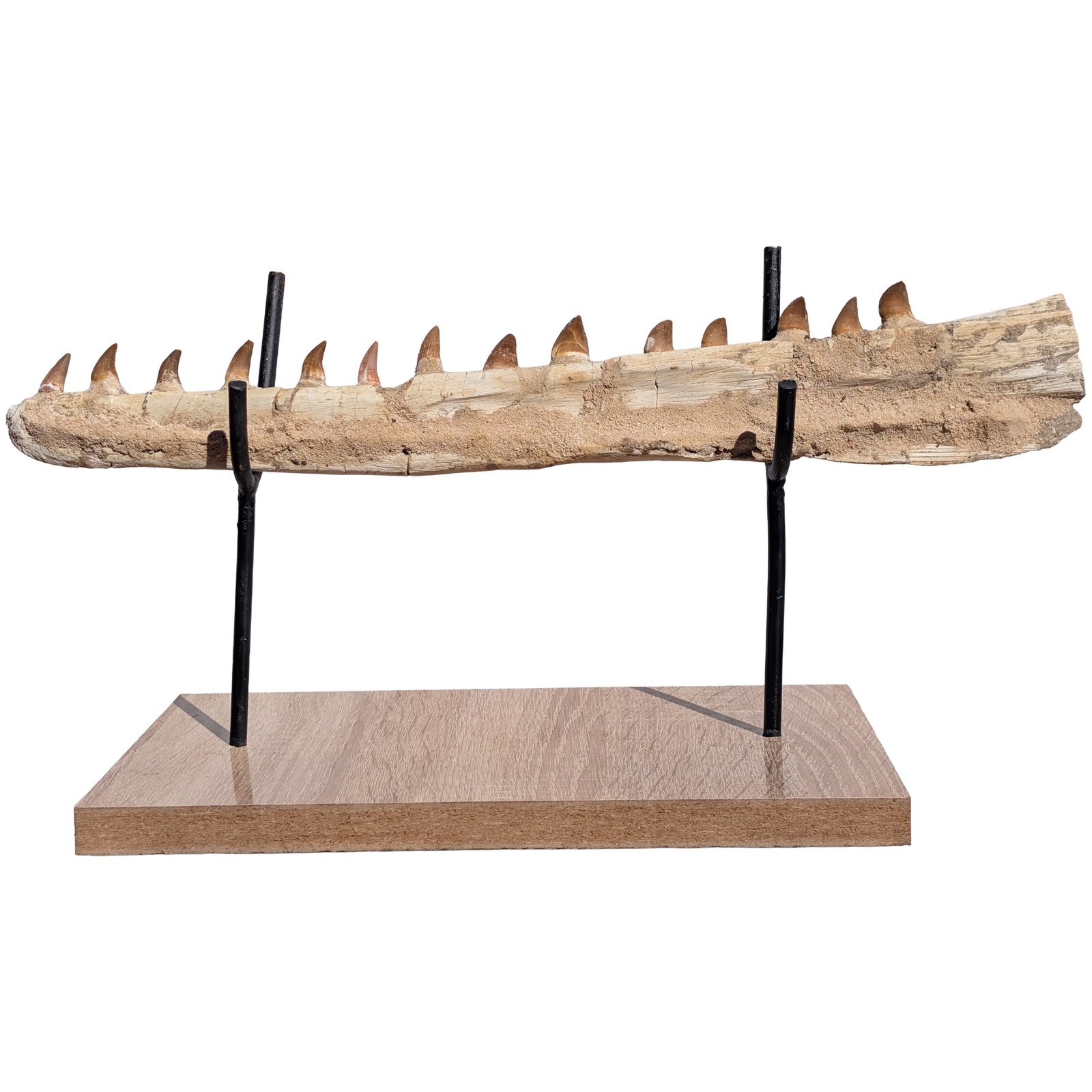

Mosasaur Moroccan Jaw Find Fossil Overview
The Mosasaur Moroccan Jaw Find comes from phosphate beds in Morocco. These deposits formed in the Late Cretaceous period around 66–72 million years ago. Back then. Morocco sat under a warm shallow sea.
Mosasaurs ruled that ocean.
Mosasaurs were large marine reptiles. Not dinosaurs. They were closer to monitor lizards and snakes. But they grew huge. Some species reached 50 feet long. Their bodies were built for speed in water. Long tail. Strong flippers. Flexible jaw.
The jaw was one of their most powerful tools.
A mosasaur jaw had rows of sharp cone shaped teeth. These teeth were made for gripping prey. Not chewing. When a mosasaur caught a fish or ammonite. It swallowed it whole. Some species even hunted turtles and other marine reptiles.
But the jaw had another trick.
Mosasaurs had a second row of teeth inside the mouth. On the roof of the palate. These teeth helped pull prey deeper into the throat. This feeding system made escape almost impossible.
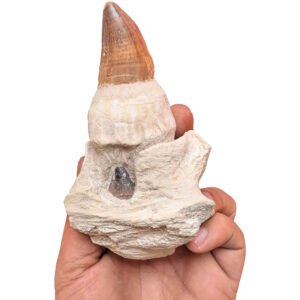
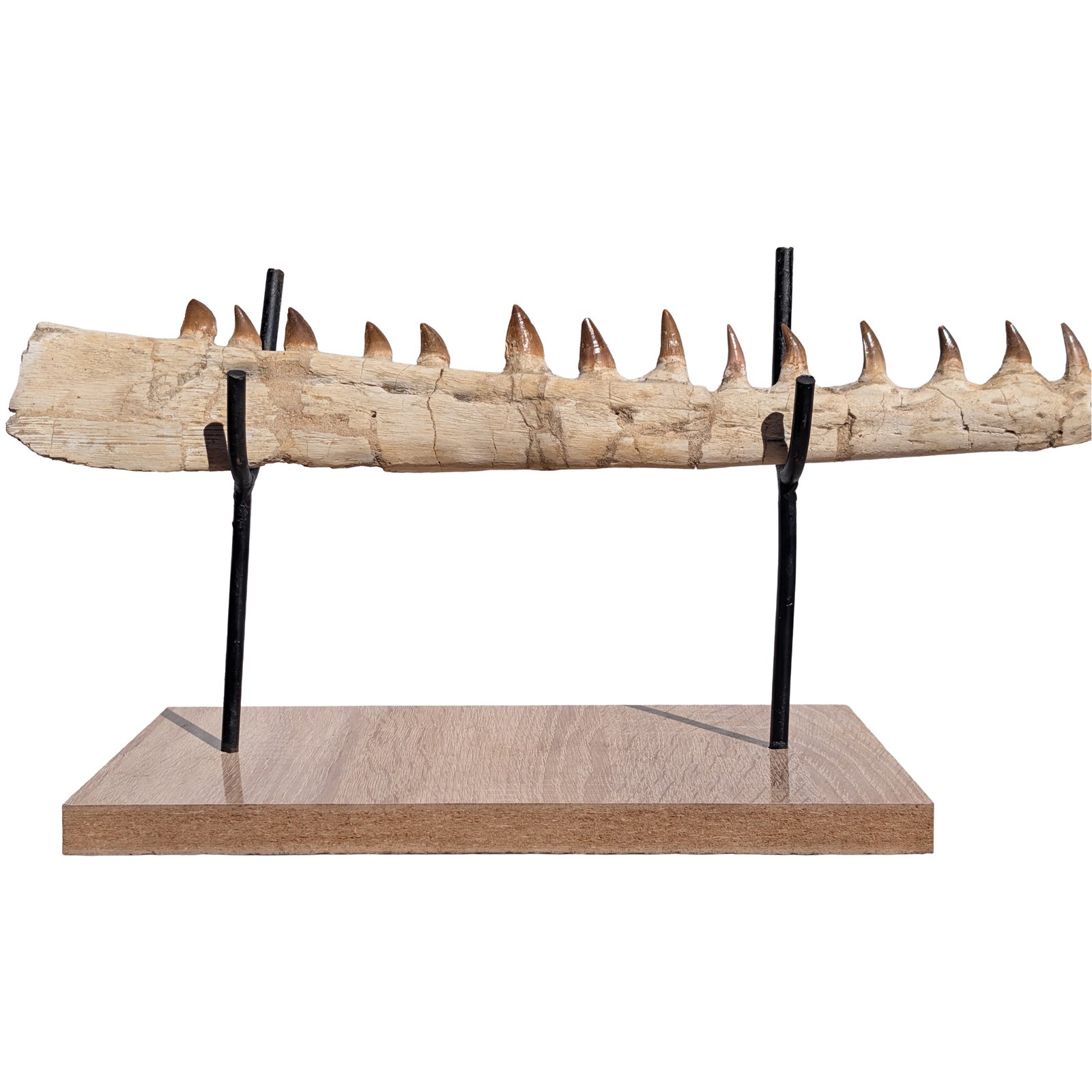
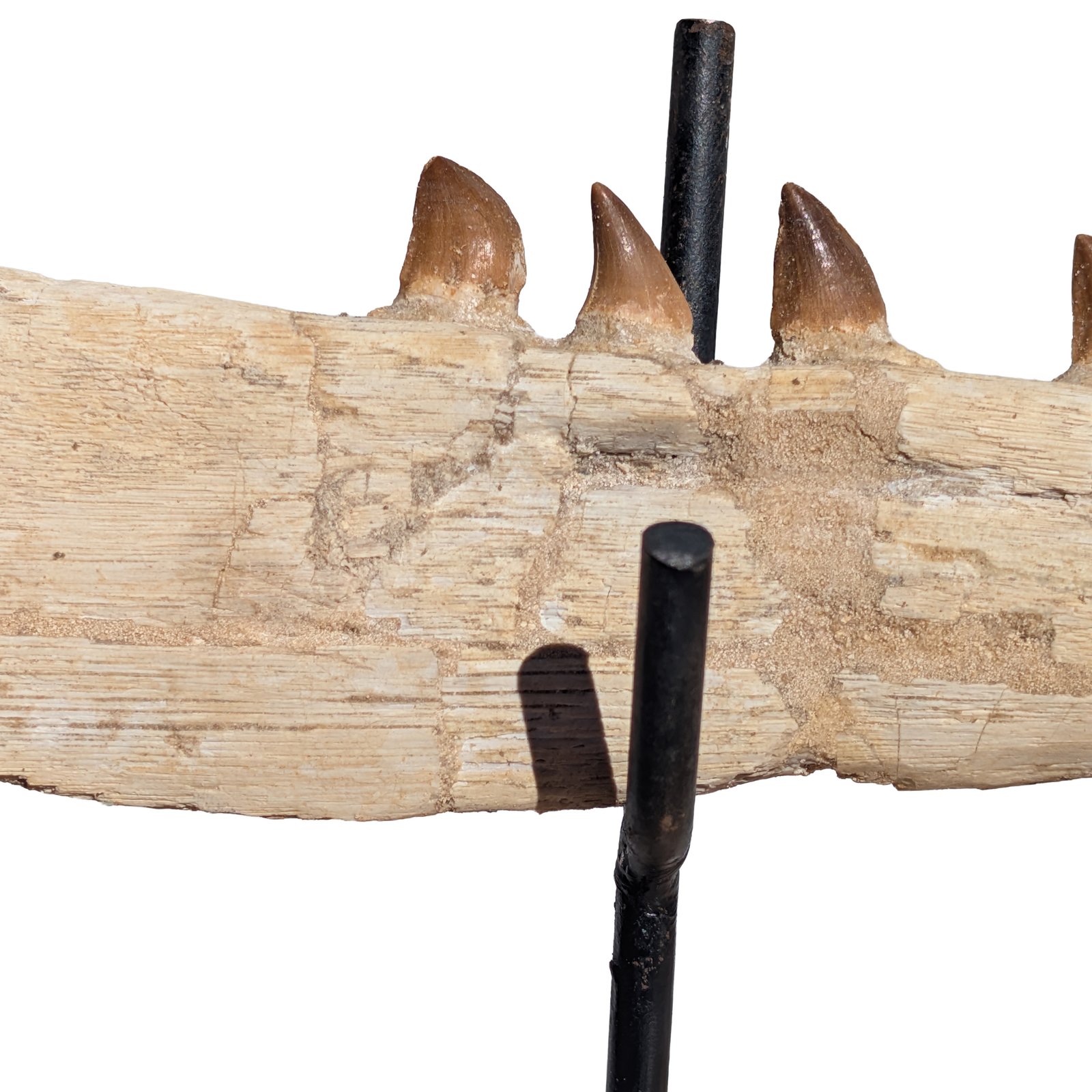
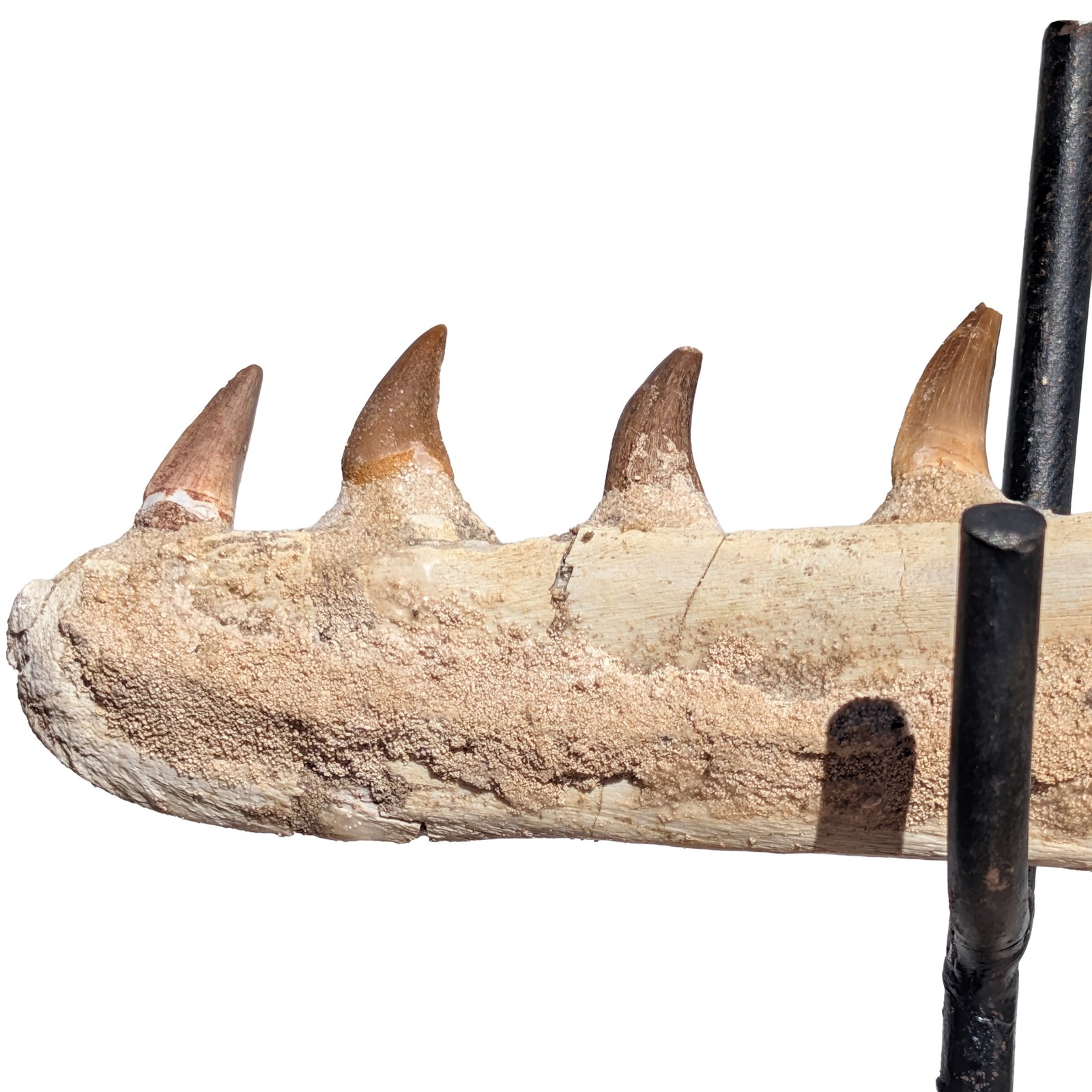
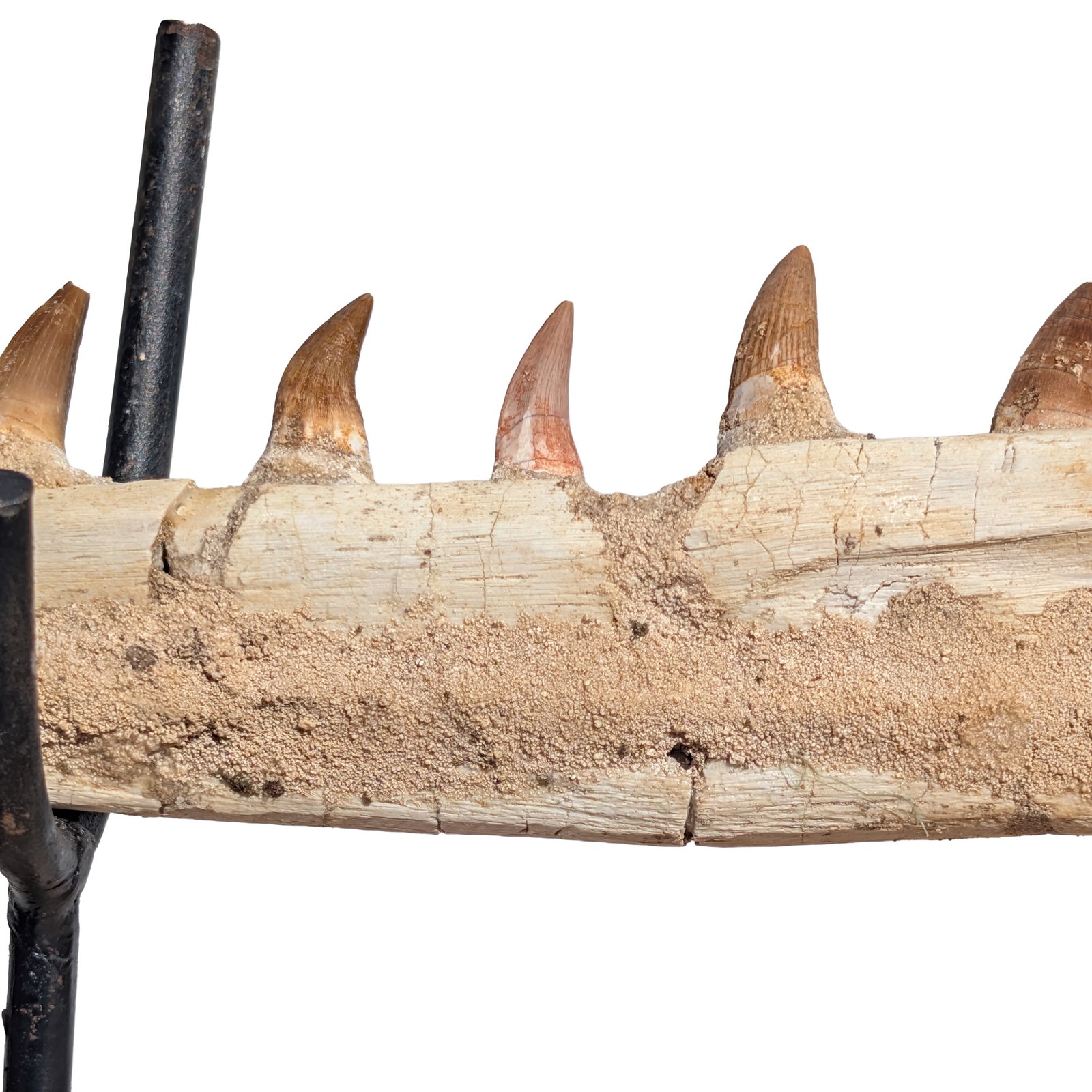
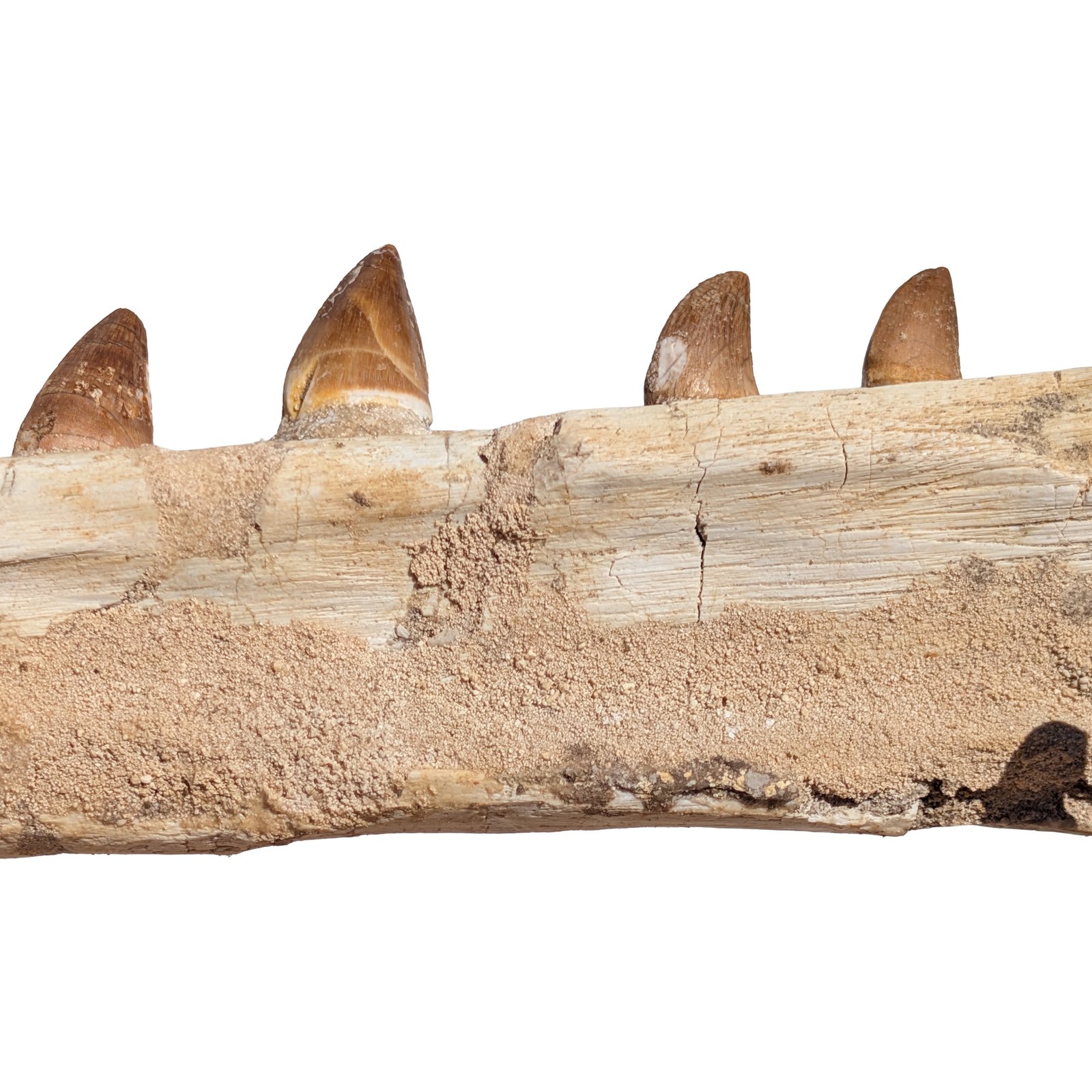
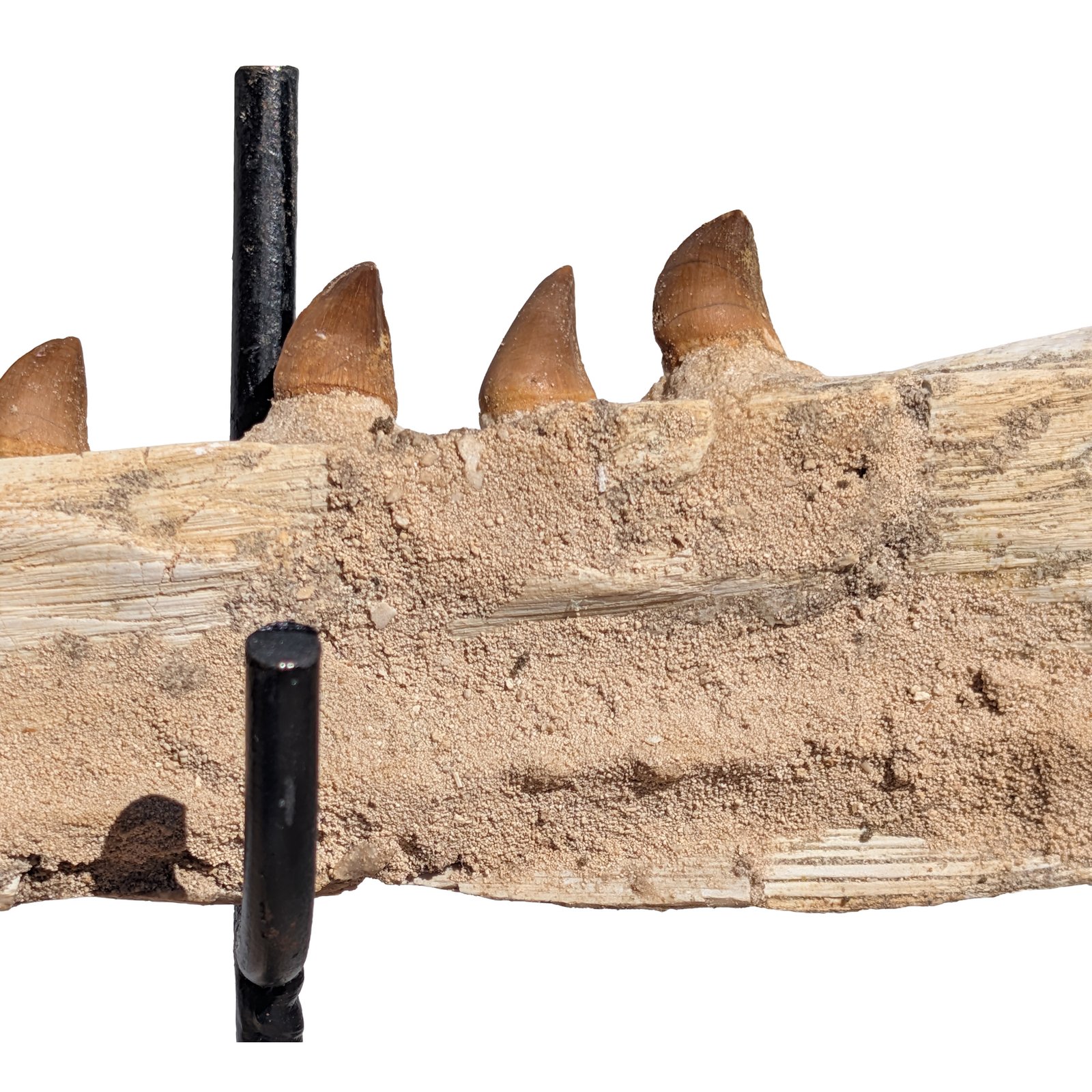
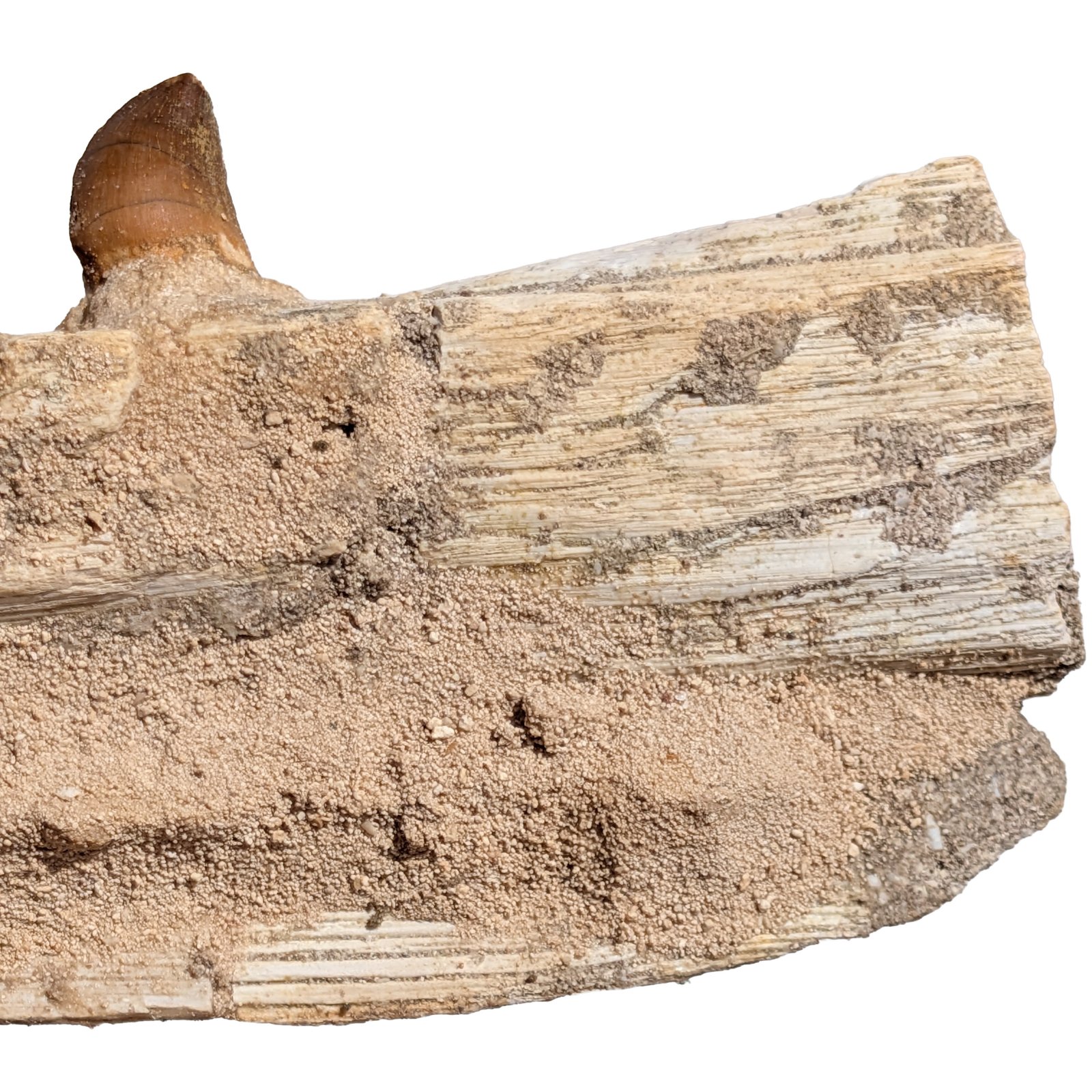
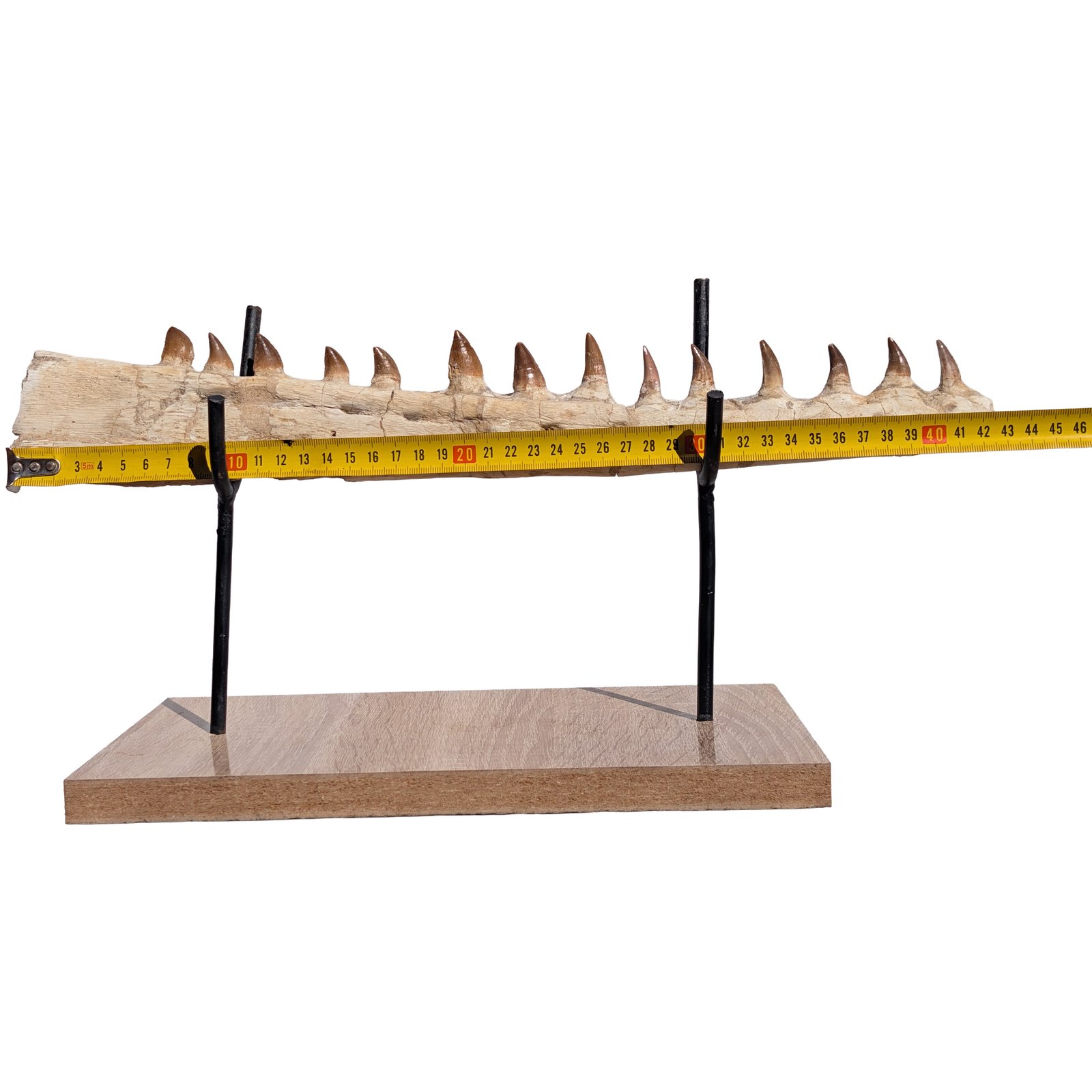
The Mosasaur Moroccan Jaw Find shows part of this hunting design. The fossil jaw section still preserves bone texture. Often tooth bases remain. Sometimes full teeth are still set in the jaw.
That detail makes jaw fossils very useful for study.
Scientists use jaw fossils to identify species. Tooth shape. Tooth spacing. Bone thickness. All give clues. Many mosasaurs found in Morocco belong to species like Mosasaurus beaugei or Prognathodon.
The fossil formed when the animal died and settled into seafloor sediment. Over millions of years the bone mineral changed. Phosphate rock replaced the original tissue. That process preserved the structure.
Morocco is now one of the best places in the world for mosasaur fossils. The phosphate mines expose ancient seabeds. Fossil hunters often find teeth. But jaw sections are harder to recover intact.
That is why a Mosasaur Moroccan Jaw Find is valued by collectors.
This specimen has been cleaned and stabilized. But the fossil surface remains natural. Small mineral marks may appear. That is normal in marine fossils.
Each fossil is unique. No two jaws are the same.
For collectors building a marine fossil set. This piece pairs well with our
Internal Link: Mosasaur Tooth Fossil Collection
For more information about mosasaurs and marine reptiles see the educational guide from the
External Link: https://www.nhm.ac.uk/discover/mosasaur.html
Shipping is packed with protective padding. Fossils are fragile but stable. A 30-day authenticity warranty is included. The specimen is guaranteed genuine fossil material.
Features
Authentic Mosasaur Moroccan Jaw Find fossil
Real marine reptile bone from Late Cretaceous sea beds
Visible jaw bone structure and tooth sockets
Natural phosphate fossil preservation
Each specimen unique in shape and surface
Suitable for collectors. Education displays. Fossil study
Secure shipping with authenticity guarantee
Technical Specifications
| Feature | Details |
|---|---|
| Fossil Type | Mosasaur jaw fossil |
| Material | Fossilized bone in phosphate matrix |
| Size | Approx. 40–42 cm section |
| Estimated Age | 66–72 million years |
| Origin | Morocco phosphate beds |