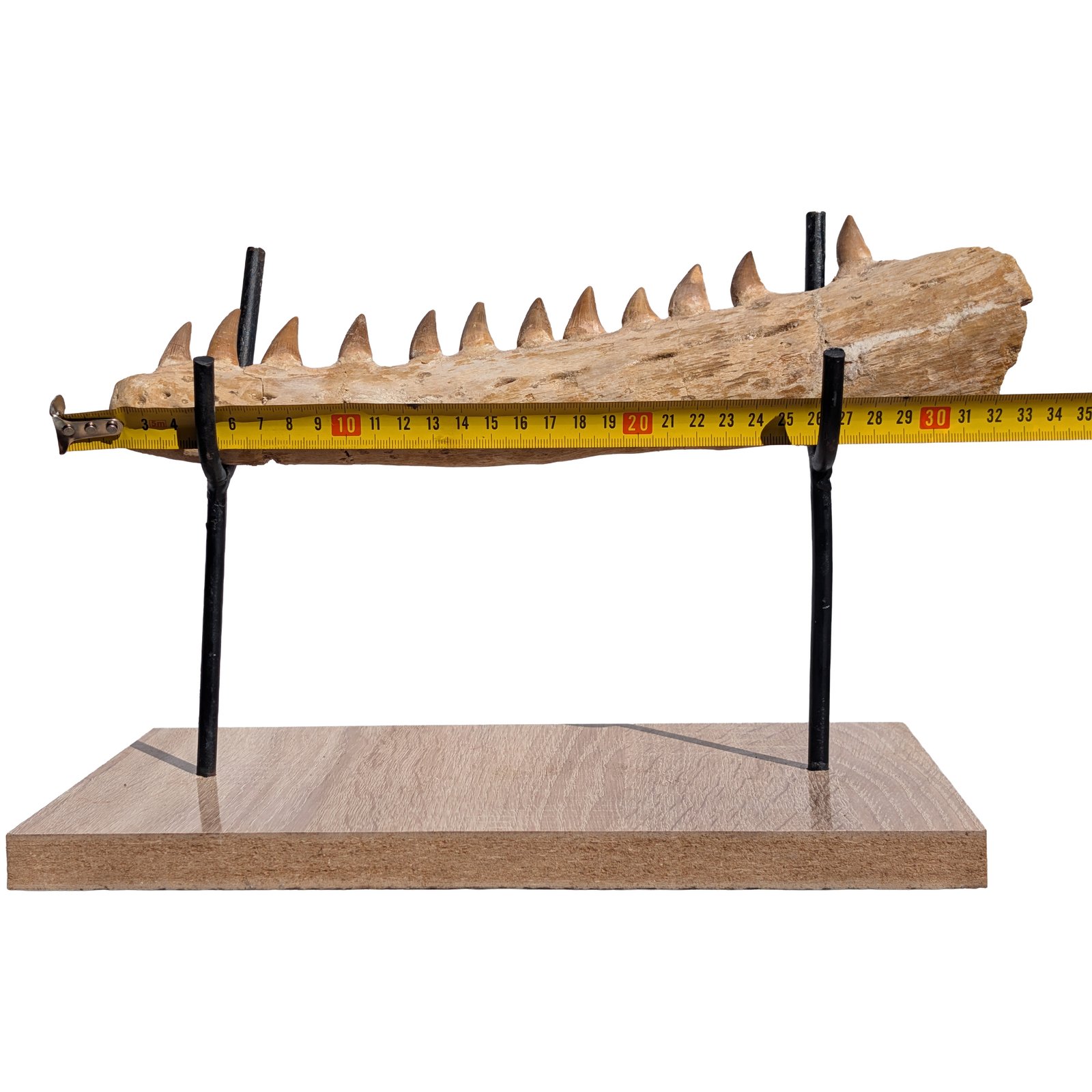

Mosasaur Research Jaw Display Fossil Overview
The Mosasaur Research Jaw Display comes from the famous phosphate fossil beds of Morocco. These deposits formed between 66 and 72 million years ago during the Late Cretaceous period. At that time. Morocco was covered by a warm shallow sea filled with marine life.
Fish moved in huge schools. Ammonites drifted through the water. Large marine reptiles hunted them.
Mosasaurs were the top predators of that ocean.
A mosasaur was not a dinosaur. It was a marine reptile closely related to modern monitor lizards. But it evolved for life in the sea. Its body became long and streamlined. Strong flippers replaced walking limbs. A powerful tail pushed the animal through water.
Many species reached massive sizes. Some mosasaurs grew over 15 meters long.
The skull and jaw were built for capturing prey.
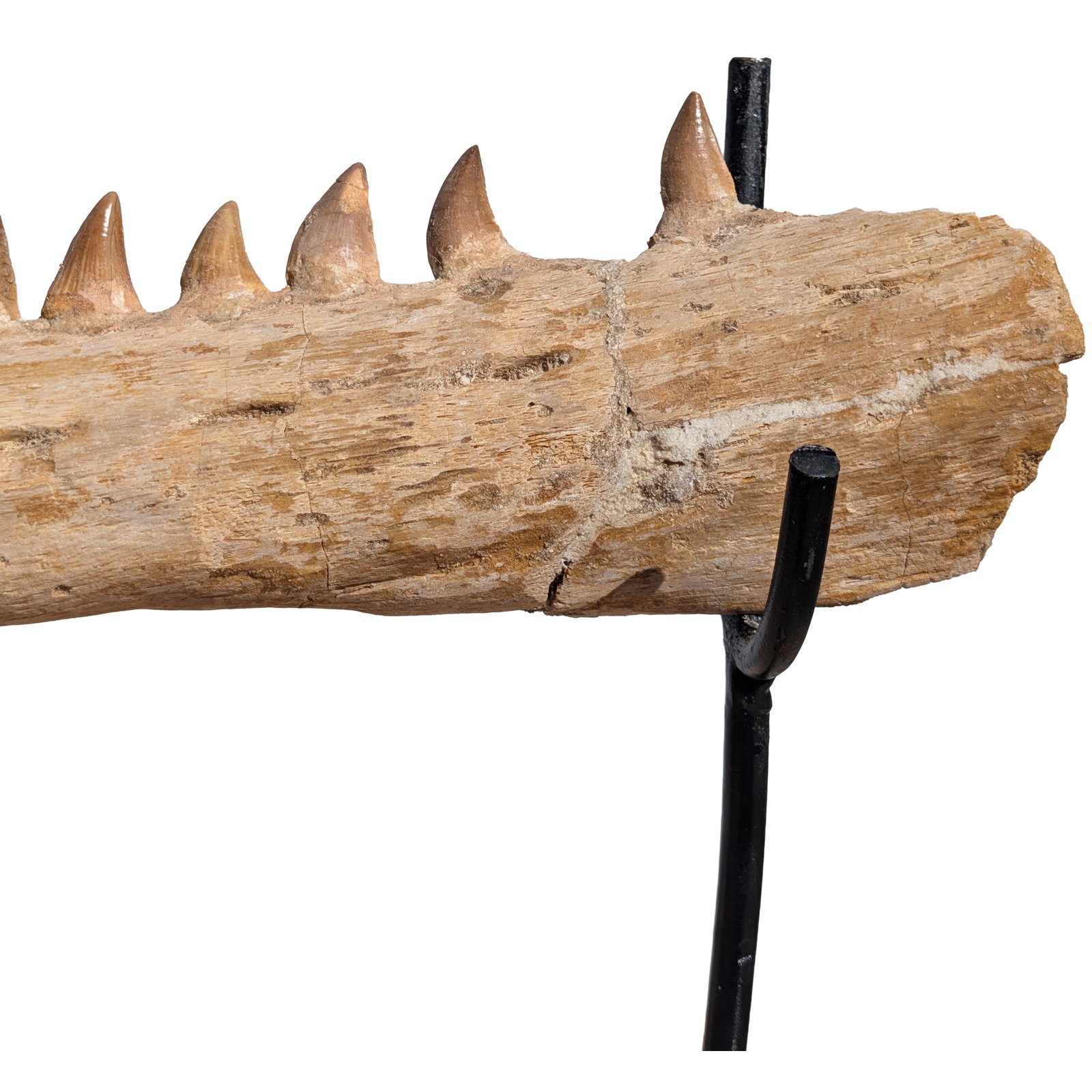
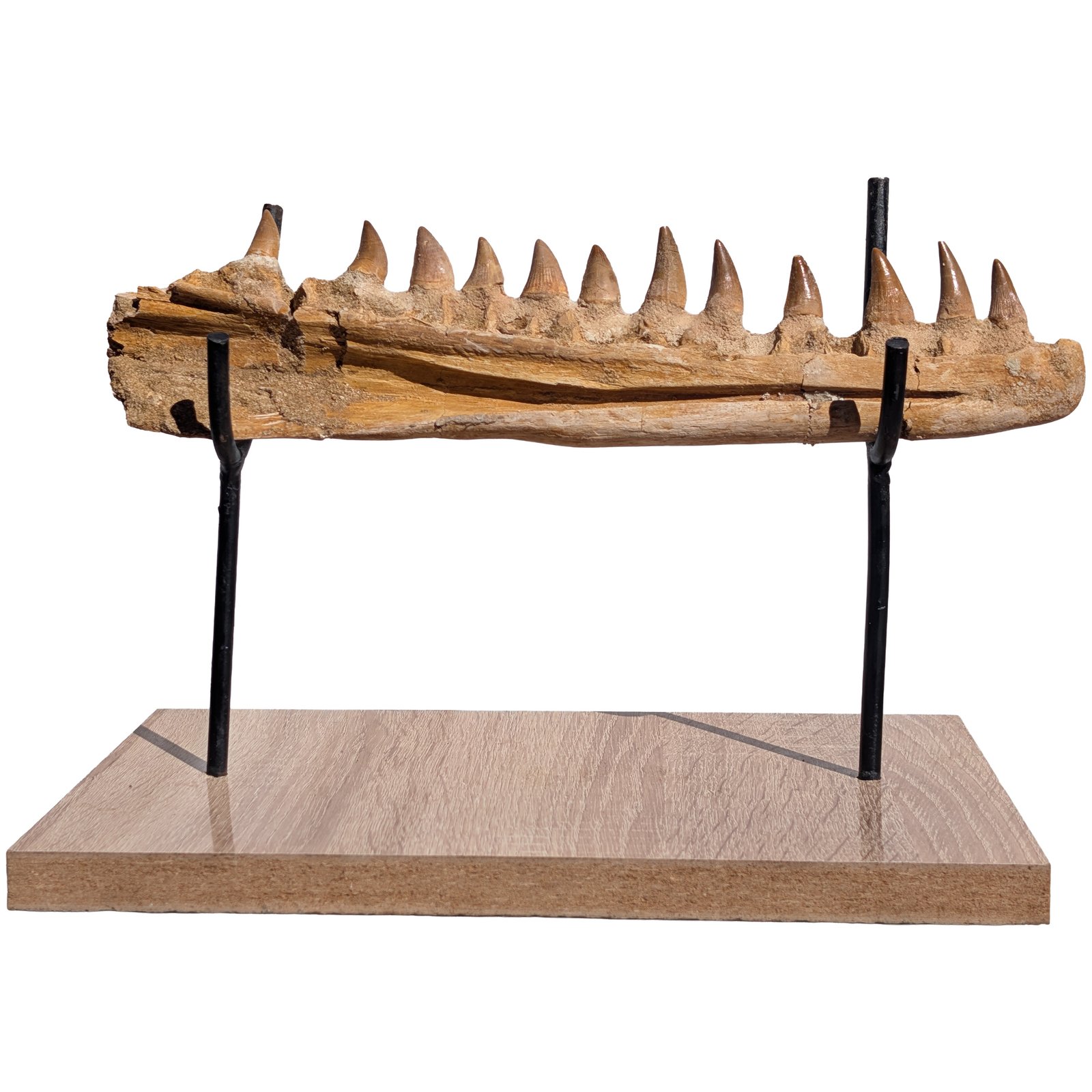
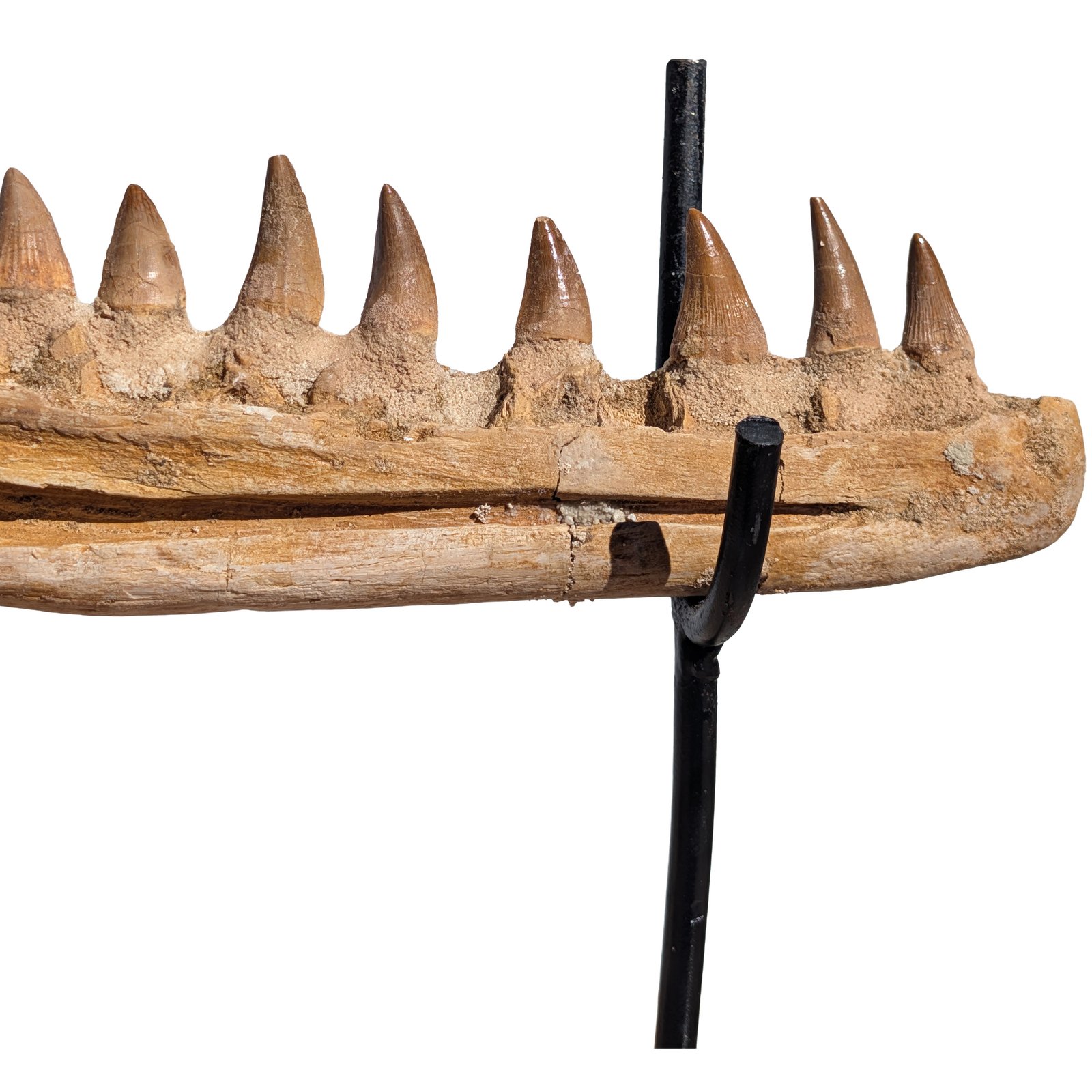
Mosasaurs had long jaws lined with cone shaped teeth. These teeth were strong and slightly curved. Perfect for gripping slippery prey. When the animal snapped its jaws shut. Fish and squid had little chance of escape.
But the feeding system went even further.
Inside the mouth mosasaurs had extra teeth on the palate. These inner teeth pulled prey deeper into the throat after the bite. This feature made mosasaurs extremely efficient hunters.
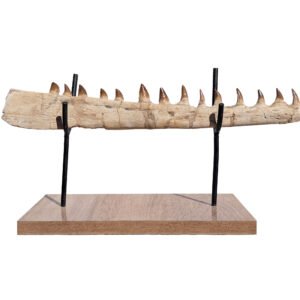
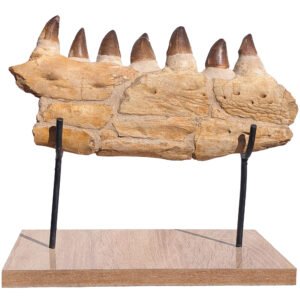
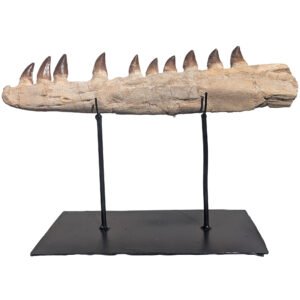
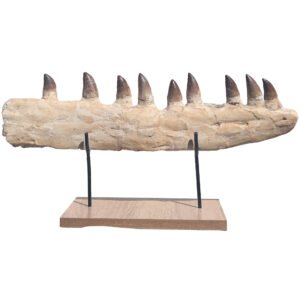
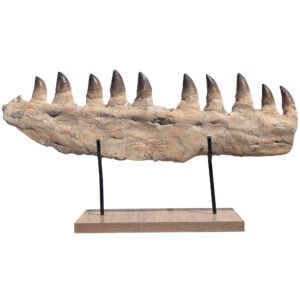
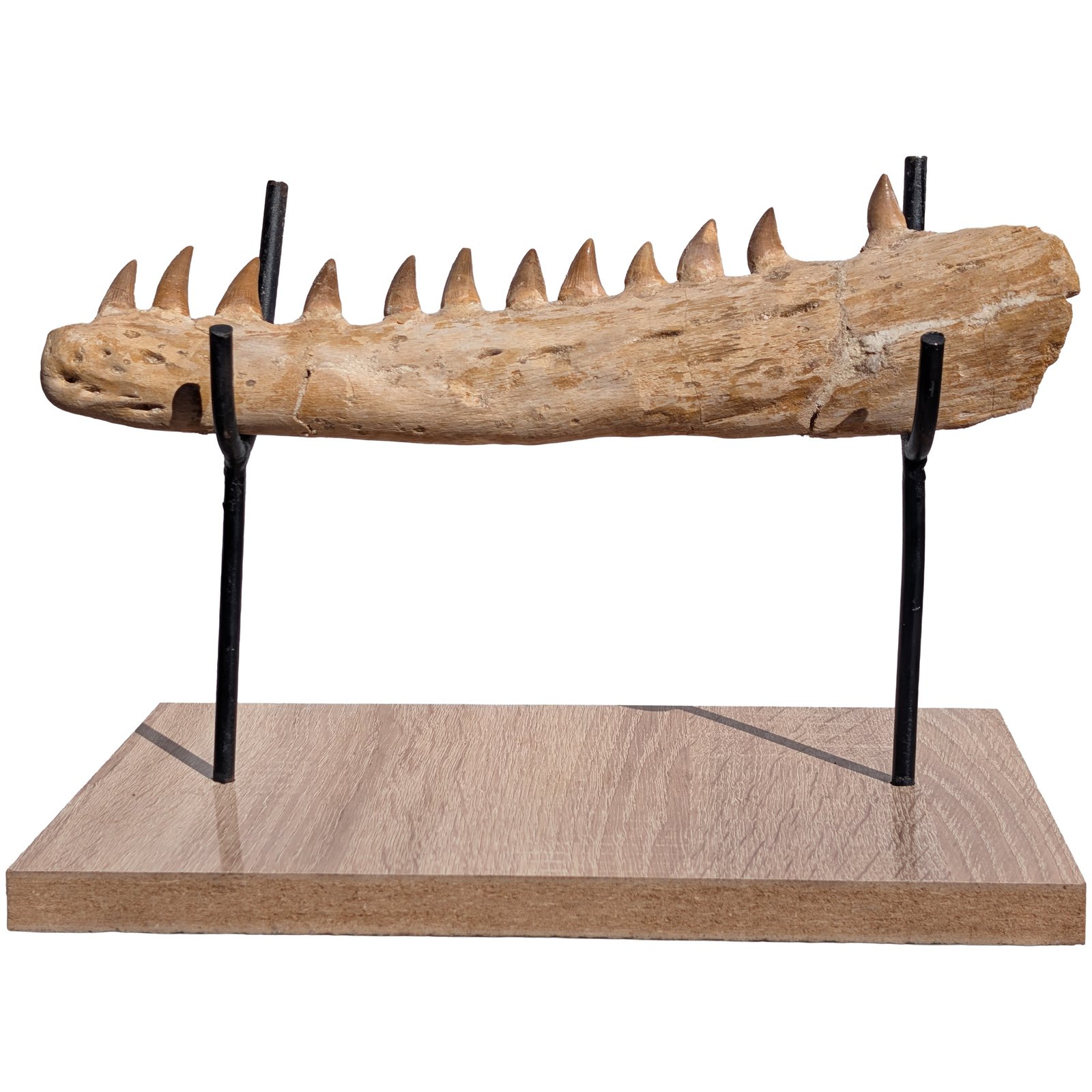
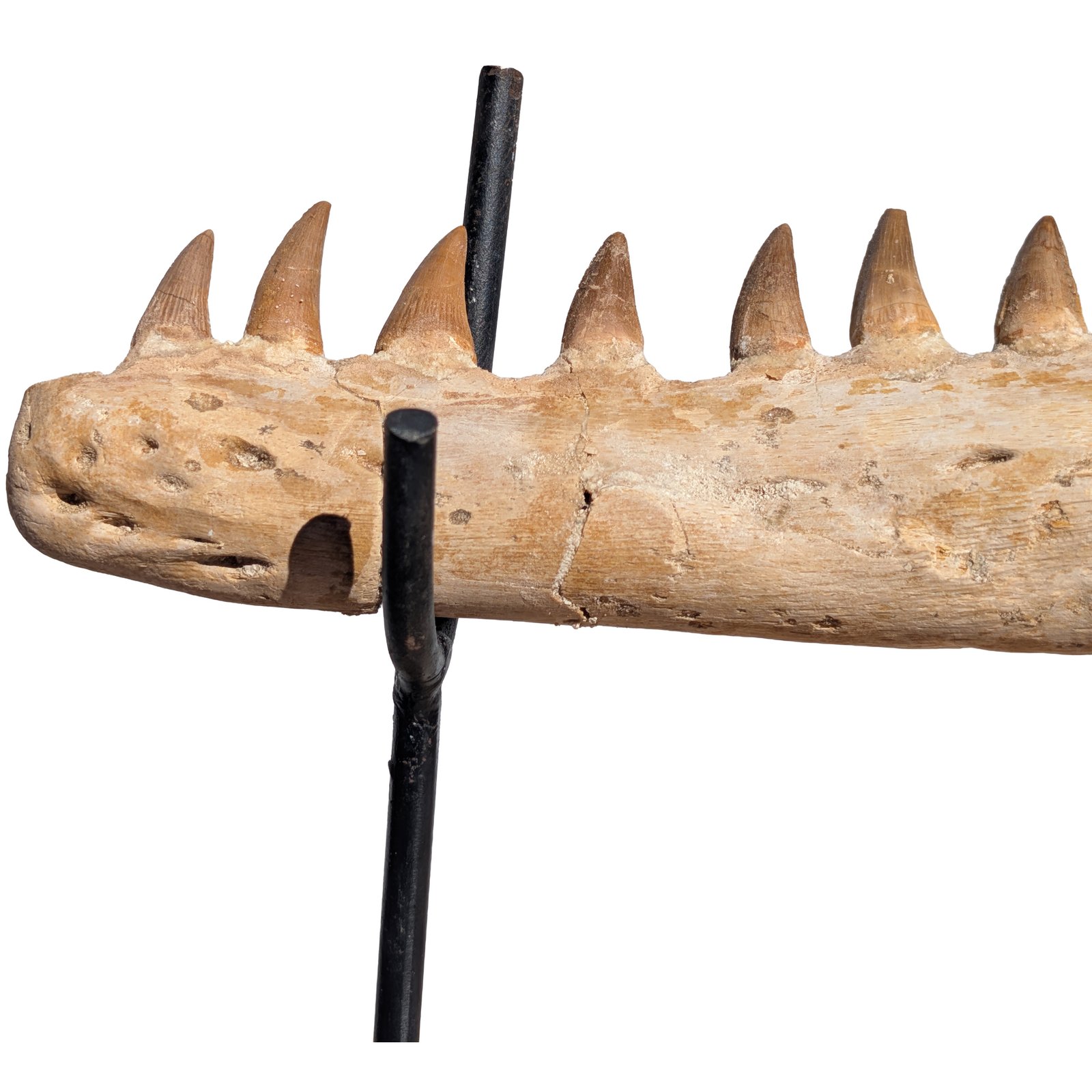
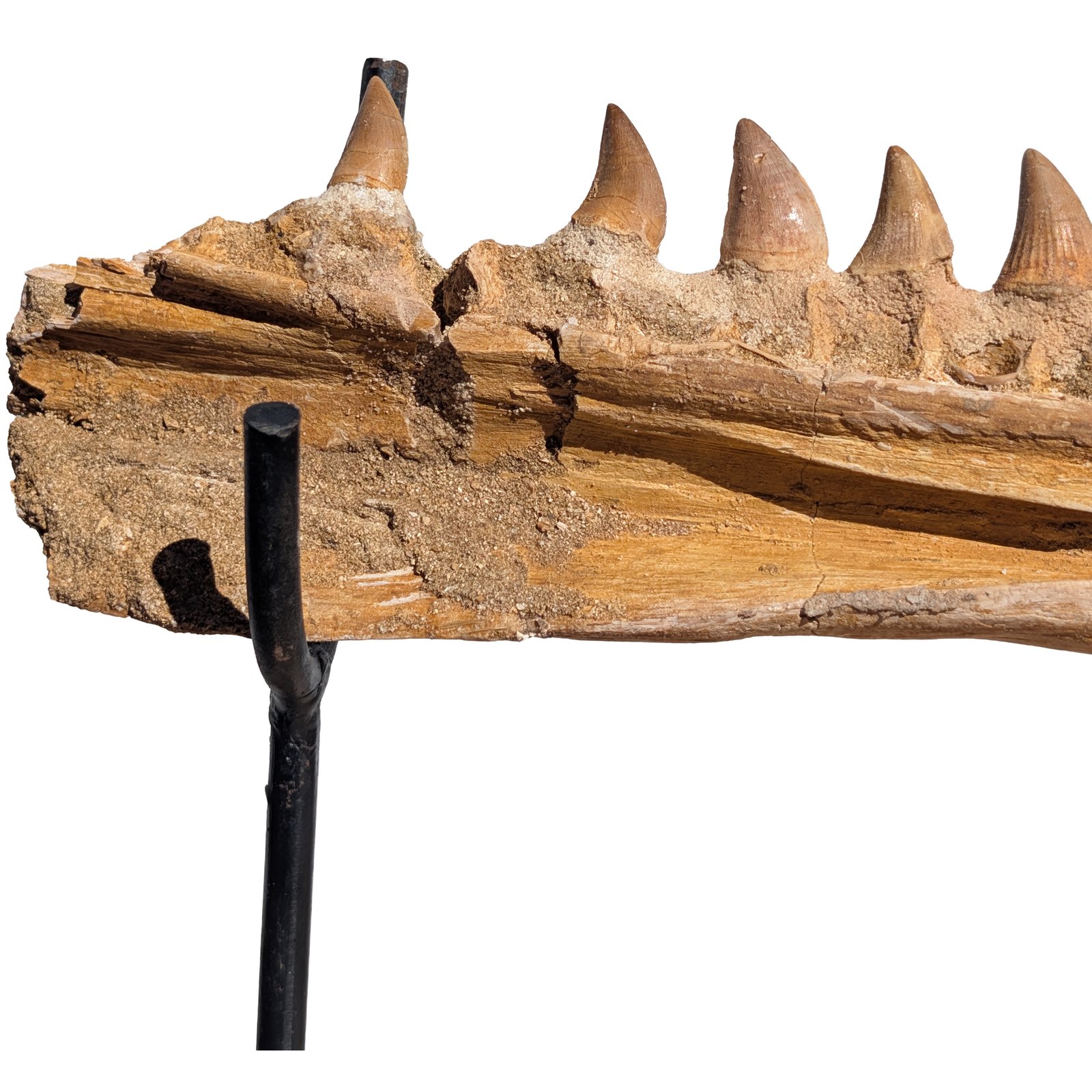
The Mosasaur Research Jaw Display shows part of this powerful jaw structure. Fossil jaws often preserve the tooth sockets. In some cases the teeth remain attached in the bone.
That detail helps scientists study mosasaur species.
Researchers compare jaw shape. Tooth spacing. Bone thickness. These clues help identify the type of mosasaur. Common species found in Morocco include Mosasaurus beaugei and Prognathodon.
The fossil formed when the animal died and sank to the sea floor. Sediment buried the bones slowly. Over millions of years. Minerals replaced the original bone structure.
This mineral process preserved the fossil in phosphate rock.
Morocco is now one of the richest mosasaur fossil regions in the world. The phosphate mines expose ancient seabeds where mosasaur fossils are often found. Teeth are common. But intact jaw sections are harder to recover.
That makes a Mosasaur Research Jaw Display a strong collector specimen.
This fossil has been prepared for display while keeping the natural fossil surface. Small mineral marks or wear may be present. That is normal for fossils of this age.
Each specimen is unique. Shape and bone detail will vary.
If you collect marine reptile fossils you may also like our
Internal Link: Mosasaur Tooth Fossil Collection
For more scientific information about mosasaurs visit the Natural History Museum resource:
https://www.nhm.ac.uk/discover/mosasaur.html
Fossils are packed with protective material for shipping. Each specimen includes a 30 day authenticity warranty confirming it is genuine fossil material.
Features
Authentic Mosasaur Research Jaw Display fossil
Real marine reptile jaw from Late Cretaceous seas
Visible jaw bone and tooth socket structure
Phosphate fossil preservation from Morocco
Ideal for fossil research collections and displays
Each fossil naturally unique
Secure shipping with authenticity warranty
Technical Specifications
| Feature | Details |
|---|---|
| Fossil Type | Mosasaur jaw fossil |
| Material | Fossilized bone in phosphate matrix |
| Size | Approx. 29-30 cm |
| Estimated Age | 66–72 million years |
| Origin | Morocco phosphate beds |