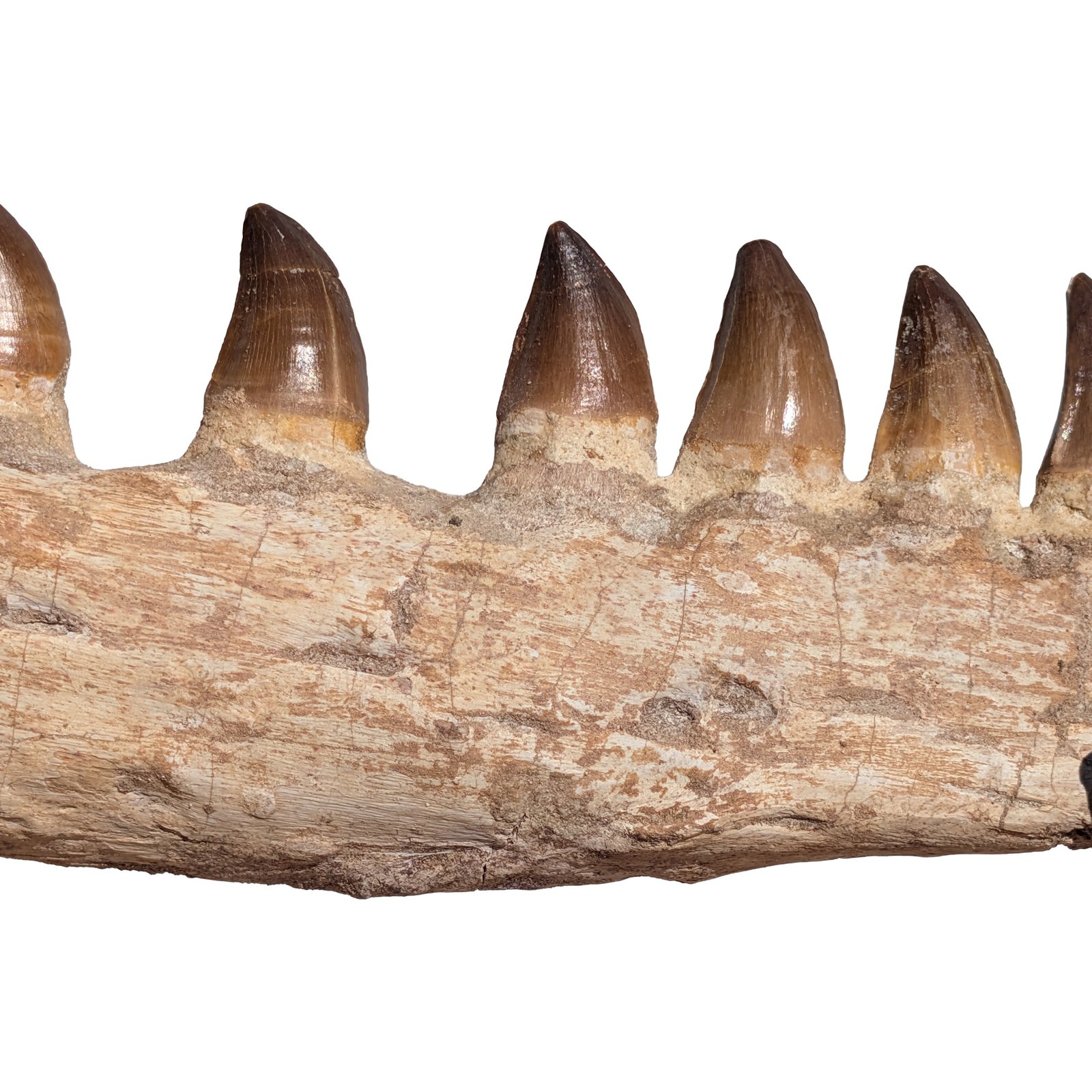
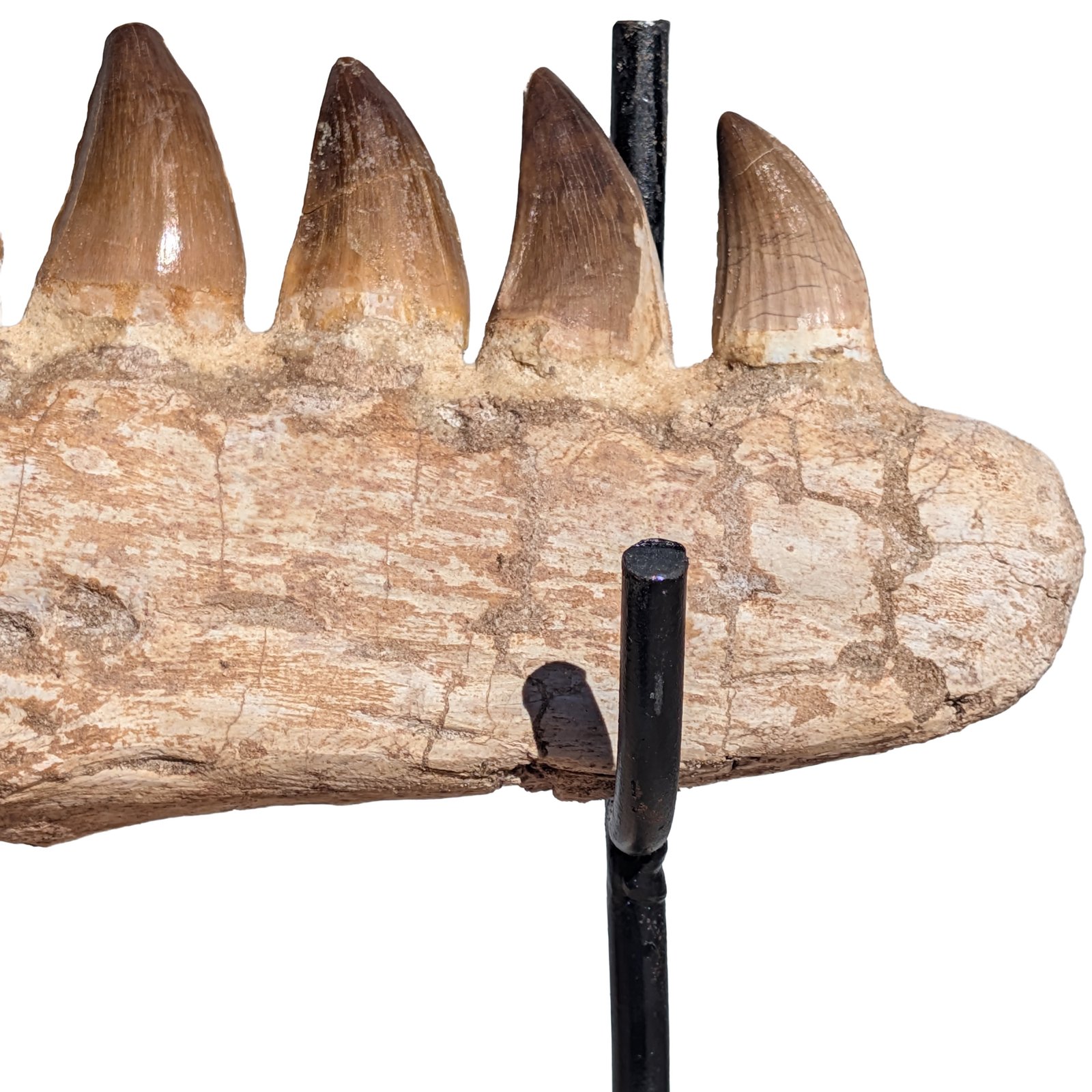
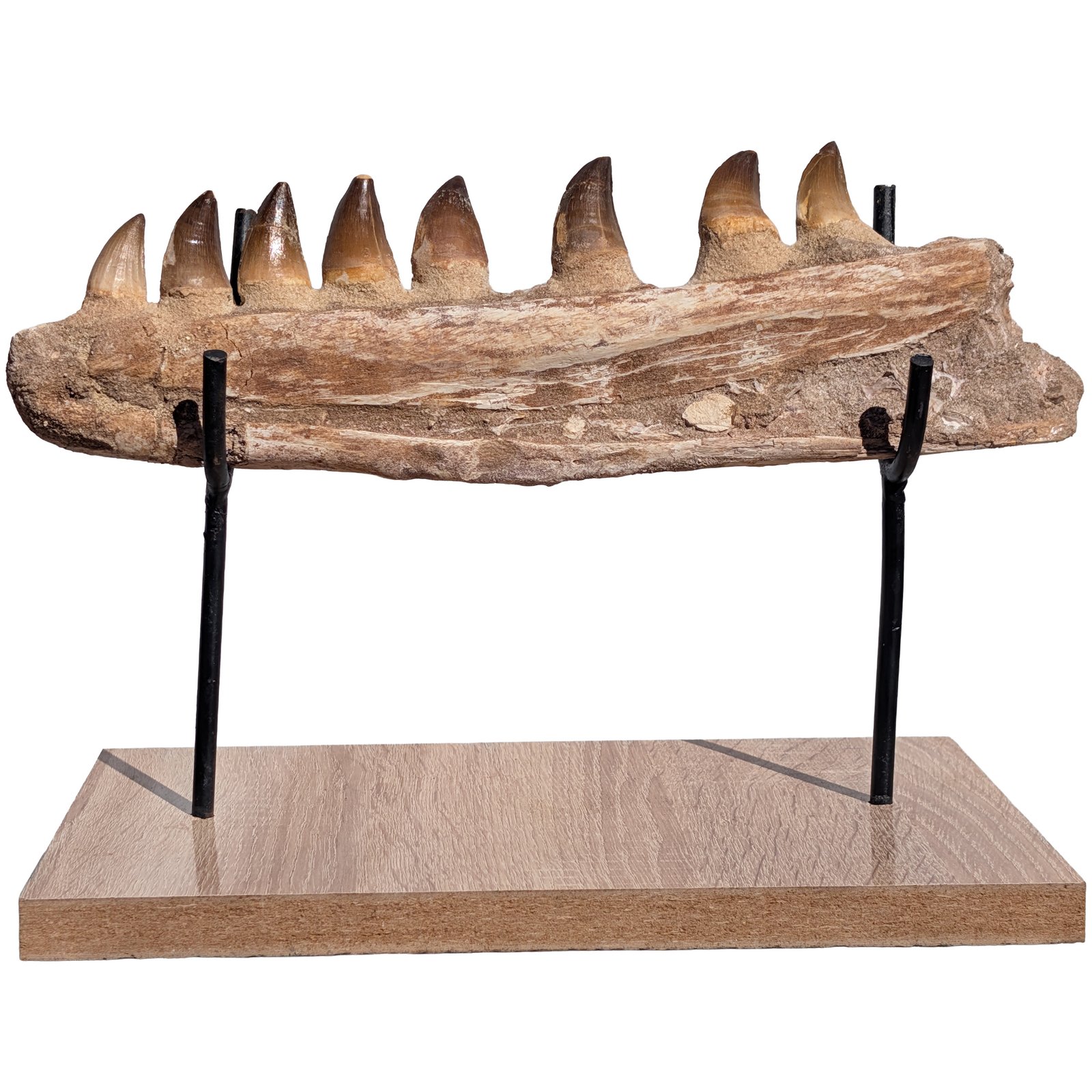
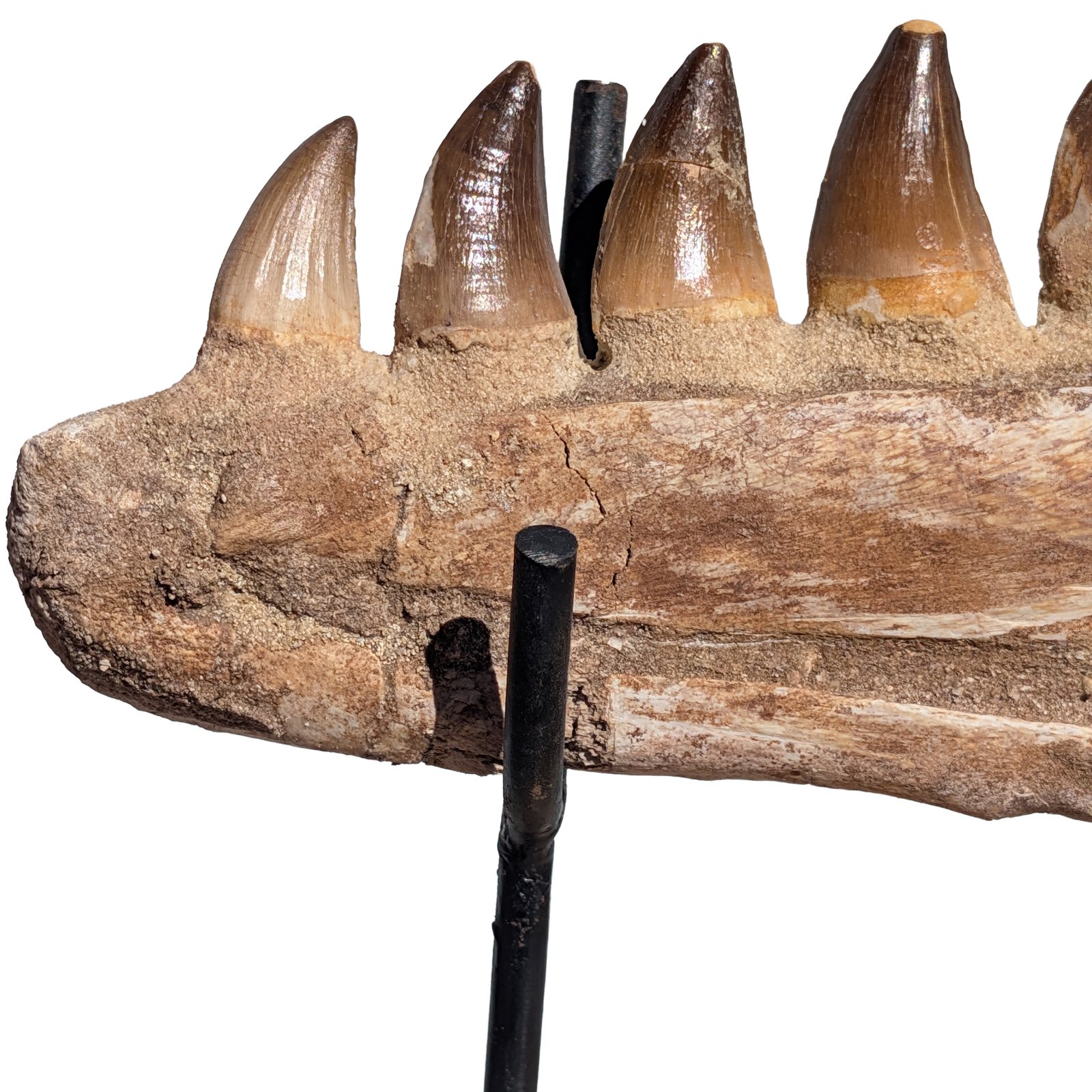
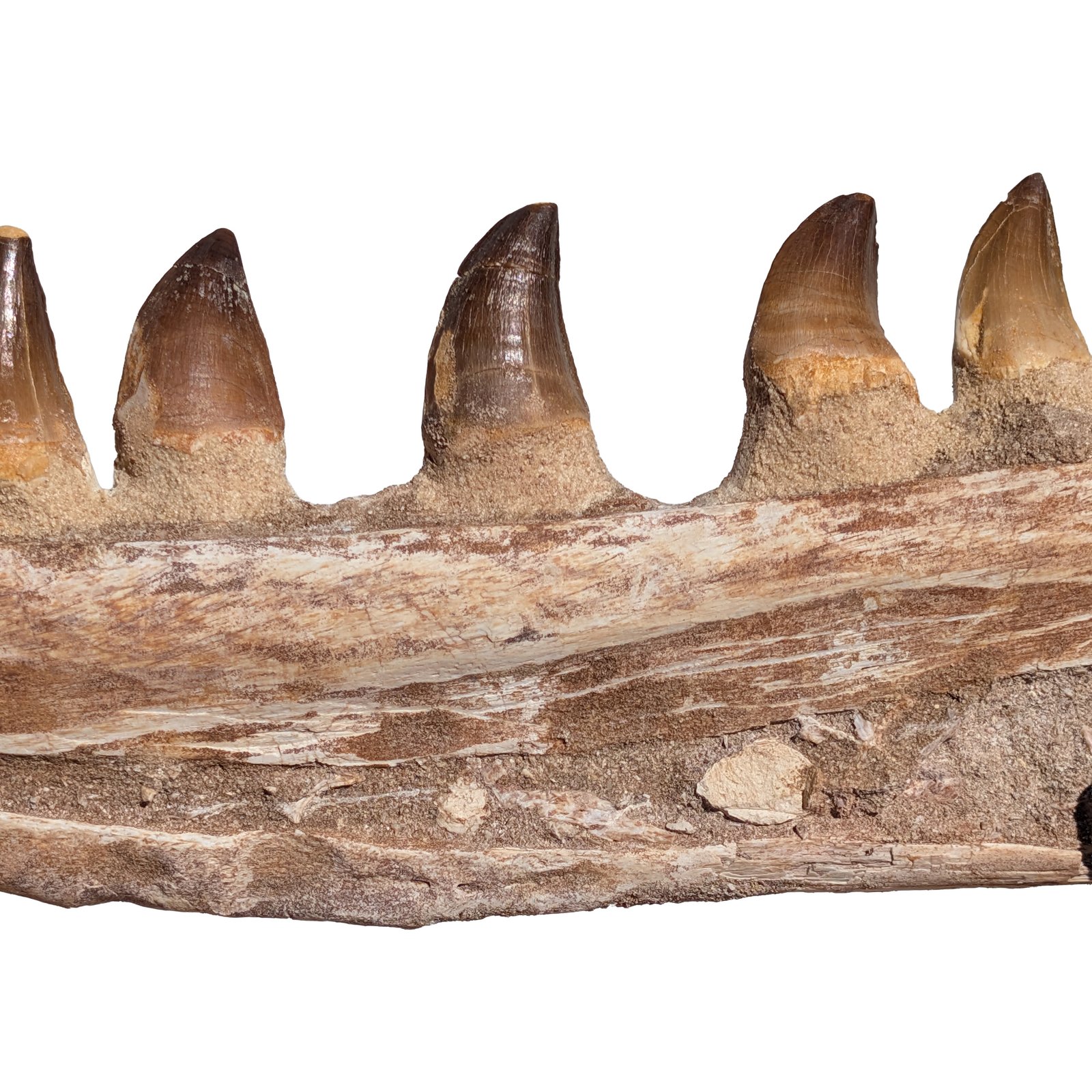
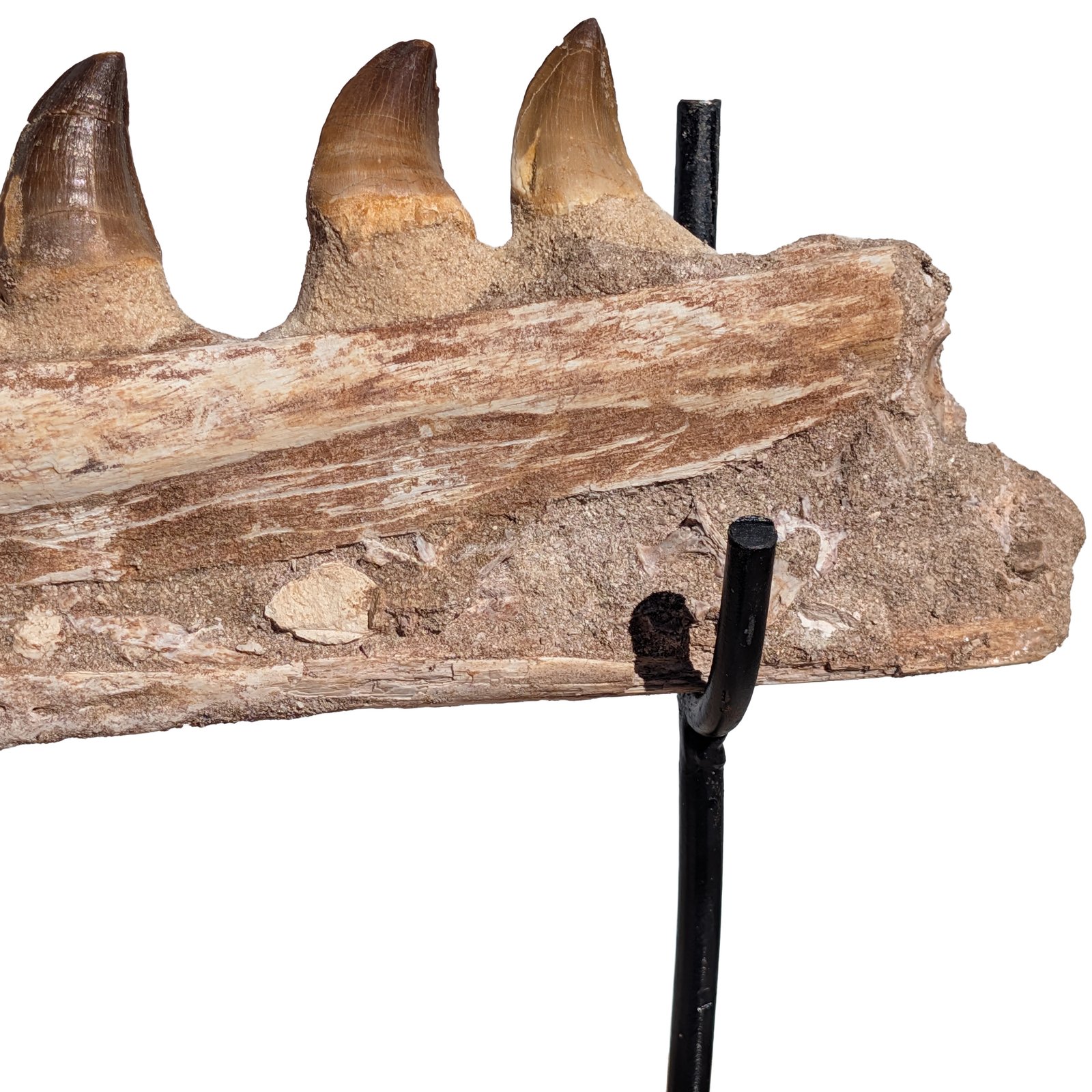
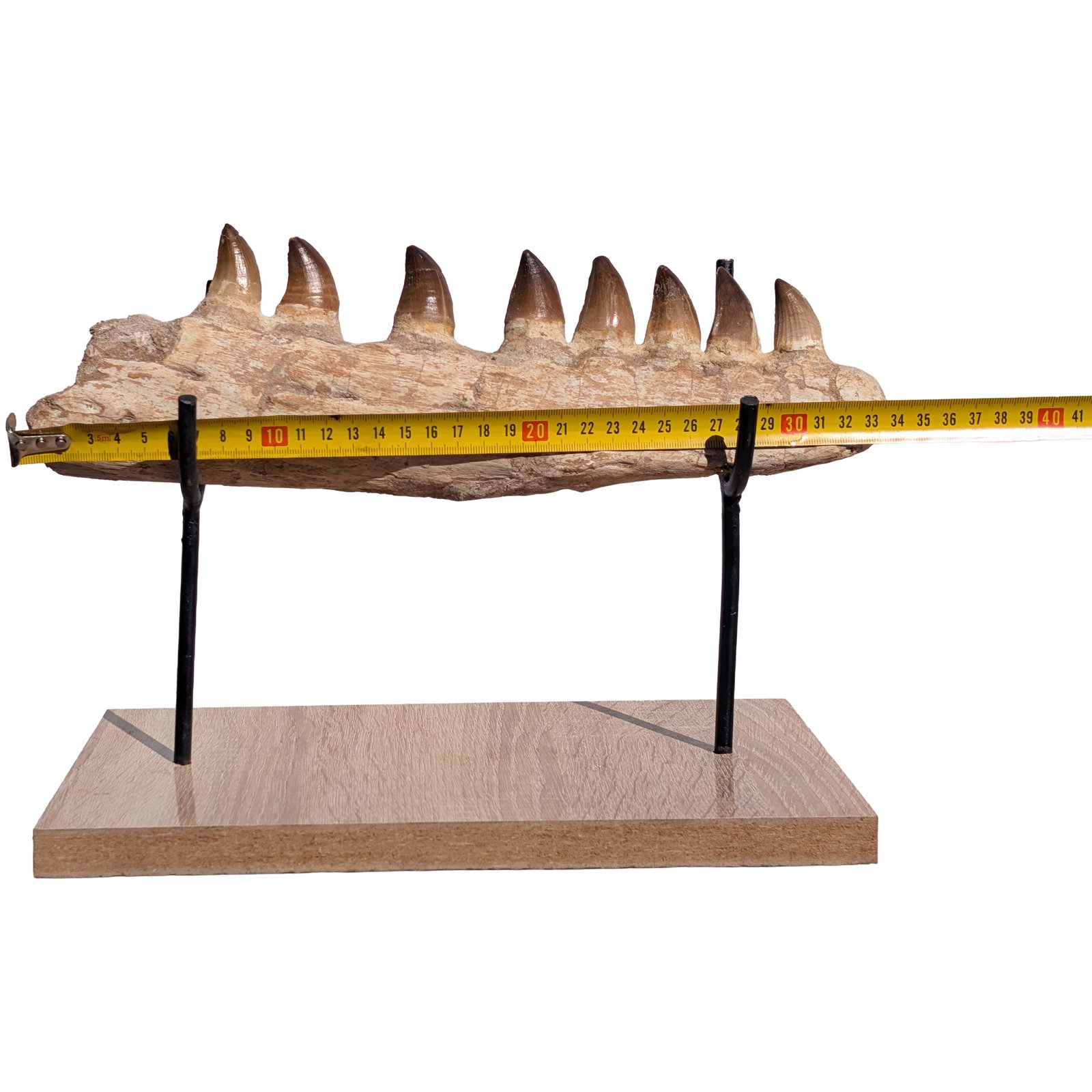

Mosasaur Study Specimen Morocco Fossil Overview
The Mosasaur Study Specimen Morocco comes from the phosphate fossil beds of Morocco. These deposits formed during the Late Cretaceous period around 66 to 72 million years ago. At that time. Much of the region sat beneath a warm shallow sea.
That sea held many animals. Fish. Sharks. Ammonites. Marine reptiles.
Mosasaurs ruled those waters.
A mosasaur was a powerful marine reptile. Not a dinosaur. It belonged to the same larger group as monitor lizards. But its body evolved for life in water. Long shape. Strong tail fin. Paddle like limbs.
Many mosasaurs grew very large. Some species reached over 15 meters in length. Their skull and jaws were built for hunting.
The teeth were one of their key tools.
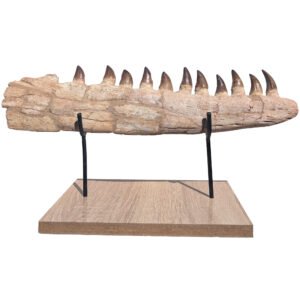
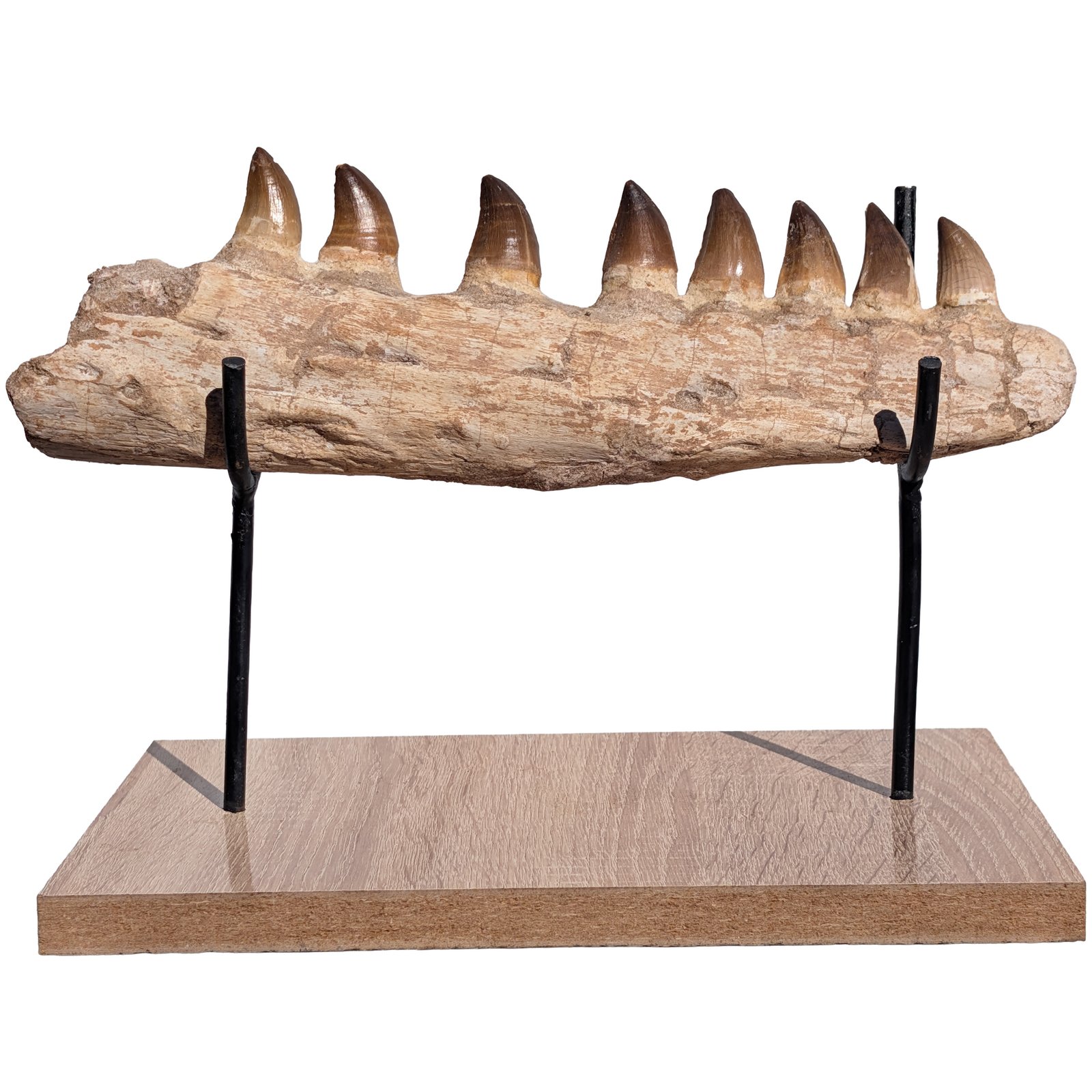
Mosasaur teeth were long and cone shaped. They had smooth enamel and sharp tips. These teeth did not slice like shark teeth. Instead they gripped prey tightly. Fish and squid could not escape once caught.
Many mosasaurs hunted fast moving fish. But large species also attacked turtles. Other marine reptiles. Even smaller mosasaurs.
Another special feature existed inside the mouth.
Mosasaurs had extra teeth on the roof of the mouth. These teeth helped move prey down the throat. Once prey entered the jaws. It rarely escaped.
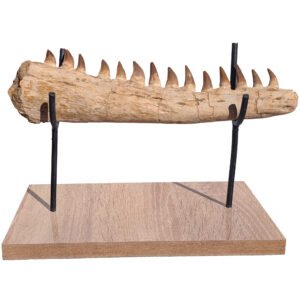
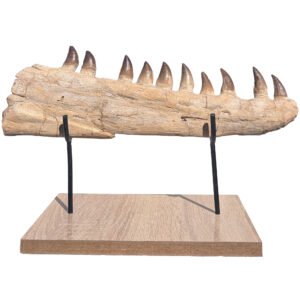
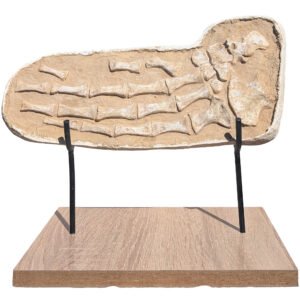
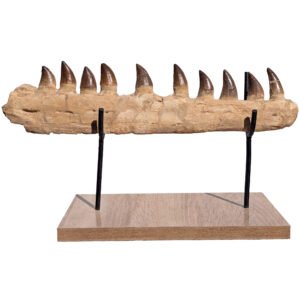
The Mosasaur Study Specimen Morocco shows this feeding system through preserved tooth structure. Study specimens may include single teeth. Partial jaw fragments. Or teeth still attached to matrix rock.
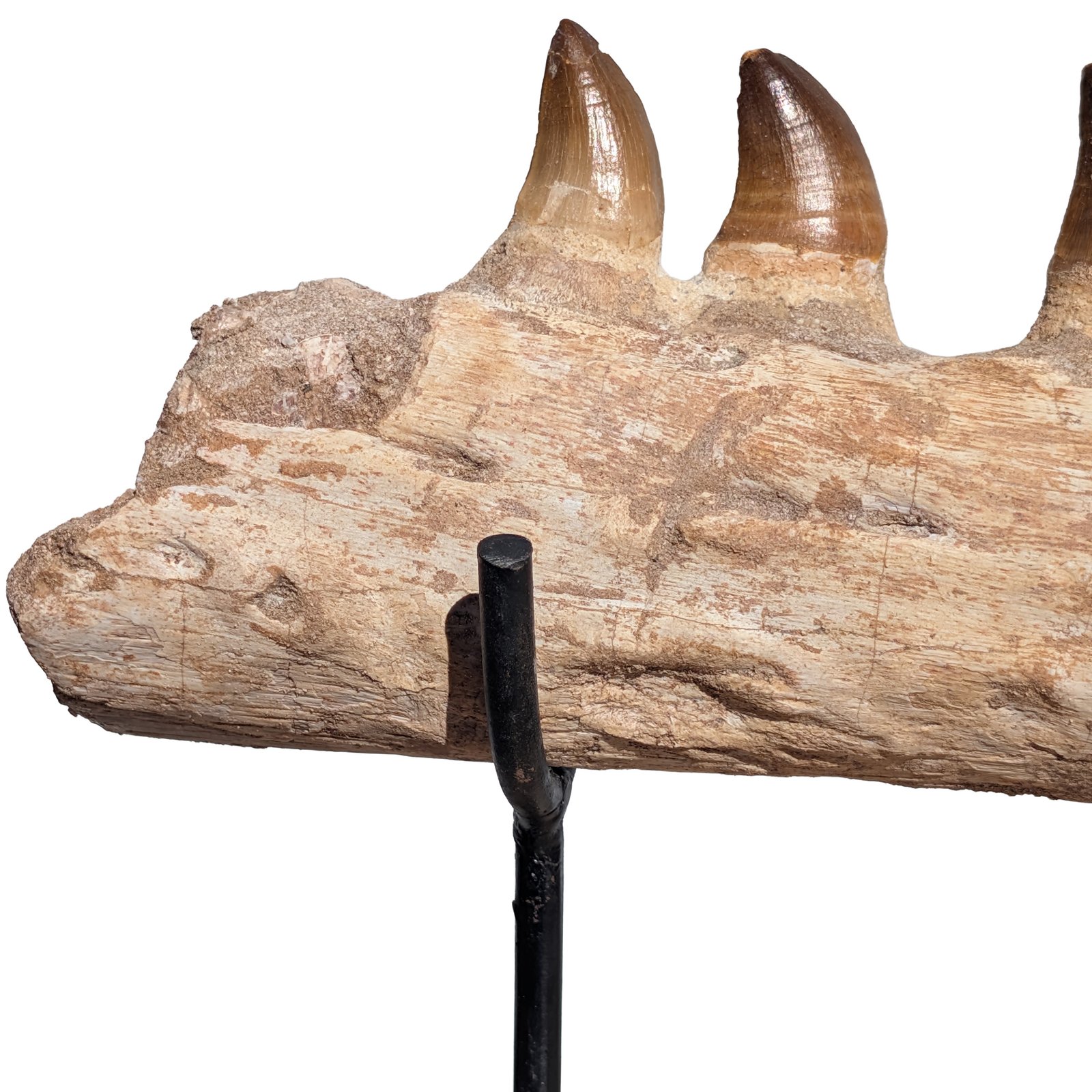
Because they come from real fossil beds. The bone and teeth often show mineral color changes. Dark brown. Black. Or deep red tones.
That mineral color comes from the phosphate sediments where the fossil formed.
Fossils like this formed after the animal died and sank to the sea floor. Sediment slowly covered the bones. Over millions of years. Minerals replaced the organic material. The original bone shape stayed preserved.
Morocco is one of the most important mosasaur fossil locations in the world today. Many museum mosasaur fossils were first discovered there.
But not every fossil needs to be museum size.
A Mosasaur Study Specimen Morocco gives a clear learning piece. Something that can be held and examined closely. That makes it popular with teachers. Fossil collectors. Students of paleontology.
Each specimen shows natural fossil texture. Small mineral cracks or wear may appear. That is normal in fossils of this age.
Every piece is slightly different.
For collectors building a marine fossil display see our
Internal Link: Mosasaur Tooth Fossil Collection
For more scientific background about mosasaurs visit the Natural History Museum guide:
https://www.nhm.ac.uk/discover/mosasaur.html
All fossils are packed carefully for shipping. Protective padding is used. Each fossil includes a 30 day authenticity guarantee confirming it is genuine fossil material.
Features
Authentic Mosasaur Study Specimen Morocco fossil
Real marine reptile fossil from Late Cretaceous deposits
Natural fossil tooth or jaw fragment structure
Phosphate preserved fossil material
Ideal for study collections or teaching displays
Each fossil unique in color and shape
Carefully packed with authenticity warranty
Technical Specifications
| Feature | Details |
|---|---|
| Fossil Type | Mosasaur tooth or jaw study fossil |
| Material | Fossilized bone or tooth in phosphate matrix |
| Size | Approx. 32.5 cm |
| Estimated Age | 66–72 million years |
| Origin | Morocco phosphate beds |