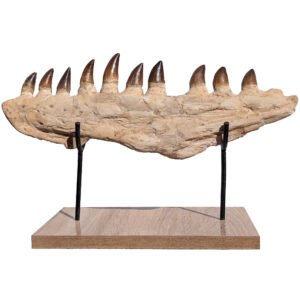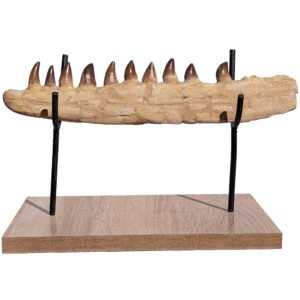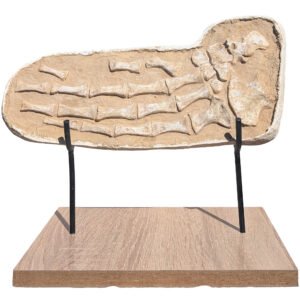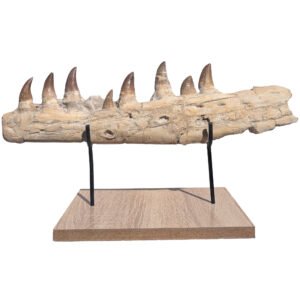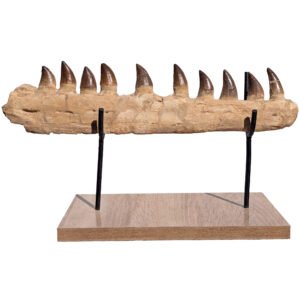
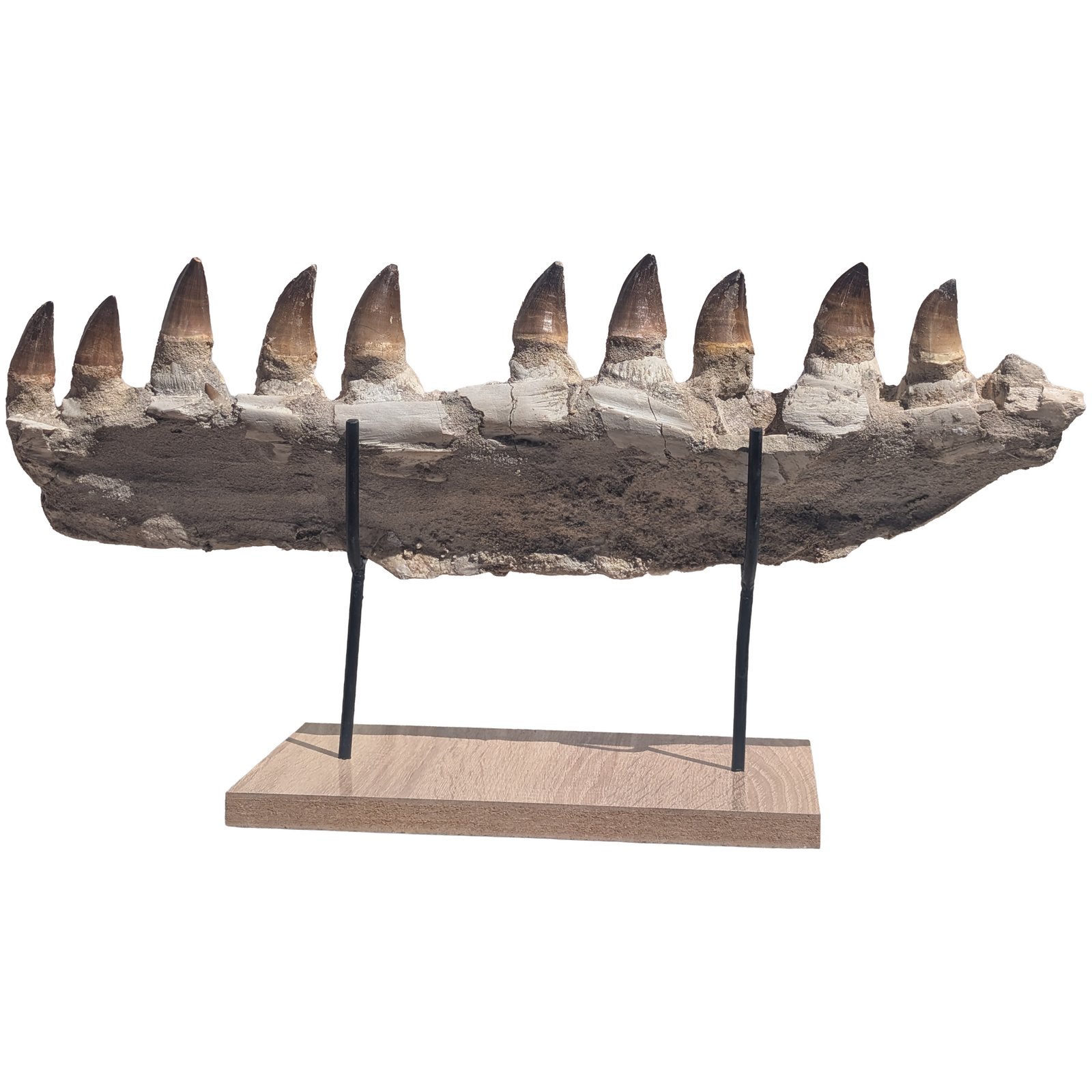
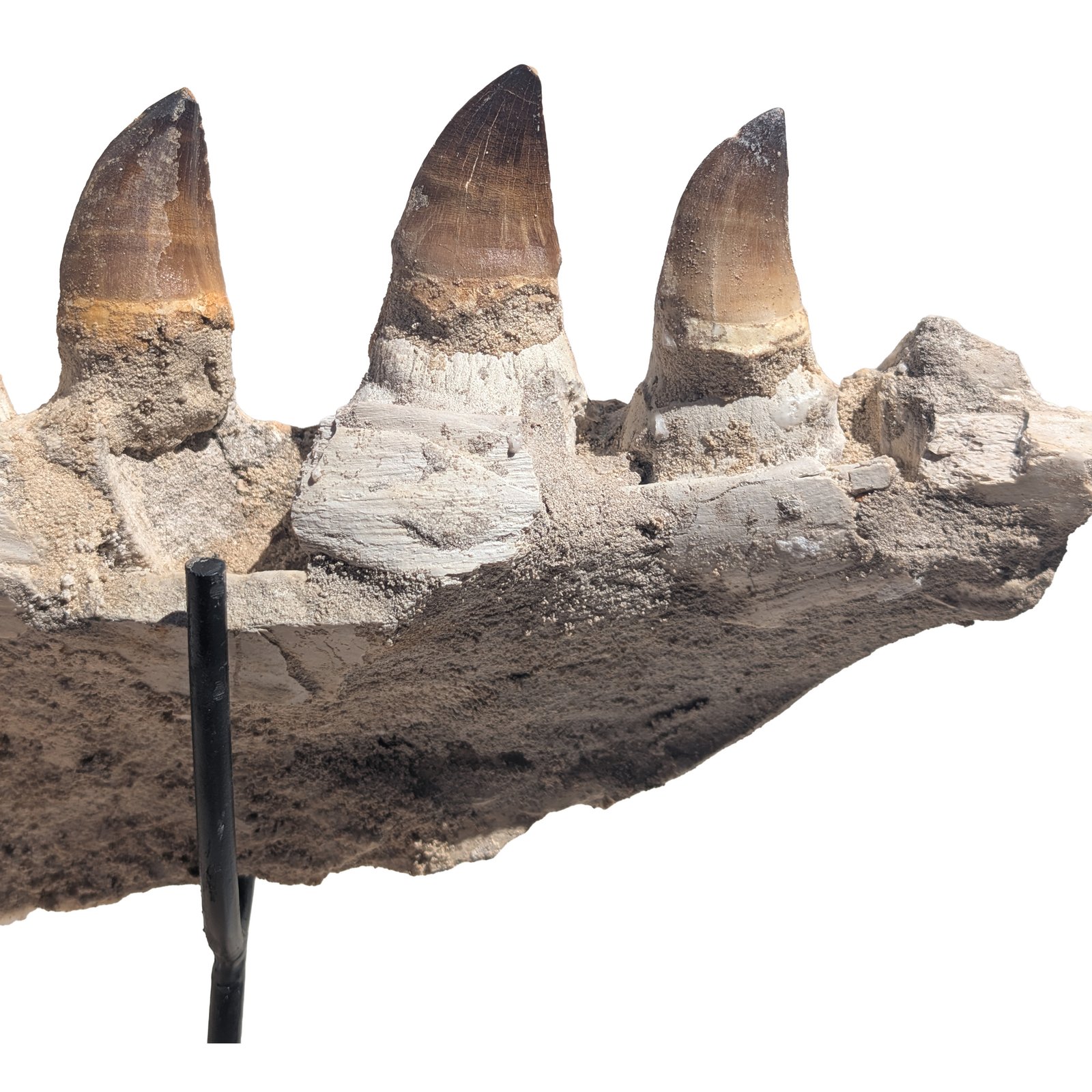
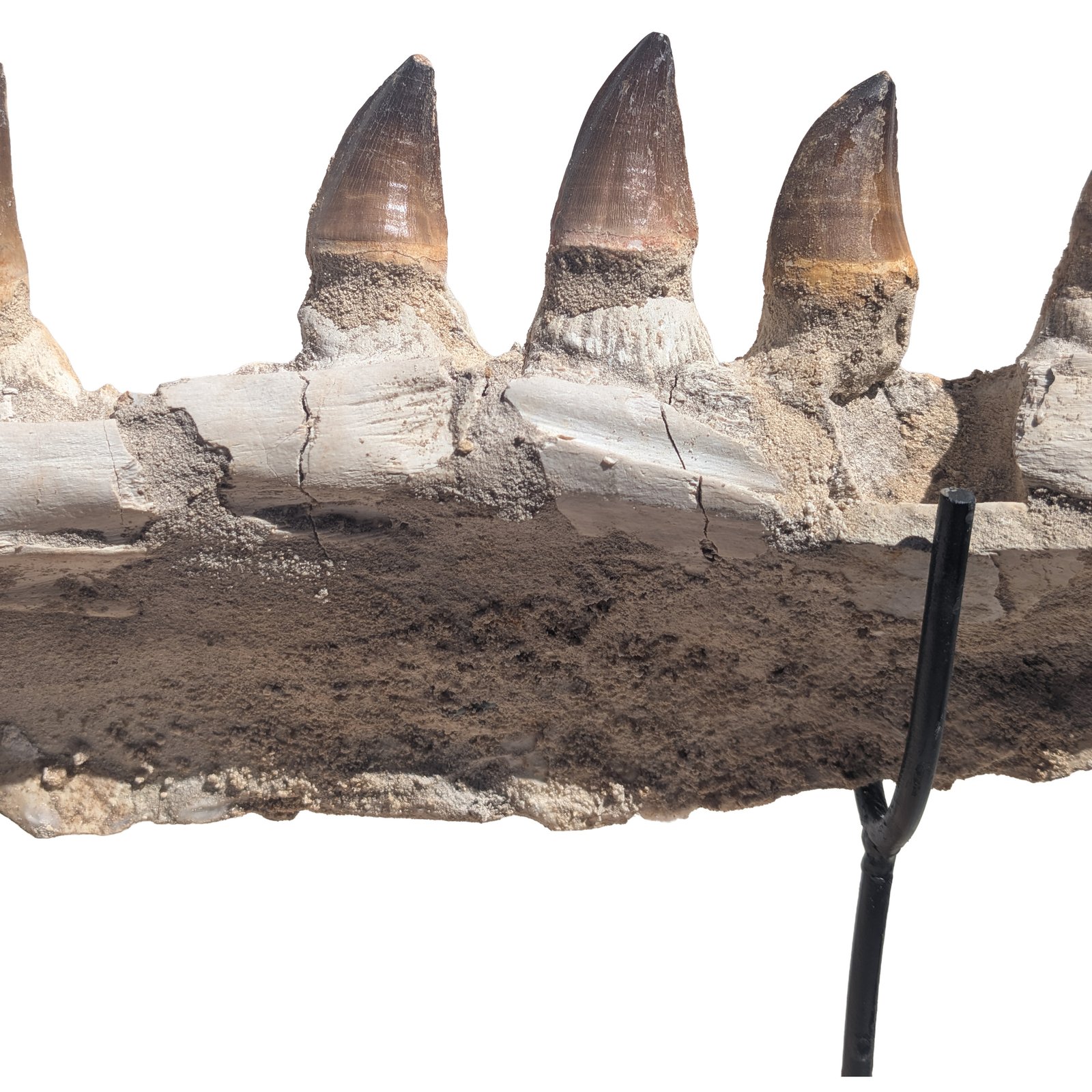
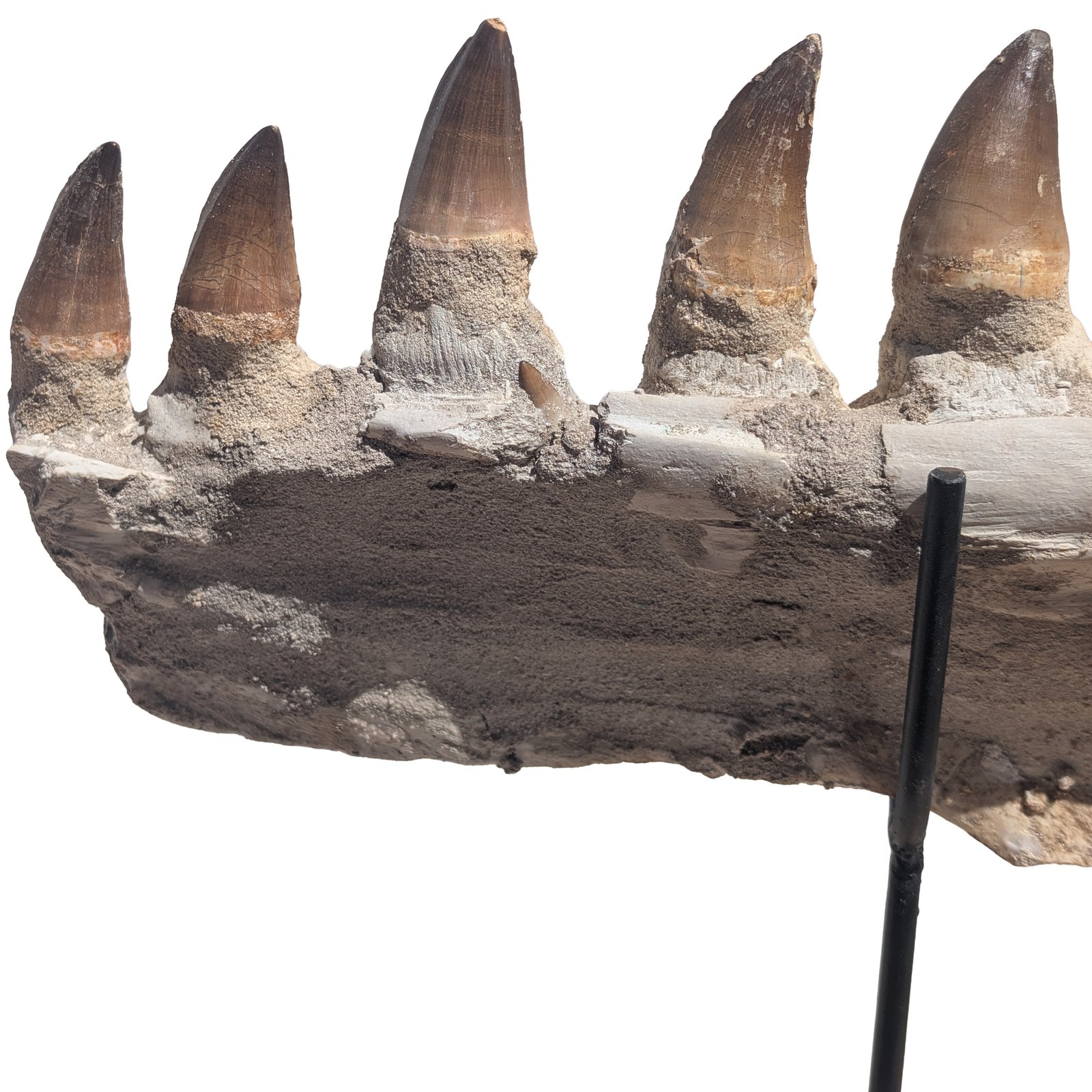
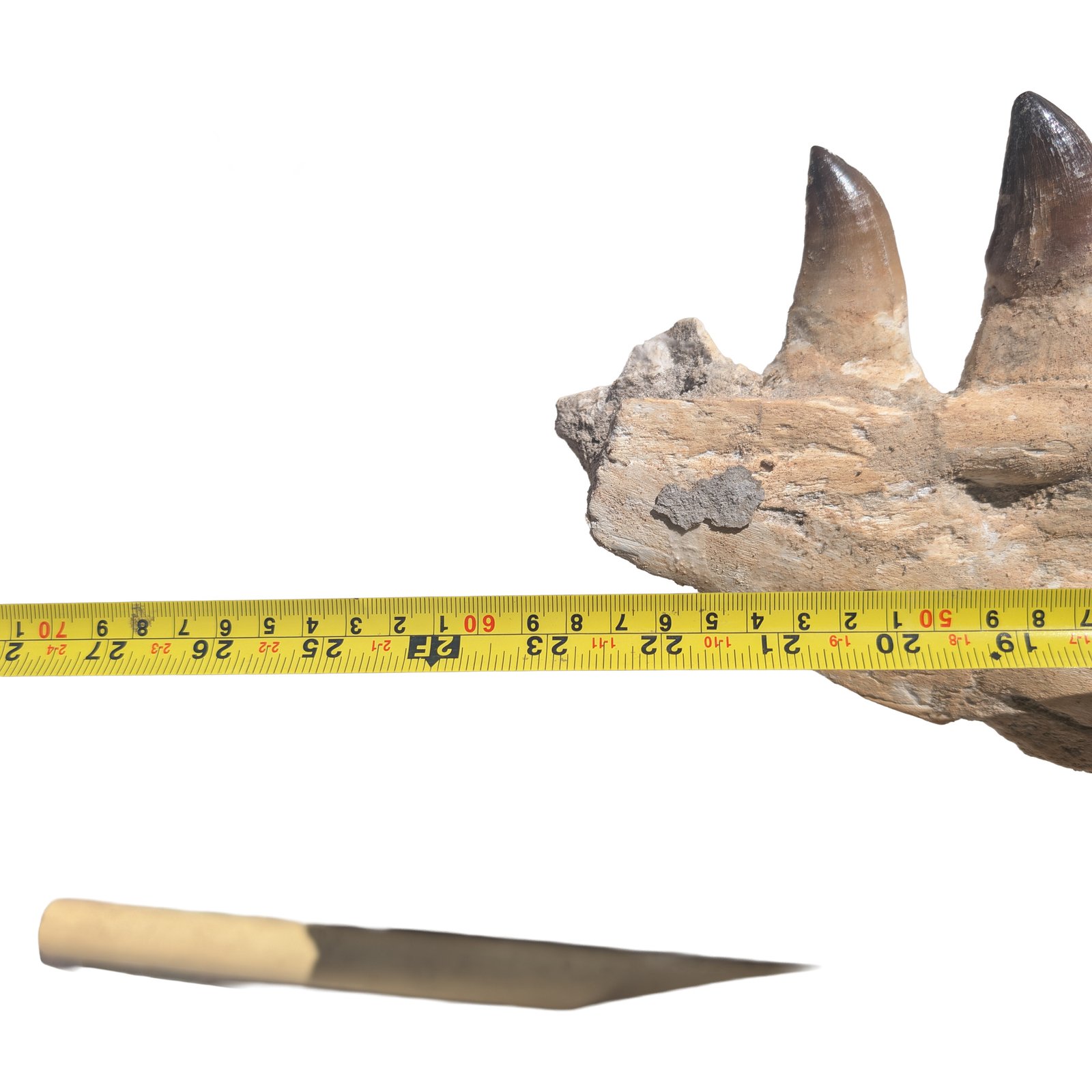
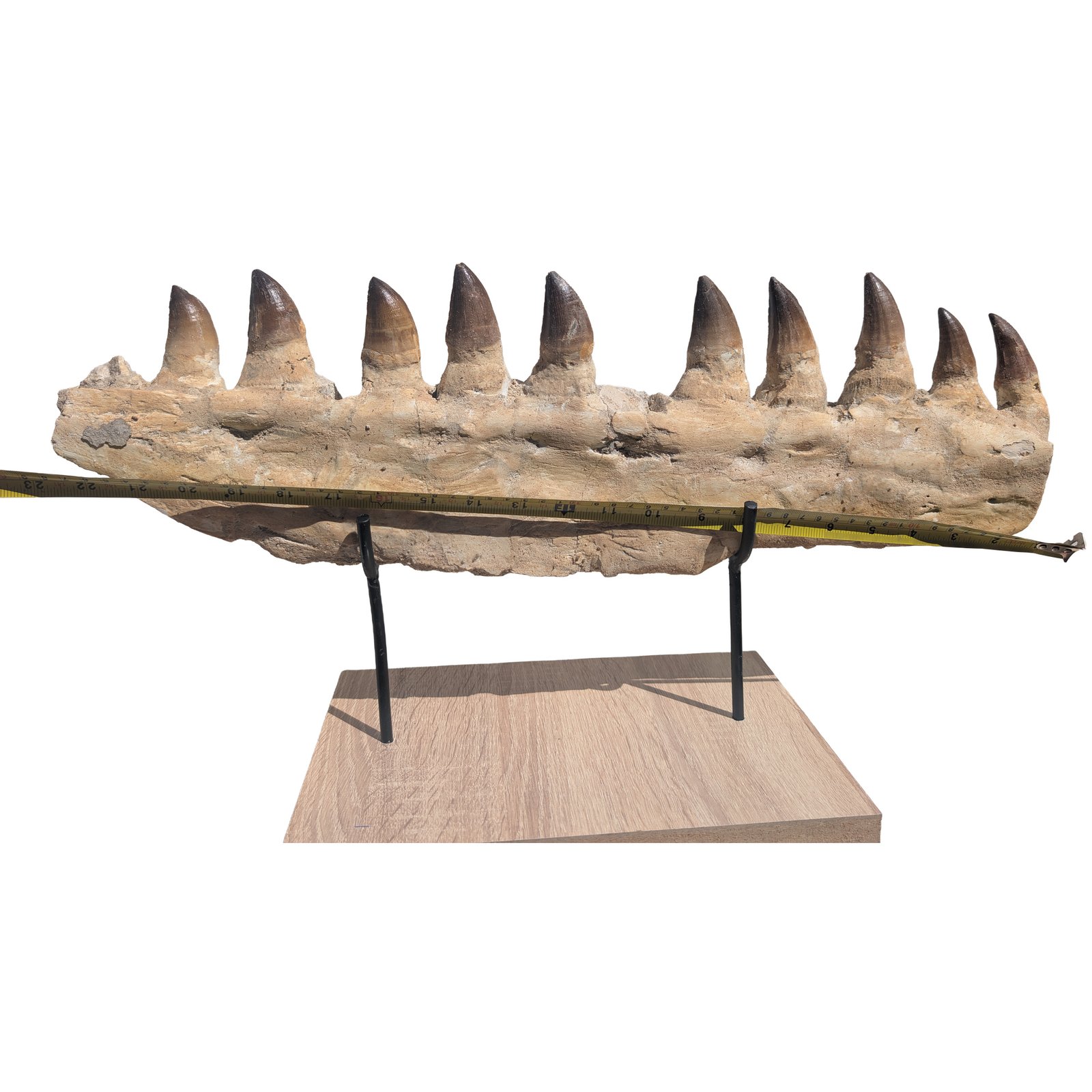
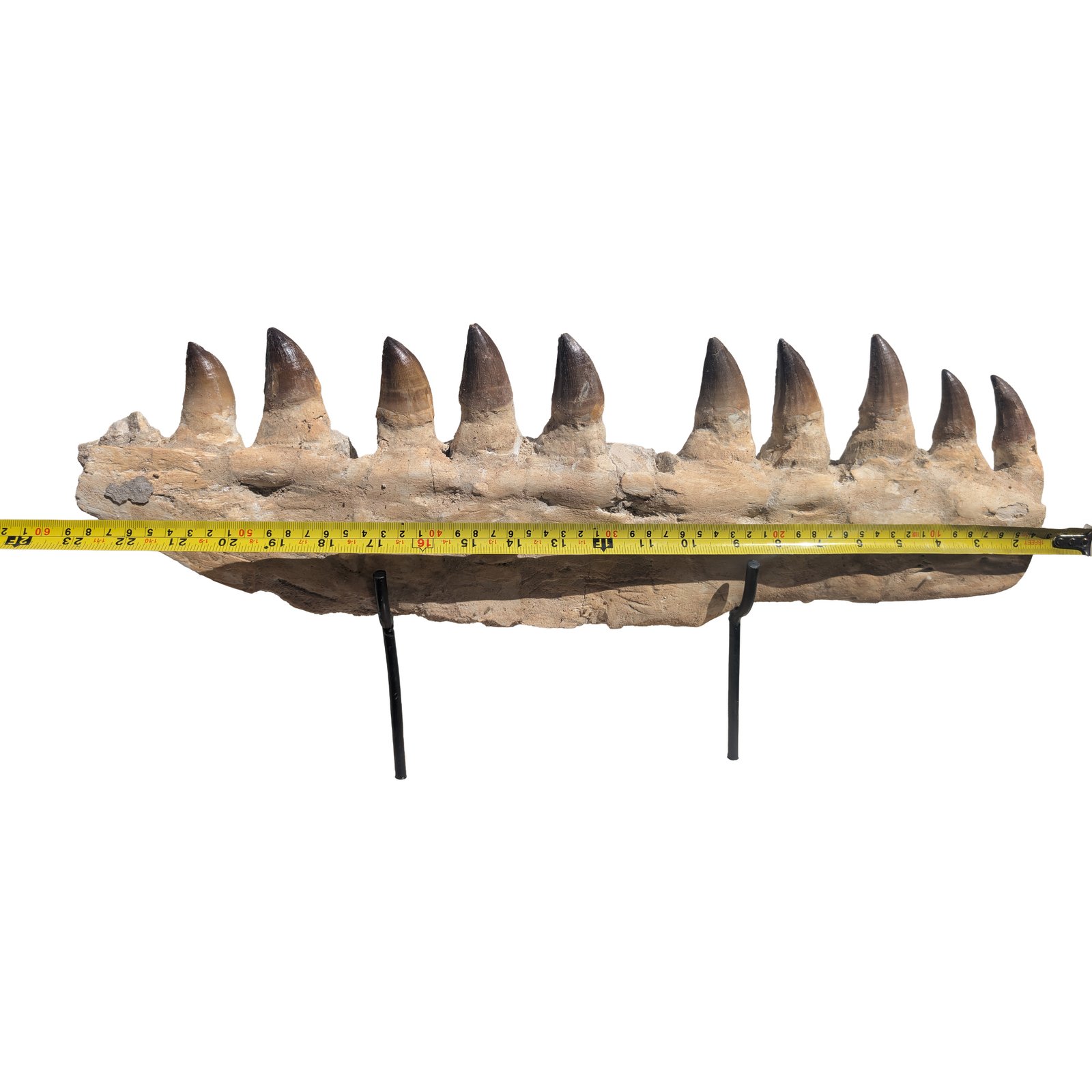
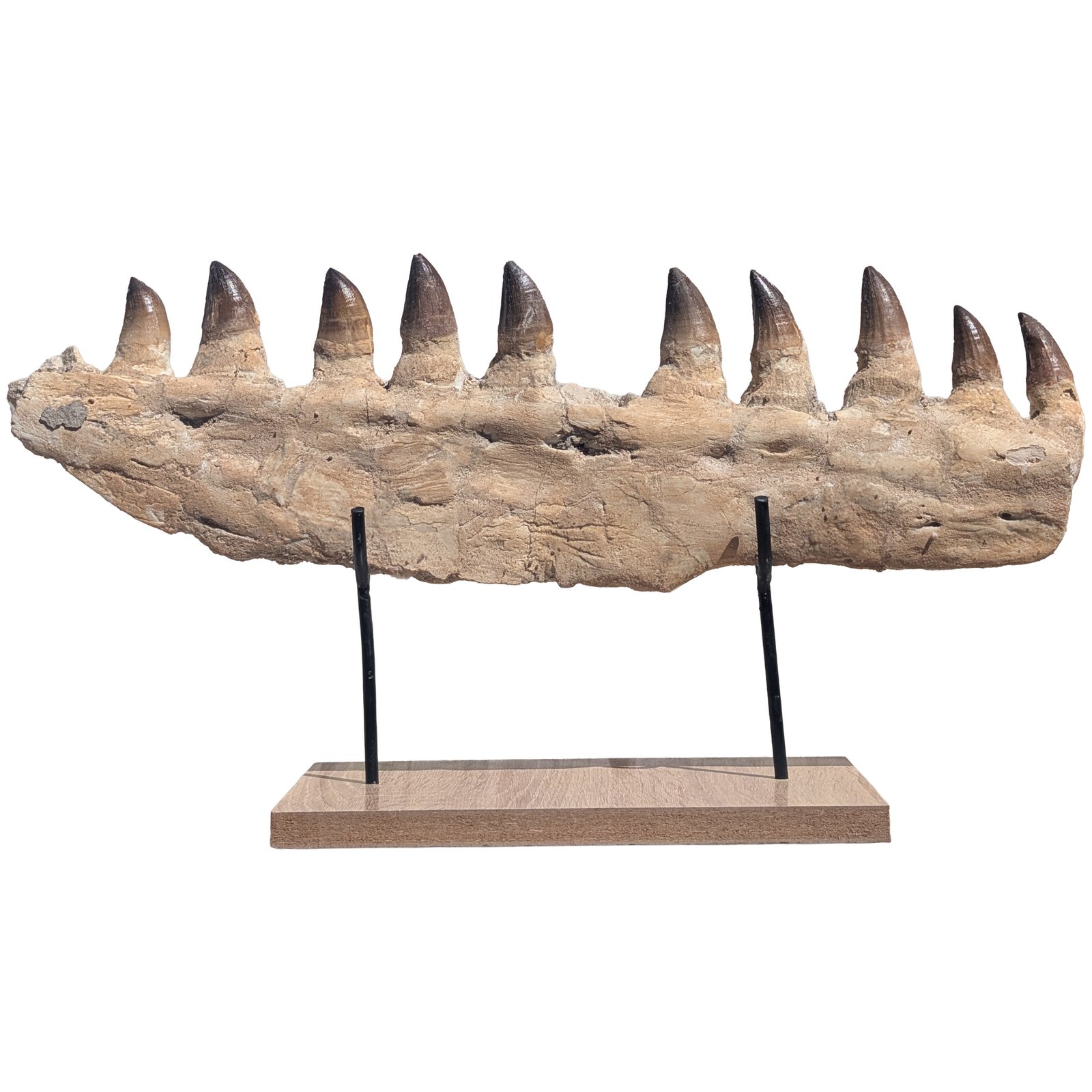
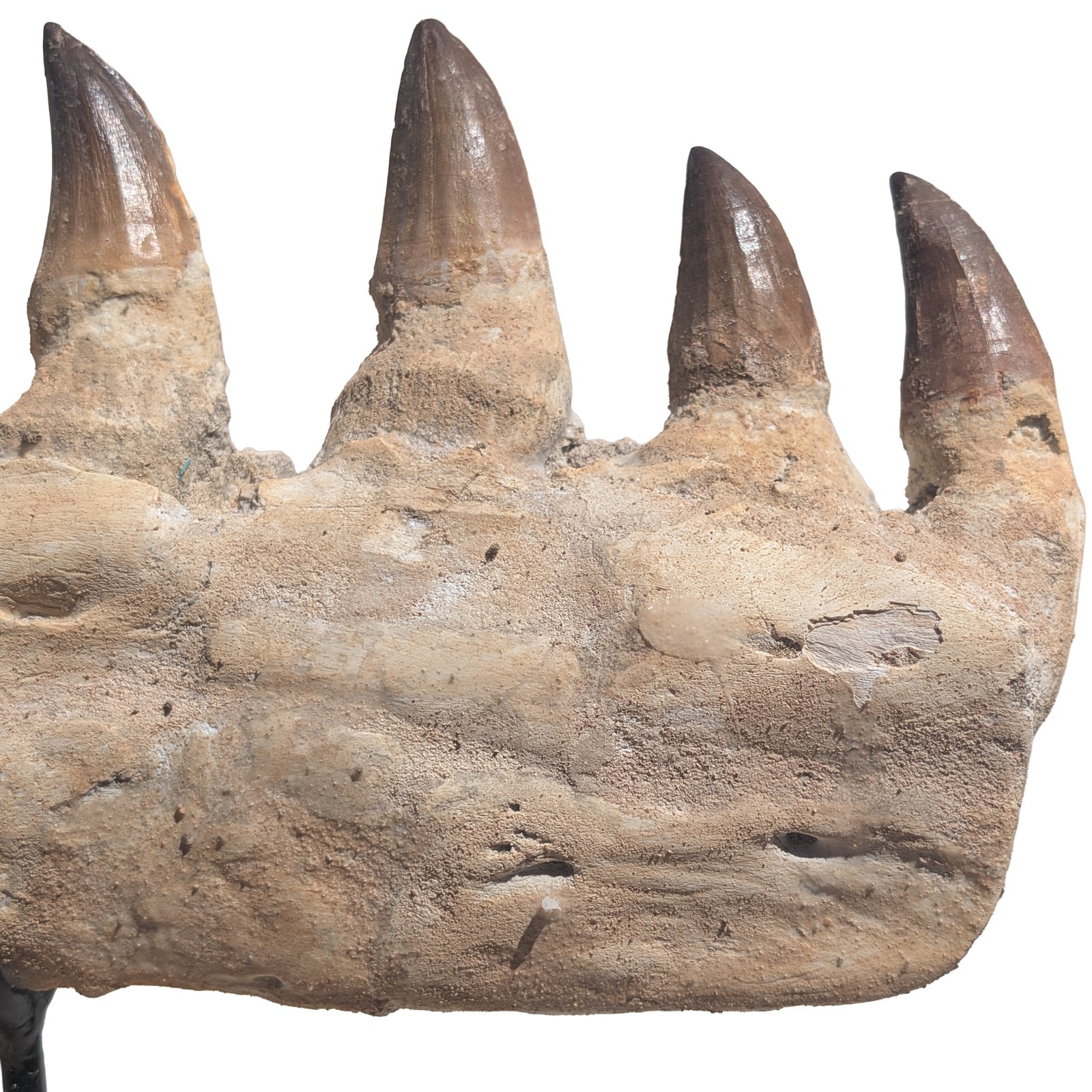
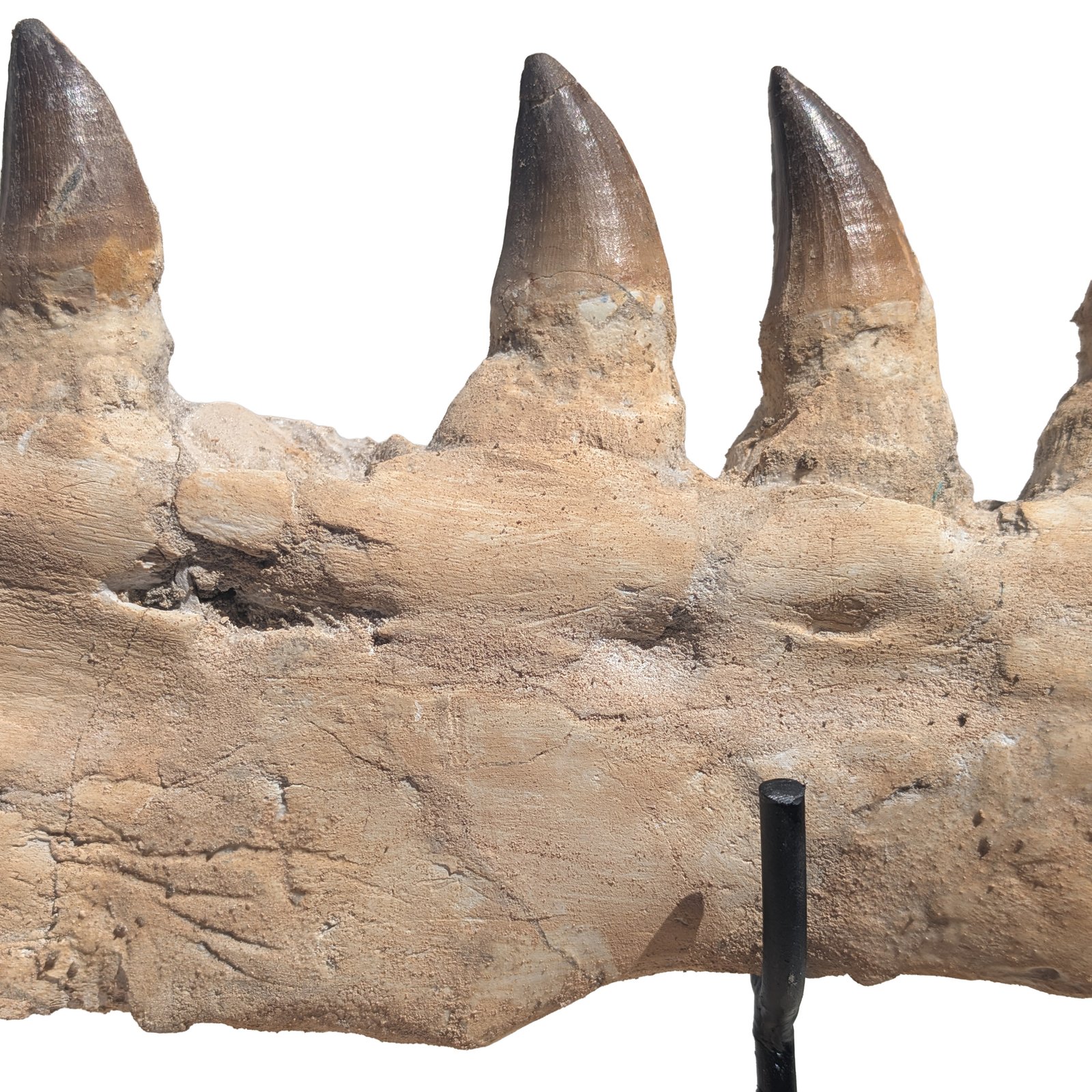
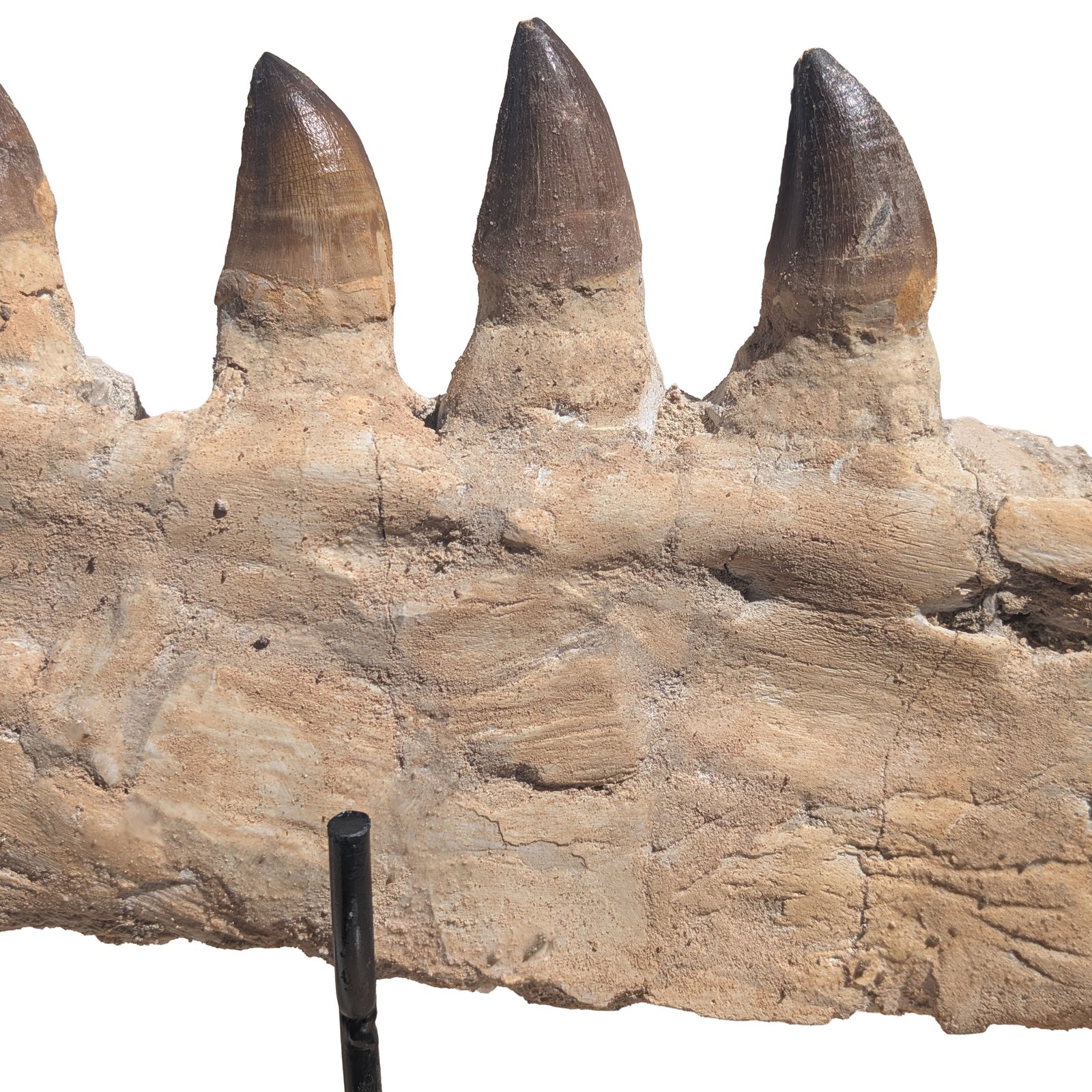

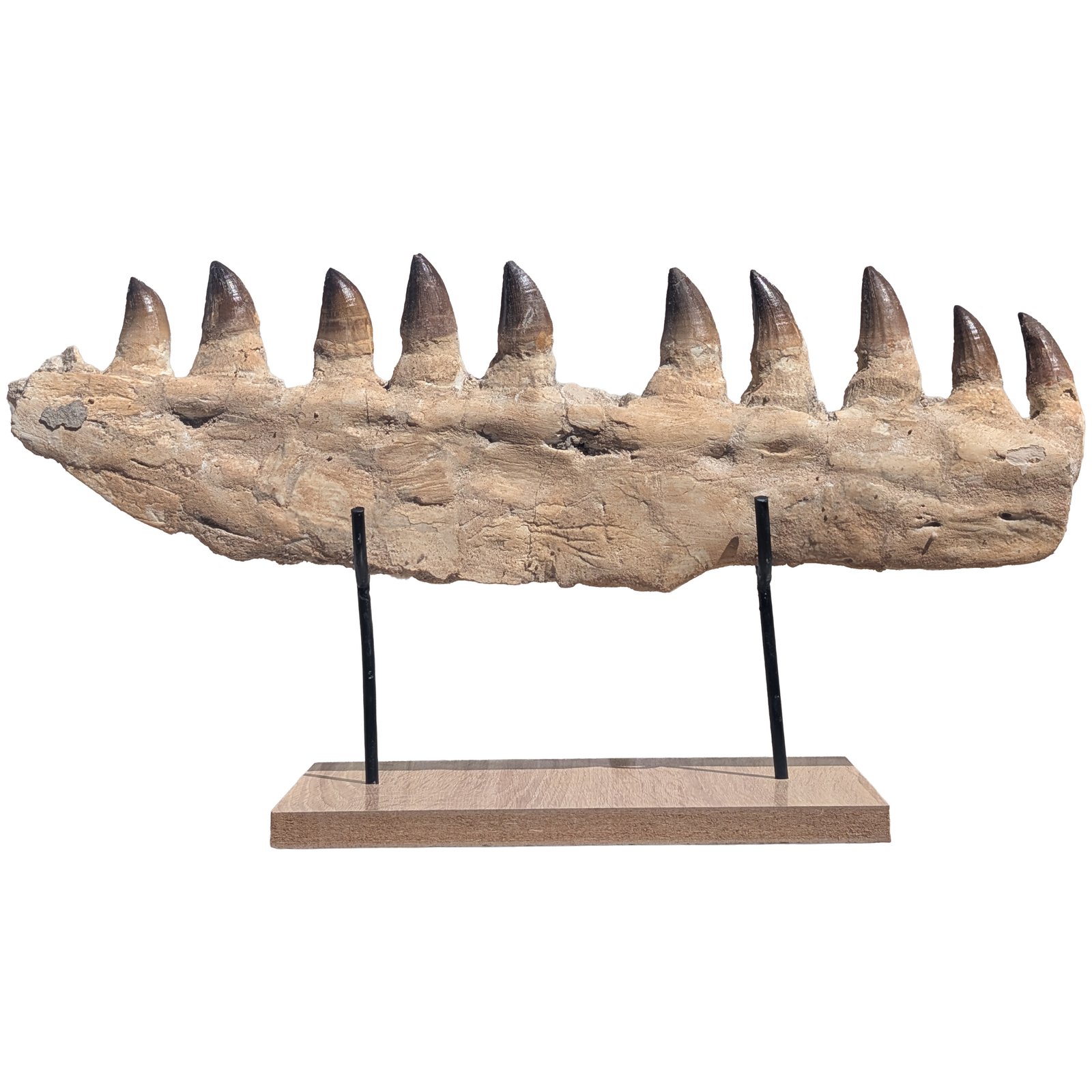
This Mosasaur Jaw Large Display represents an exceptional opportunity to own a piece of Cretaceous marine history. The fossil has been preserved through natural mineralization processes that transformed the original bone into stone over millions of years, creating a durable specimen suitable for display and study.
This Mosasaur Jaw Large Display is carefully selected for its exceptional preservation, visible anatomical features, and impressive display qualities that make it a standout addition to any fossil collection or educational setting.
Introduction to This Mosasaur Jaw Large Display
This Mosasaur Jaw Large Display brings the mighty marine reptile back to life. Every specimen in our collection is a genuine fossil from the Late Cretaceous period, originating from the rich phosphate deposits of Morocco. This magnificent specimen showcases the powerful jaw structure of one of the most fearsome marine predators to ever inhabit the prehistoric oceans.
Scientific Significance of Your Mosasaur Jaw Large Display
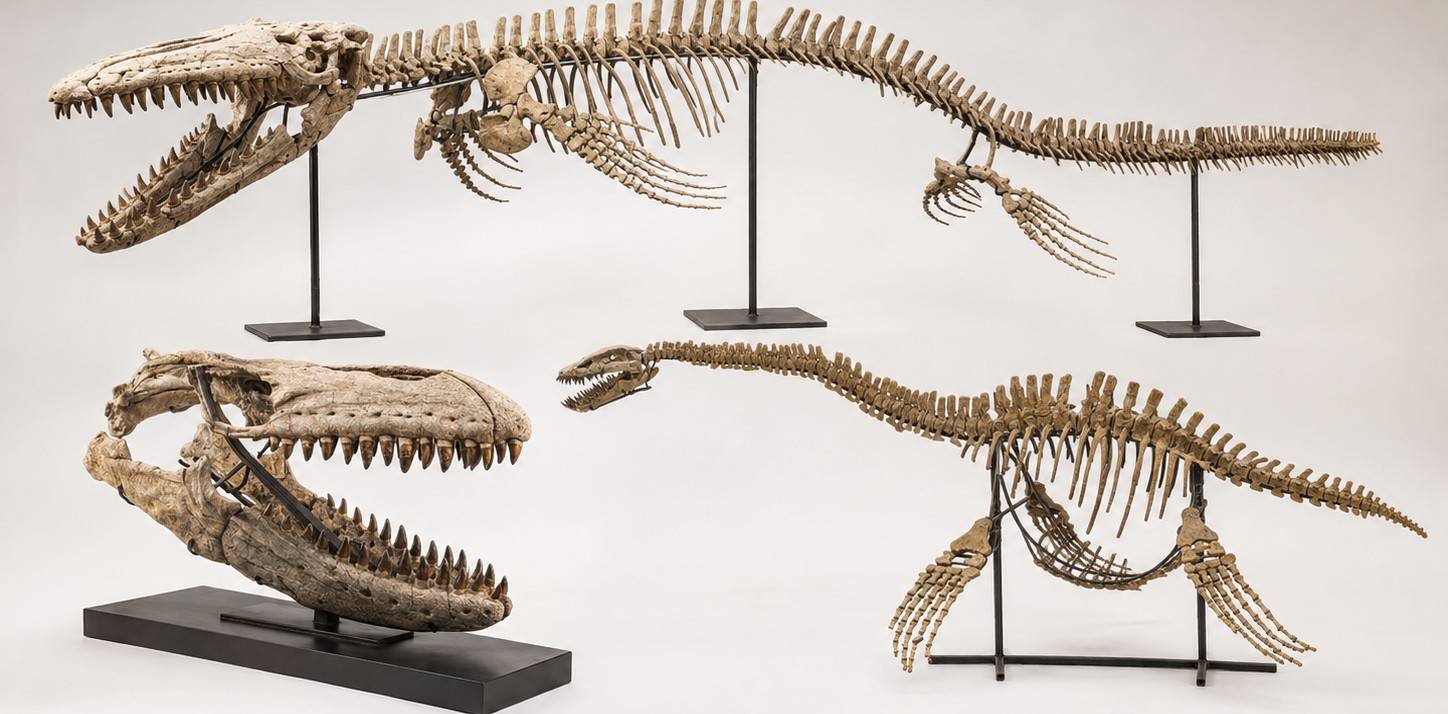
Mosasaurs were dominant marine reptiles that ruled the seas during the Late Cretaceous period, approximately 70 to 66 million years ago. A Mosasaur Jaw Large Display reveals the incredible adaptation of these creatures to marine life. Their jaws were equipped with sharp, conical teeth designed for gripping and holding slippery prey such as fish, squid, and smaller marine reptiles. The jaw structure shows the powerful muscles that delivered a devastating bite force.
This specimen comes from the phosphate mines of the Khouribga region in Morocco. These deposits are world-famous for producing exceptionally well-preserved mosasaur fossils. The phosphate-rich sediment created ideal conditions for fossilization, preserving fine details visible in these fossils.
Anatomy Revealed in This Mosasaur Jaw Large Display
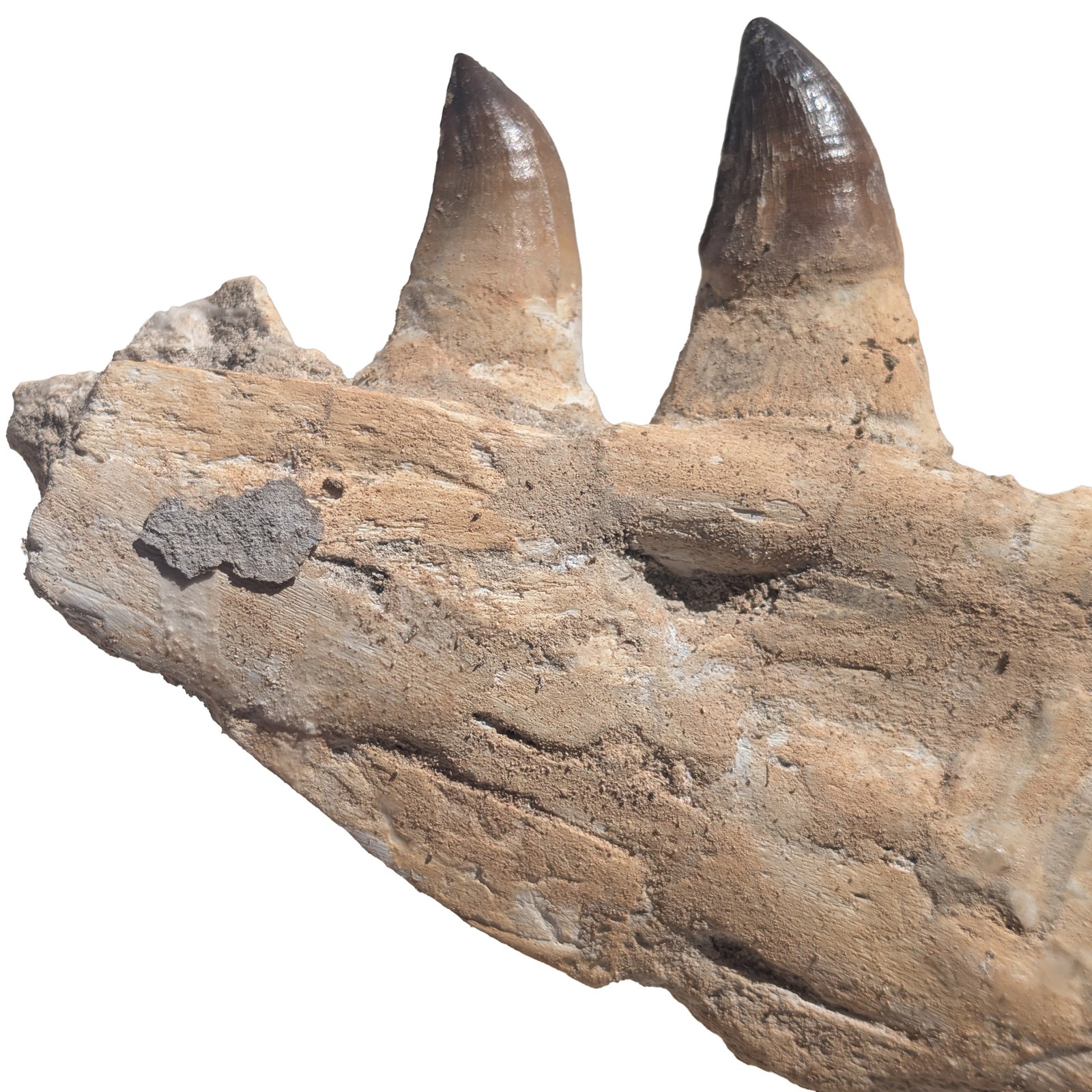
The jaw bone in a Mosasaur Jaw Large Display is typically a partial or complete dentary bone from the lower jaw. This specimen shows the dental groove where teeth were socketed, along with preserved tooth roots or complete teeth. The bone texture reveals muscle attachment points, nerve foramina (small openings for blood vessels and nerves), and the articulation surface where the jaw connected to the skull.
Each specimen has been carefully selected for display quality. The natural mineralization has preserved the original bone shape while adding rich coloration from iron and other minerals in the surrounding sediment. The colors range from deep brown to tan and occasionally show reddish or greyish hues depending on the specific mineral content of the fossilization environment.
Display and Educational Value of This Mosasaur Jaw Large Display
This piece is a centerpiece-worthy addition to any fossil collection. The substantial size and dramatic appearance of jaw fossils make them ideal for display in living rooms, offices, museums, and educational institutions. Collectors choose a Mosasaur Jaw Large Display for its visual impact and scientific value. The visible teeth and bone structure provide an immediate connection to prehistoric marine life that smaller fossils cannot match.
Whether used in a classroom setting or as a conversation piece in a private collection, a Mosasaur Jaw Large Display serves as an excellent teaching tool. Students and visitors can observe real fossilized bone, study tooth morphology, and learn about marine reptile anatomy. The large format makes details visible without magnification, allowing for effortless study and appreciation.
Geological Context of This Mosasaur Jaw Large Display
During the Late Cretaceous period, much of what is now Morocco was covered by a shallow tropical sea. This sea teemed with marine life including mosasaurs, plesiosaurs, turtles, and enormous fish. The phosphate deposits of the Oulad Abdoun Basin, where this specimen was discovered, formed from the accumulation of marine sediments over millions of years. These sediments trapped and preserved the remains of countless marine animals.
The fossilization began when the mosasaur died and its carcass settled on the sea floor. Rapid burial by sediment protected the bones from scavengers and decomposition. Over time, mineral-rich groundwater percolated through the sediments, replacing the original bone material with phosphate minerals. This process preserved the microscopic structure of the bone while turning it into durable stone that has survived for over 66 million years.
Collecting and Caring for Your Mosasaur Jaw Large Display
This specimen requires minimal care to maintain its appearance for generations. Display your specimen away from direct sunlight to prevent fading of natural color. A stable environment with moderate humidity is ideal. Dust it gently with a soft brush when needed. Avoid using water or cleaning chemicals, as these can damage the fossil surface.
For best display, position on a sturdy surface at eye level. The dramatic shape and natural beauty of the fossil make it a natural focal point. Many collectors pair it with informational labels describing the species, age, and origin of the specimen for the benefit of guests and visitors.
Comparing Different Mosasaur Jaw Displays
When selecting a Mosasaur Jaw Large Display for your collection, there are several factors to consider. Larger specimens naturally command higher prices due to their rarity and visual impact. A mosasaur jaw display like this one represents excellent value because it combines substantial size with well-preserved anatomical features. Smaller jaw sections are more affordable but may not provide the same dramatic display presence.
The preservation quality of a mosasaur jaw display depends on the specific fossilization conditions at the discovery site. Specimens from the Oulad Abdoun Basin in Morocco are renowned for their exceptional preservation. The phosphate-rich environment created ideal conditions for mineral replacement, resulting in fossils that retain fine surface detail while being durable enough for handling and display.
When evaluating a Mosasaur Jaw Large Display, look for specimens with visible tooth sockets, natural bone texture, and stable mineralization. These features indicate a well-preserved fossil that will maintain its appearance for years to come. The presence of original tooth material, whether fully intact or as root fragments, adds significant scientific value to any mosasaur jaw display.
The History of Mosasaur Discovery
The first mosasaur fossils were discovered in 1766 near Maastricht, Netherlands, long before the scientific understanding of extinction and prehistoric life was established. These early discoveries of mosasaur jaw displays puzzled naturalists who could not reconcile the giant marine reptile teeth and bones with any known living animal. It was not until the early 19th century that Georges Cuvier, the father of paleontology, correctly identified mosasaurs as extinct marine reptiles.
Today, mosasaur fossils from Morocco are among the most sought-after specimens in the fossil trade. The sheer abundance and quality of Moroccan mosasaur material has made these fossils accessible to collectors worldwide. A mosasaur jaw display from Morocco offers exceptional value compared to specimens from other regions, as the phosphate mines produce large quantities of well-preserved material that is carefully extracted and prepared for the international market.
Tooth Preservation in This Display
The teeth are often the most striking feature of a Mosasaur Jaw Large Display. Mosasaur teeth are conical, sharply pointed, and slightly curved backward, an adaptation for grasping slippery prey. In a well-preserved Mosasaur Jaw Large Display, you can observe the enamel surface texture, the shape variation between front and back teeth, and the replacement teeth developing beneath the functional ones.
The tooth roots in a Mosasaur Jaw Large Display are firmly anchored in deep sockets, a condition called thecodont dentition that is also seen in crocodiles and dinosaurs. This robust attachment allowed mosasaurs to deliver powerful bites without losing teeth. The number of visible teeth in a Mosasaur Jaw Large Display varies by specimen, but a typical example shows 8 to 12 tooth positions along the jawbone.
How This Display Was Prepared
The preparation of a Mosasaur Jaw Large Display is a delicate process that requires skill and patience. When the fossil is first extracted from the phosphate mines, it is encased in a hard matrix of phosphate rock. Professional preparators carefully remove this matrix using mechanical tools such as air scribes and micro-jacks. The goal is to expose the fossil bone while preserving all natural surface detail.
After mechanical preparation, a Mosasaur Jaw Large Display may receive consolidation treatment to stabilize any fragile areas. A dilute solution of acrylic resin is applied to reinforce the fossil without altering its natural appearance. The final step is gentle cleaning to remove dust and debris. Your Mosasaur Jaw Large Display has been prepared to museum standards, ensuring it will provide years of enjoyment without deterioration.
Mosasaur Species in This Display
Mosasaurs were a diverse group of marine reptiles that evolved rapidly during the last 25 million years of the Cretaceous period. The Mosasaur Jaw Large Display you are considering likely belongs to the genus Mosasaurus, which includes some of the largest known mosasaurs reaching lengths of up to 15 meters. Other common genera found in Moroccan deposits include Prognathodon, known for its robust crushing teeth, and Platecarpus, a more streamlined form.
Identifying the exact species of a Mosasaur Jaw Large Display requires examination of specific anatomical features including tooth shape, jaw bone proportions, and the arrangement of tooth sockets. While a Mosasaur Jaw Large Display from Morocco may not always come with a species-level identification, the jaw structure itself provides valuable information about the feeding ecology and evolutionary relationships of these fascinating marine reptiles.
The Cretaceous Marine Ecosystem
The Mosasaur Jaw Large Display represents an apex predator from one of the most diverse marine ecosystems in Earth’s history. During the Late Cretaceous, the seas that covered what is now Morocco teemed with an extraordinary variety of life. Giant predatory fish such as the 5-meter long Cretalamna and the enormous 8-meter Xiphactinus shared these waters with sea turtles, plesiosaurs, and multiple species of mosasaurs.
A Mosasaur Jaw Large Display provides a window into this ancient ecosystem. The size and robustness of the jaw indicate the position this predator occupied in the food chain. Large mosasaurs with powerful jaws could prey on sea turtles, large fish, and even smaller marine reptiles. The variety of mosasaur species found in Moroccan deposits suggests these animals partitioned the ecosystem, with different species specializing in different prey and habitats.
Photographing Your Display
A Mosasaur Jaw Large Display deserves to be photographed well. Good lighting is essential to capture the natural texture and color. Natural indirect light works best, revealing the true mineral coloration without harsh shadows. Position near a window on an overcast day for the most accurate color reproduction. Include a scale reference such as a ruler to indicate the size.
Take photographs from multiple angles to capture the full three-dimensional structure. Close-up photography is particularly effective for revealing the fine details of tooth sockets, bone texture, and fossilization features. A neutral background helps the specimen stand out. Macro shots of individual teeth and tooth sockets add scientific documentation value to your photographs.
Value and Investment of Your Display
A Mosasaur Jaw Large Display represents both a scientific treasure and a tangible investment. The fossil market has shown consistent growth over the past decades, with quality specimens appreciating in value. A Mosasaur Jaw Large Display from Morocco offers exceptional value compared to specimens from other regions, as the combination of quality and availability makes these fossils accessible while still maintaining their scientific importance.
Factors that influence the value of a Mosasaur Jaw Large Display include size, preservation quality, tooth count, and overall aesthetic appeal. The Mosasaur Jaw Large Display you receive has been selected for its display qualities and scientific merit. As public interest in paleontology continues to grow, well-preserved fossils like this Mosasaur Jaw Large Display are likely to become increasingly sought after by collectors and institutions alike.
This high-quality marine reptile specimen provides an excellent opportunity for study and display.
Frequently Asked Questions About This Mosasaur Jaw Large Display
What is included?
This listing includes one genuine mosasaur jaw fossil specimen from the Late Cretaceous phosphate deposits of Morocco. The specific jaw section may vary, but all specimens in this category offer exceptional display quality.
How can I verify authenticity?
Every specimen comes with an authenticity guarantee. The natural bone texture, preserved tooth sockets, and mineral coloration are indicators of genuine fossil material. Professional鉴定 is welcome.
How large is a typical specimen?
Size varies by specimen, but a specimen typically measures between 30 and 50 centimeters in length. The substantial size makes these fossils particularly impressive display pieces.
What species is this?
Most specimens in our collection are from the genus Mosasaurus or related genera such as Prognathodon. Exact species identification varies by specimen.
Is this suitable for educational use?
Absolutely. The large size and visible anatomical features make this an excellent educational specimen for teaching marine reptile anatomy, fossilization processes, and Cretaceous marine ecosystems.
How should I display this?
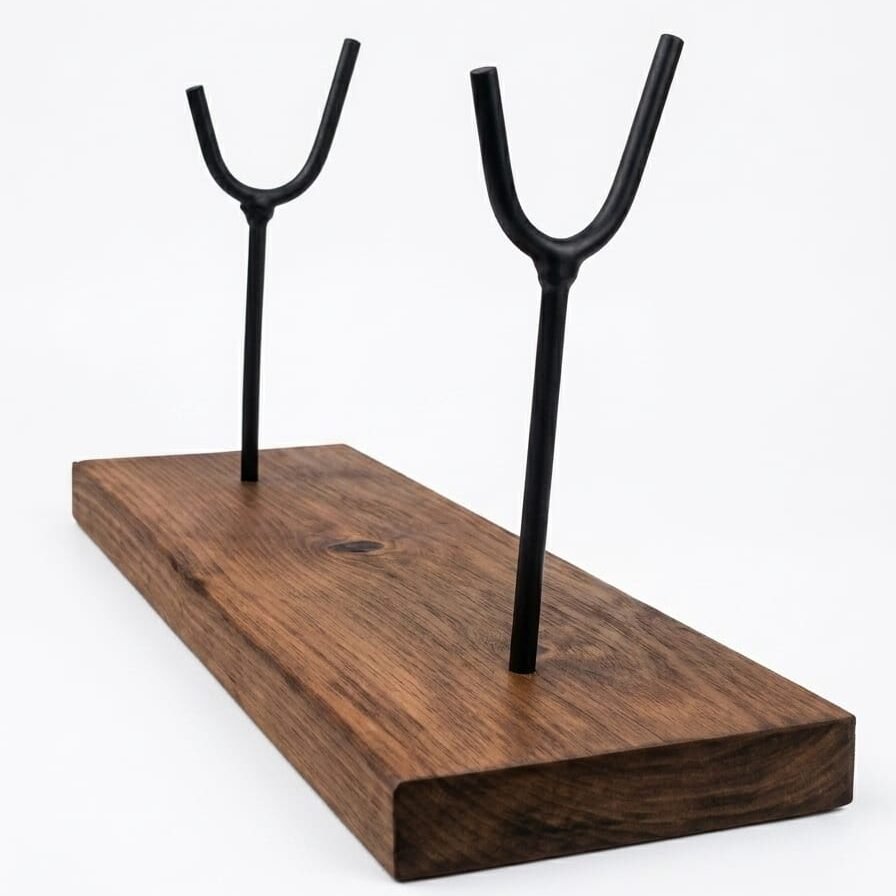
Display on a sturdy shelf, in a glass cabinet, or mounted on a custom stand. The dramatic shape and size make it a natural conversation piece in any setting.
Does this come with documentation?
Yes, your purchase includes information about the geological context, estimated age, and origin of the specimen.
Technical Specifications: Mosasaur Jaw Large Display
| Specification | Details |
|---|---|
| Fossil Type | Mosasaur jaw fossil |
| Species | Mosasaurus / Prognathodon |
| Material | Mineralized fossil bone |
| Length | Approx. 30-50 cm |
| Estimated Age | ~66-70 million years |
| Period | Late Cretaceous (Maastrichtian) |
| Origin | Oulad Abdoun Basin, Morocco |
| SKU | 9036 |
Authenticity Guarantee for Your Display
Every Mosasaur Jaw Large Display we sell is guaranteed to be a genuine fossil specimen. We source our fossils directly from reputable Moroccan suppliers who work within the legal framework for fossil exports. Each Mosasaur Jaw Large Display is inspected by our team before listing to ensure it meets our quality standards for preservation, display value, and scientific integrity. If you have any concerns about the authenticity of your Mosasaur Jaw Large Display, we offer a full satisfaction guarantee.
Shipping and Handling of Your Display
Your Mosasaur Jaw Large Display will be carefully packaged for safe transport. The specimen is wrapped in protective foam and placed in a sturdy box with additional padding to prevent movement during transit. Insurance is included with every shipment. We recommend inspecting your Mosasaur Jaw Large Display immediately upon receipt and contacting us within 48 hours if any damage has occurred.
International shipping of a Mosasaur Jaw Large Display follows all applicable regulations for fossil specimens. Moroccan fossil exports are legal when accompanied by proper documentation. Your Mosasaur Jaw Large Display ships with all necessary paperwork for customs clearance. Delivery times vary by destination, with most international orders arriving within 7 to 14 business days.
Collector Testimonials for This Display
Collectors consistently praise the Mosasaur Jaw Large Display for its impressive size and visual impact. Many note that the Mosasaur Jaw Large Display becomes the centerpiece of their fossil collection, drawing attention from guests and fellow collectors alike. The substantial weight and dramatic tooth arrangement of a Mosasaur Jaw Large Display create an immediate impression of the power and majesty of these ancient marine reptiles.
Educators value the Mosasaur Jaw Large Display as a teaching tool that brings prehistoric marine life to life for students. The visible anatomical features allow for engaging lessons about evolution, adaptation, and extinction. Whether displayed in a home, office, or classroom, the Mosasaur Jaw Large Display consistently receives positive feedback for its combination of scientific value and aesthetic appeal.
Explore More Fossils
Browse our Mosasaur Fossil Collection for more authentic specimens. For scientific information about mosasaurs, visit the Mosasaurus reference page.